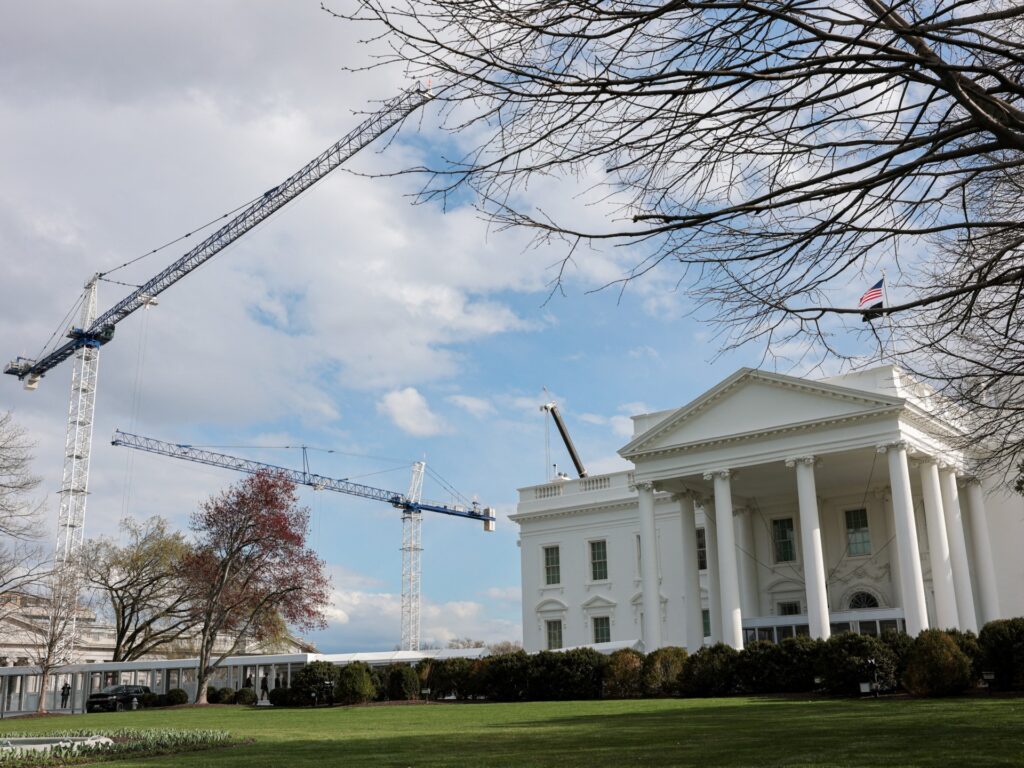
Former President Donald Trump has filed an emergency motion seeking to continue construction on a White House ballroom, a project currently under suspension due to legal challenges. The motion contends that the court order halting the construction was improper and poses risks to national security.
The ballroom, reportedly envisioned as a part of the White House complex, has faced opposition and led to judicial intervention. Trump’s legal team argues that the suspension overlooks critical considerations related to security and operational needs of the White House.
According to the motion, stopping work on the ballroom leaves specific vulnerabilities unaddressed within the White House’s infrastructure, which could have implications for national security. The filing states that the ballroom is essential for accommodating official functions and strengthening the administration’s ability to host important events safely and efficiently.
The emergency motion emphasizes the urgency of the construction continuing without delay, asserting that the suspension disrupts important plans backed by legitimate government interests. Trump’s lawyers maintain that the original court ruling failed to properly evaluate the broader impact of halting the project.
Opponents of the construction project have raised concerns about the scope, cost, and potential environmental impact of the ballroom addition. This has fueled legal challenges aimed at stopping progress, culminating in the current suspension order.
The case has drawn attention from various stakeholders, including preservationists, national security experts, and political observers, all weighing in on the implications of the construction on the historic White House building and the broader political narratives.
Trump’s emergency motion marks an escalation in the legal battle, signaling his intent to push forward aggressively to complete the ballroom despite opposition. The motion calls for immediate court action to overturn the suspension and allow work to resume promptly.
Observers note that the case exemplifies the complex intersections between political agendas, historic preservation concerns, and security priorities that often characterize projects within the White House grounds.
Legal experts expect that the court will carefully consider the national security arguments presented by Trump’s team alongside the complaints raised by opponents before making a ruling. The outcome could have significant consequences for future White House renovations and constructions.
The White House ballroom project has been a contentious issue since its announcement, with supporters highlighting its utility and detractors emphasizing potential risk and unnecessary expenditure. The emergency motion reinforces the administration’s stance on pushing forward despite judicial pushback.
As the court reviews Trump’s emergency motion, the White House and its supporters remain hopeful for a swift resolution that allows the ballroom project to continue uninterrupted, framing it as vital to the nation’s security and operational efficiency.
This legal development adds another chapter to the ongoing discussions around preserving the historic character of the White House while addressing modern functional demands and security imperatives. Stakeholders and the public alike await the court’s decision, which could shape the future of the iconic presidential residence.
In conclusion, Trump’s emergency motion to continue construction on the White House ballroom underscores a critical moment in balancing preservation, security, and political will, highlighting the high stakes involved in managing one of the nation’s most symbolic landmarks.