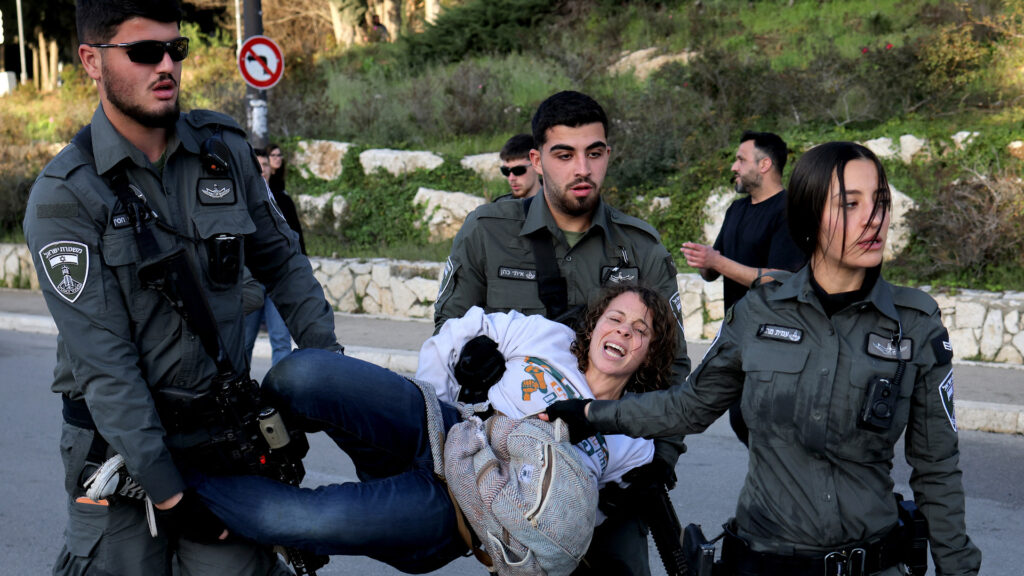
A wave of protests has erupted worldwide in response to Israel’s recently enacted law that mandates the death penalty as the default sentence for certain Palestinians. This controversial legislation marks a significant shift in Israel’s judicial approach towards Palestinians and has ignited intense debates and widespread condemnation.
The new law, passed by the Israeli government, stipulates the death penalty as the automatic punishment for specific charges involving Palestinians. Advocates for the bill argue that it aims to deter terrorism and acts deemed as severe threats to national security. However, human rights organizations, international bodies, and activists have voiced strong opposition, citing concerns over fairness, potential misuse, and the broader implications for peace and justice in the region.
Protests have taken place across various major cities globally, including New York, London, Paris, and Amman, with thousands demonstrating peacefully yet fervently against the legislation. Protesters highlight the disproportionate impact of the law on Palestinian communities and stress the need for dialogue and reconciliation rather than harsh punitive measures.
Human rights groups warn that enshrining the death penalty as a default punishment undermines international human rights norms and increases the risk of miscarriages of justice. They argue that such laws exacerbate existing tensions and fuel cycles of violence rather than resolving underlying conflicts.
The Israeli government, meanwhile, maintains that the law is a necessary tool to combat terrorism and protect its citizens. Officials assert that the legislation targets individuals involved in severe offenses such as terrorism-related murders and attacks against civilians.
Critics also point to the lack of international consensus on capital punishment and the controversial use of the death penalty globally. Many countries have abolished it, urging Israel to reconsider its stance, emphasizing respect for human rights and due process.
The legislation has sparked debate within Israel itself, with some politicians, legal experts, and civil society members expressing deep reservations about the law’s ethical and legal ramifications.
The United Nations and other international bodies have called for restraint and urged Israel to adhere to international legal standards, emphasizing the importance of upholding human rights and seeking peaceful resolutions.
This development comes amid an already volatile political climate in Israel and the Palestinian territories, where decades of conflict, disputes over land, sovereignty, and human rights remain unresolved.
Analysts warn that the introduction of the death penalty as a default sentence could further jeopardize efforts towards peace and may lead to increased international isolation for Israel.
As global condemnation grows, dialogue between Israeli officials, Palestinian representatives, and international mediators is viewed as essential to prevent further escalation.
The protests and international reactions underscore the deep divisions and complex emotions surrounding the Israeli-Palestinian conflict and the delicate balance of justice, security, and human rights.
As this issue continues to unfold, the world watches closely, hoping for a resolution that respects human dignity, promotes peace, and safeguards the rights of all individuals in the region.
Stakeholders emphasize the necessity of pursuing avenues that foster understanding and reconciliation rather than retributive justice measures that could harden divisions and perpetuate suffering.
The global protests against Israel’s new death penalty law reflect broad concern that justice systems must prioritize fairness and human rights to build sustainable peace and stability in volatile regions.
With tensions high and emotions running deep, the international community faces a critical moment to influence outcomes through advocacy, dialogue, and support for peaceful conflict resolution strategies.
The coming months will likely determine the impact of this law on Israeli-Palestinian relations and the broader Middle East dynamics, with human rights and international law at the forefront of ongoing debates.
In summary, the global response to Israel’s legal shift highlights the urgent need for balanced approaches rooted in justice, equity, and respect for fundamental rights to address one of the most enduring and complex conflicts of our time.