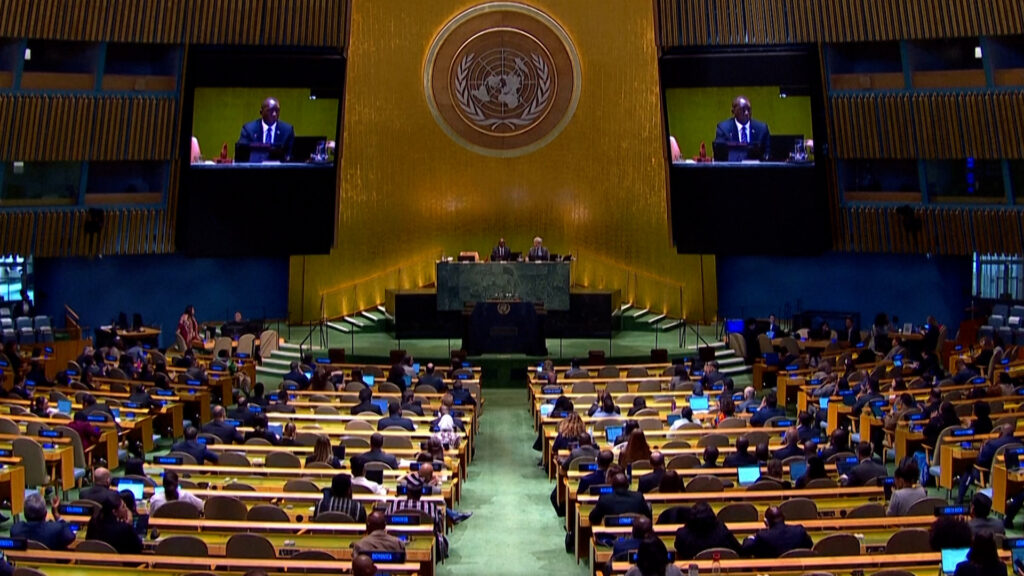
In a historic move, the United Nations has adopted a resolution led by Ghana that formally recognizes transatlantic slavery as the “gravest crime against humanity.” This decision came despite notable resistance from some member states, marking a significant step in global acknowledgment of the profound impact and enduring legacy of slavery.
The resolution highlights the extensive atrocities committed during the transatlantic slave trade, which forcibly uprooted millions of Africans and subjected them to brutal conditions. It condemns the systemic dehumanization and exploitation inherent in the practice and calls for increased awareness, education, and reparative actions to address the lasting consequences on descendant communities.
Ghana, which spearheaded the drafting of this resolution, emphasized the importance of acknowledging the historical injustices to promote healing and reconciliation worldwide. The country’s leadership underscored the need for collective global responsibility in confronting the roots of racial discrimination and inequality, both historically and in contemporary societies.
Although some member states voiced opposition or reservations about the resolution, citing various political and diplomatic concerns, the majority of the UN General Assembly voted in favor. This consensus exhibits a growing international commitment to tackling issues of historical wrongdoing and their modern implications.
The resolution calls for more comprehensive educational programs and remembrance initiatives to ensure future generations understand the scale and severity of transatlantic slavery. It also encourages the collaboration of governments, civil society, and international organizations to promote social justice, human rights, and the elimination of racial discrimination.
By officially labeling transatlantic slavery as the “gravest crime against humanity,” the UN sets a precedent for recognizing other forms of historical injustices. This decision fosters a global dialogue about accountability, historical memory, and the role international institutions play in advancing human dignity.
The resolution also has profound implications for ongoing discussions about reparations. Although the document does not prescribe specific reparative measures, it acknowledges the necessity of addressing the economic and social damage inflicted upon African descendants.
Human rights advocates and scholars have widely praised the resolution for its moral clarity and symbolic importance. They argue that such recognition is vital for dismantling structures of systemic racism and ensuring that the horrors of slavery are neither forgotten nor repeated.
Critics of the resolution, however, warn that documentation alone will not suffice without actionable steps to rectify inequities. They call on the UN and member states to translate the resolution’s principles into tangible policies that promote equality and justice.
Overall, the UN’s adoption of the Ghana-led resolution marks a pivotal moment in international efforts to confront the legacy of slavery. It represents a unified stance against a dark chapter of human history and signals a commitment to fostering a world founded on human rights, dignity, and equality.