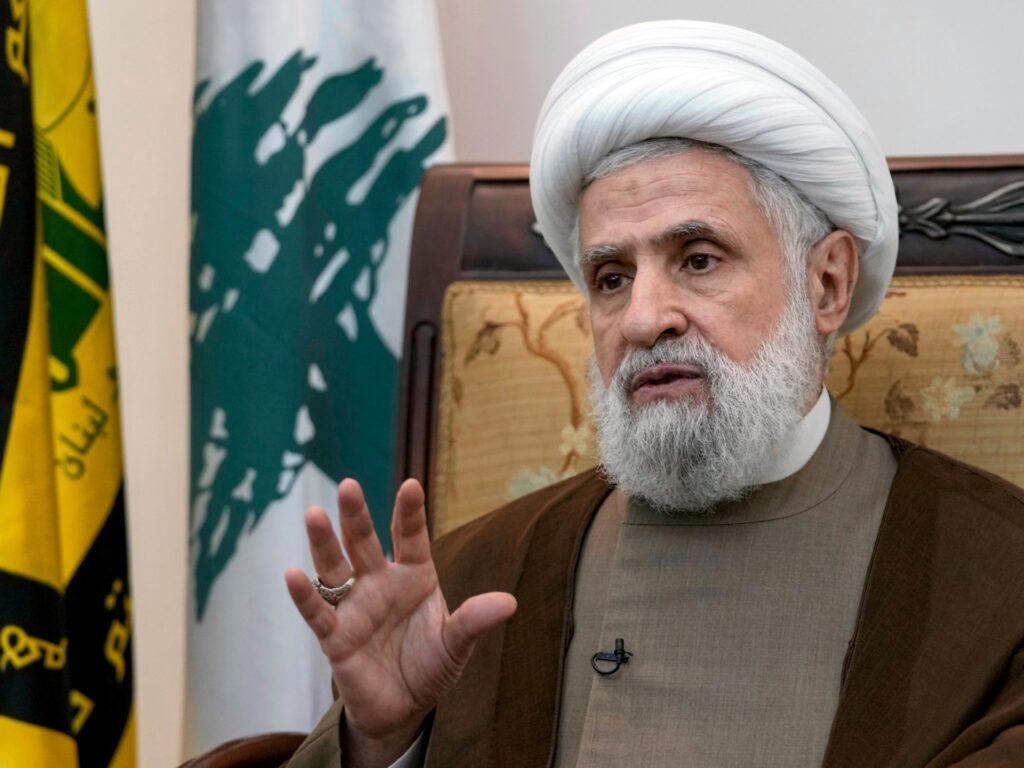
In a recent statement amidst ongoing attacks in Lebanon, Hezbollah’s deputy chief, Naim Qassem, called for national unity and resolutely rejected any negotiations with Israel. Qassem emphasized that engaging in talks with Israel “under fire amounts to imposing surrender” on Lebanon, signaling a firm stance against dialogue under the current hostile circumstances.
The context of these remarks comes amid heightened tensions and violent exchanges in the region, where conflicting interests continue to destabilize Lebanon. Hezbollah, a powerful political and militant group in Lebanon, remains a central figure in the conflict, often asserting a strong position against Israel.
Qassem’s call for unity reflects a broader appeal to Lebanese factions to present a consolidated front during these turbulent times. His rejection of negotiations highlights the deep mistrust and ongoing hostilities between Hezbollah and Israel.
These developments underscore the complexity of achieving peace in the region, with militant activities and political disagreements creating significant barriers. Lebanon’s internal dynamics, influenced heavily by Hezbollah’s stance, play a crucial role in shaping the country’s response to Israeli actions.
Analysts point out that Hezbollah’s position might harden Lebanon’s overall approach towards Israel, potentially prolonging the conflict and diminishing hopes for diplomatic solutions. The international community continues to monitor the situation closely, advocating for peaceful resolutions while recognizing the challenges posed by entrenched animosities.
The statement from Qassem serves as a reminder of the fragile balance in the Middle East, where calls for unity often accompany calls for resistance, particularly in the face of external aggression. As Lebanon navigates these attacks, the question remains how unity and resilience will translate into long-term strategies beyond immediate security concerns.
In conclusion, Hezbollah’s leadership underlines no willingness to negotiate with Israel amidst ongoing assaults, framing it as a capitulation rather than a pathway to peace. This position deeply influences Lebanon’s political landscape and the broader geopolitical dynamics of the region.