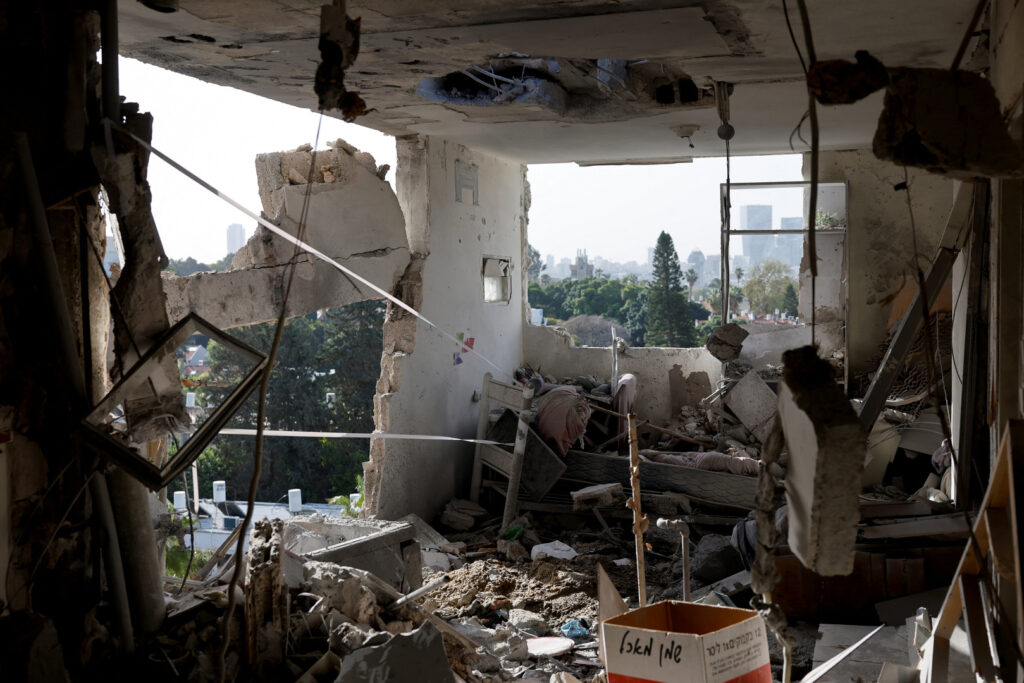
Damage inside a building at an impact site, following a barrage of missiles launched from Iran, amid the U.S.-Israeli conflict with Iran, in Tel Aviv, Israel, March 19, 2026. REUTERS/Amir Cohen
In recent weeks, Palestinian citizens of Israel have raised urgent calls for improved protection measures against ongoing missile threats amid escalating regional hostilities. Since the outbreak of the conflict involving Iran, at least 15 people have lost their lives in attacks across Israel, highlighting the serious security challenges faced by the population.
The war that began late last month has intensified tensions and led to a series of missile strikes targeting various areas within Israel. These attacks have resulted in casualties, destruction, and widespread fear among all communities, including Palestinian citizens who constitute a significant minority within the country.
Palestinian residents emphasize that their communities are particularly vulnerable during such conflicts and demand that government authorities prioritize their safety by enhancing missile defense systems and civil protection infrastructure in Palestinian-populated areas. The lack of adequate shelters and early warning mechanisms has been cited as a critical concern.
Community leaders have voiced their disappointment over what they describe as neglect and unequal resource allocation, calling for a more inclusive approach in national security policies that address the needs of all citizens regardless of ethnicity. They insist that protecting every civilian is paramount to maintaining social cohesion and fostering a peaceful coexistence within Israeli society.
The current situation also reflects broader geopolitical dynamics, with the conflict involving Iran contributing to increased volatility throughout the region. This has created a complex environment where local populations suffer the consequences of geopolitical struggles beyond their control.
Experts suggest that enhancing protection for all residents, including Palestinian citizens, requires coordinated efforts between security forces, local authorities, and civil organizations. Investments in advanced missile interception technologies, construction of reinforced shelters, and effective communication strategies for emergency situations are essential components of this response.
Furthermore, calls for dialogue and mutual understanding between communities are gaining momentum as a means to reduce internal tensions exacerbated by external threats. Advocates argue that addressing the humanitarian impact of the missile attacks should go hand-in-hand with diplomatic efforts aimed at de-escalating the broader regional conflict.
As the situation continues to unfold, the plight of Palestinian citizens in Israel serves as a reminder of the urgent need for comprehensive security solutions that ensure the protection and dignity of all populations affected by ongoing violence. The demand for better defensive measures underscores a universal desire for safety and stability amid uncertain times.