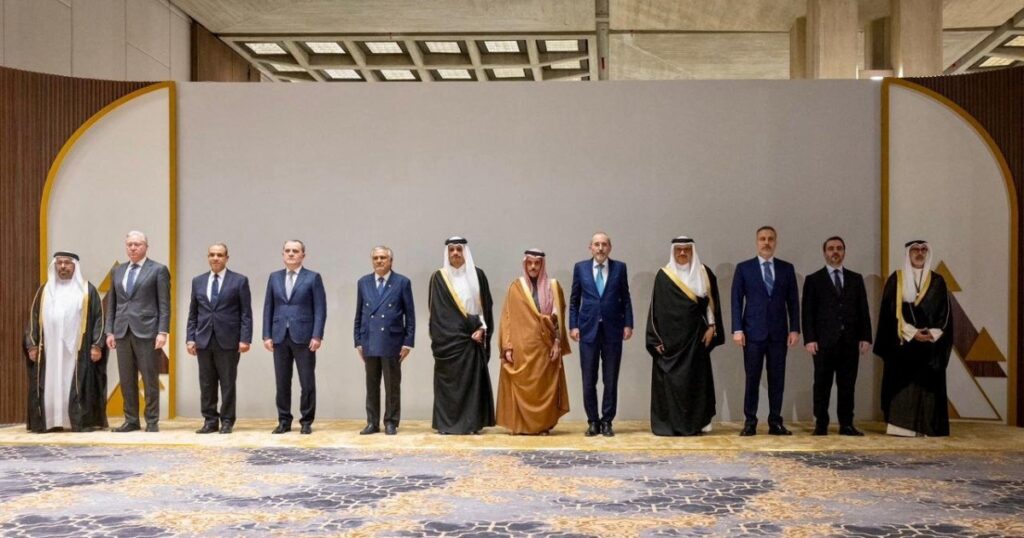
In a significant meeting held in Riyadh, Arab and Muslim foreign ministers gathered to address the escalating tensions resulting from recent Iranian strikes. The assembly focused on fostering a collective strategy to defend their nations’ sovereignty and ensuring regional stability.
The ministers underscored their shared concern over the Iranian military actions, which they viewed as aggressive and destabilizing. They collectively condemned the strikes and expressed unwavering support for the affected countries’ rights to self-defense in the face of such provocations.
Discussions revolved around coordinating responses that could effectively deter future aggressions while maintaining international peace and security. The ministers emphasized the importance of solidarity among Arab and Muslim nations to stand strong against challenges posed by external threats.
Additionally, the meeting highlighted the need for diplomatic engagements alongside strategic defense measures to prevent further escalation. The collective approach aims to present a united front that balances assertive action with avenues for dialogue.
Participants agreed on the urgency of enhancing intelligence sharing and military cooperation to safeguard their territories. The resolutions called for strengthening regional alliances and bolstering defense capabilities to respond swiftly and decisively to any threats.
Moreover, the ministers discussed the broader implications of Iran’s actions on the geopolitical landscape of the Middle East. They acknowledged that unchecked aggression could undermine ongoing efforts toward peace and economic development in the region.
The Riyadh meeting marked a pivotal moment in fostering unity among Arab and Muslim countries, demonstrating their commitment to protecting their sovereignty and maintaining regional peace through collective action and strategic coordination.