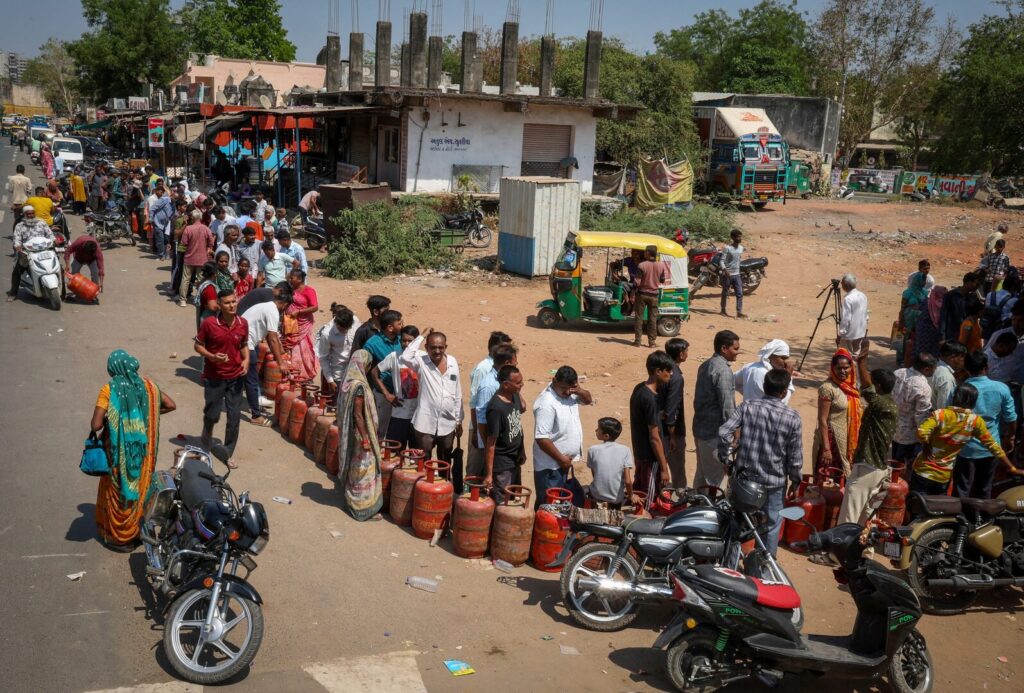
People stand in a queue with their empty LPG cylinders outside a gas agency amid supply disruptions following the U.S.-Israeli conflict with Iran, in Ahmedabad, India, March 12, 2026. REUTERS/Amit Dave TPX IMAGES OF THE DAY
Fuel shortages are causing significant disruptions worldwide, with long queues at gas stations and widespread protests erupting in various countries. The root cause of the crisis is linked to rising fuel prices amidst escalating tensions and conflict involving the US, Israel, and Iran.
As the US and Israel intensify their military actions against Iran, uncertainty in the global oil markets has surged. Iran, being a major oil producer, plays a crucial role in the supply chain of energy resources. Any conflict in the region disrupts supply routes and raises concerns about future availability, pushing prices upward.
The sudden spike in fuel prices has stoked public anger in many parts of the world, particularly in countries heavily reliant on imported oil. Motorists face long queues at petrol stations, often waiting for hours to fill up their tanks. The shortages have also impacted logistics and transportation sectors, causing delays and increased costs for goods delivery.
Several countries have seen demonstrations as citizens demand government action to stabilize fuel prices and secure adequate supplies. Protesters have called on their leaders to seek peaceful resolutions to the conflict and reduce their dependency on volatile oil markets.
Governments are under pressure to respond effectively. Some have introduced measures such as releasing strategic petroleum reserves to boost supply, while others have sought alternative energy sources to mitigate the impact of the shortages.
Analysts warn that the ongoing conflict and resulting fuel scarcity could have prolonged global economic repercussions. Inflationary pressures may mount as transportation and production costs rise, potentially slowing economic recovery post-pandemic.
The crisis has also highlighted the need for accelerating transition to renewable energy to reduce dependence on politically sensitive oil-producing regions. Energy experts advocate for increased investments in clean technologies and diversified energy portfolios for greater stability.
In summary, the fuel shortages tied to the US-Israeli war on Iran have triggered a complex global challenge, affecting everyday life and global markets. Urgent and coordinated international efforts will be required to address the immediate energy crisis and work toward long-term solutions for energy security and peace.