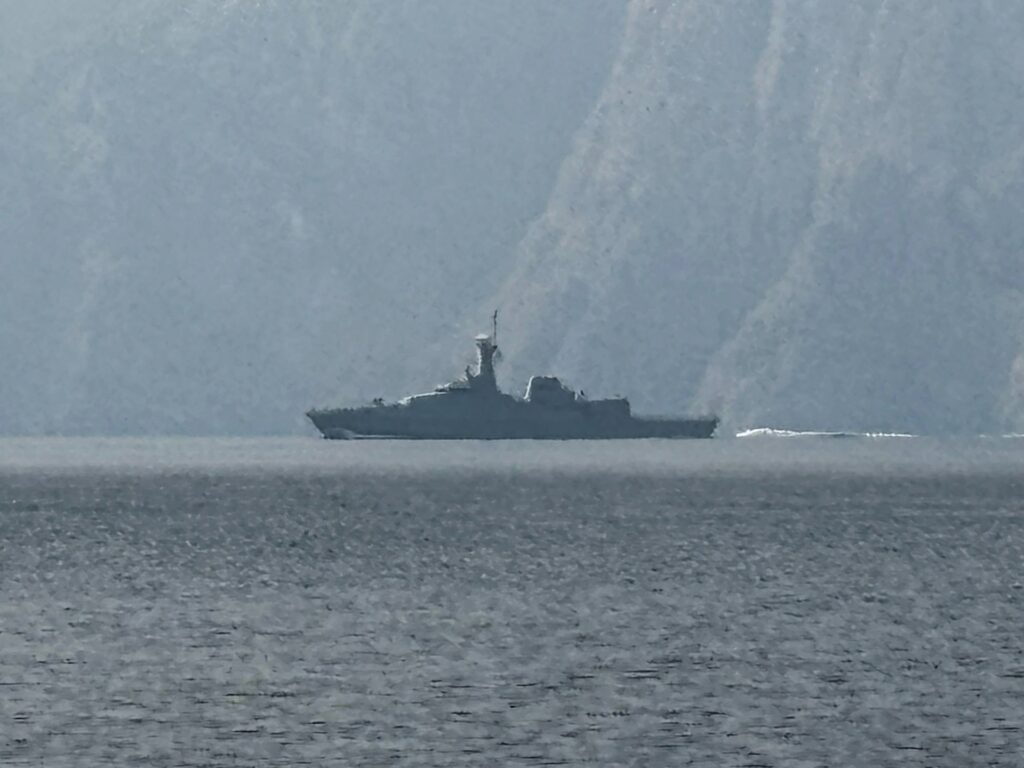
The Islamic Revolutionary Guard Corps (IRGC) of Iran has declared that the country is in ‘complete control’ of the Strait of Hormuz, a vital chokepoint through which approximately one-fifth of the world’s oil shipments pass. This announcement comes amid heightened tensions triggered by threats from former U.S. President Donald Trump and ongoing hostilities between the U.S.-Israeli alliance and Iran.
The Strait of Hormuz is a narrow passage between the Persian Gulf and the Gulf of Oman, serving as a critical route for global energy supplies. Around 20% of the world’s oil supply is transported through this strategic waterway, making any disruption potentially impactful on international oil markets and global economic stability.
Iran’s IRGC asserts that despite mounting military and economic pressures, Tehran maintains effective control over the strait, both militarily and strategically. The IRGC’s statement underscores Iran’s readiness to defend its interests and resist attempts by the U.S. and Israel to exert influence or enforce blockades in the region.
These developments occur against a backdrop of sustained U.S.-Israeli efforts to isolate and contain Iran, including economic sanctions, covert operations, and naval deployments aimed at undermining Iran’s regional ambitions. The threat from former President Trump included warnings of severe consequences if Iran were to close the Strait of Hormuz or escalate aggression.
Iran’s control over the strait presents a geopolitical challenge for the international community, signaling Iran’s ability to influence global oil markets by restricting or permitting access to this critical maritime corridor. It also highlights the ongoing volatility in the Persian Gulf, where sectarian conflicts, proxy wars, and great power competition intersect.
Economic analysts warn that any actual closure or disruption of the Strait of Hormuz could lead to sharp increases in oil prices, affecting economies worldwide. Countries dependent on energy imports are closely monitoring the situation, urging diplomatic solutions to avoid escalation.
The IRGC’s latest declaration reflects Tehran’s confidence in its military capabilities, including a mix of naval forces, anti-access/area denial strategies, and asymmetrical tactics designed to counter superior naval powers.
International actors have expressed concern over the rising tensions. The United Nations and several European countries have called for dialogue and restraint, emphasizing the importance of keeping the Strait of Hormuz open for peaceful transit.
As the region remains on edge, the situation underscores the delicate balance of power in the Persian Gulf. Iran’s message of control could either deter further provocations or provoke escalation, depending on responses from the U.S., Israel, and their allies.
In summary, the IRGC’s proclamation of full control over the Strait of Hormuz amid ongoing U.S.-Israeli threats signals a critical moment in Middle Eastern geopolitics. The global community watches closely as the potential for conflict looms over one of the world’s most strategically important maritime routes.