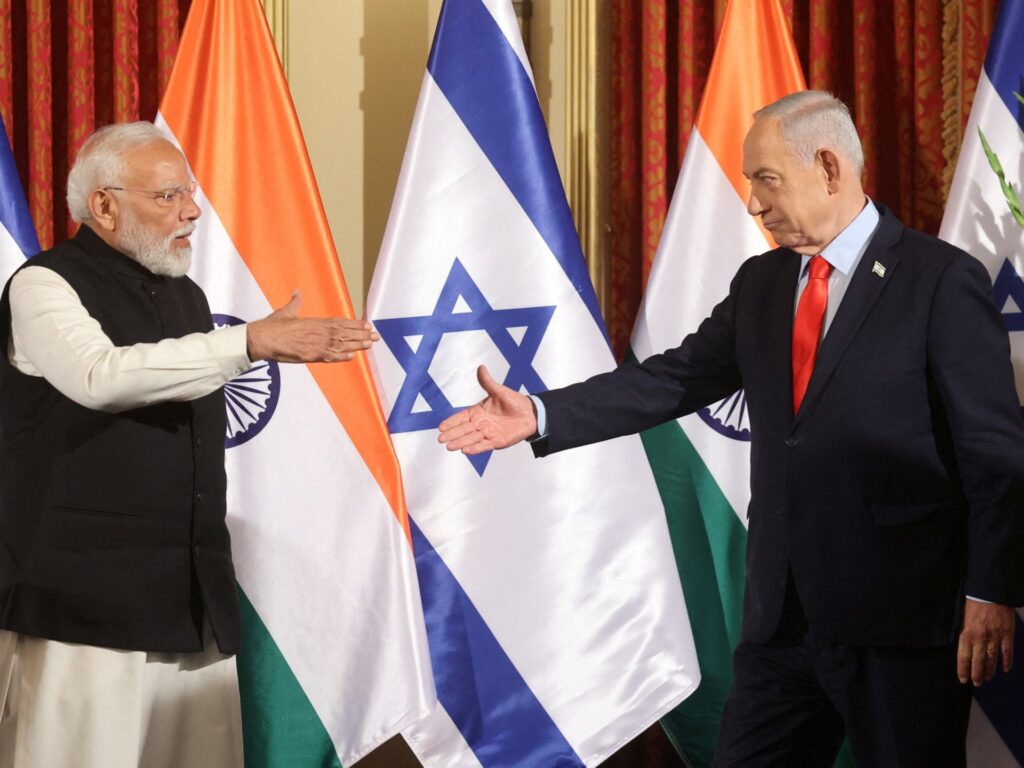
The recent visit of Indian Prime Minister Narendra Modi to Israel has culminated in a significant bilateral agreement aimed at strengthening ties between the two nations, particularly in the realms of trade and defence. This development marks an important chapter in India-Israel relations, highlighting a mutual commitment to deepen strategic and economic collaboration.
During Modi’s visit, both countries reaffirmed their partnership, agreeing to enhance cooperation that encompasses defense technology transfers, joint military exercises, intelligence sharing, and trade facilitation measures. These efforts underscore a strategic pivot towards bolstering security frameworks and expanding economic opportunities, reflecting the evolving geopolitical landscape in the Middle East and South Asia.
However, Modi’s visit to Israel has not been without controversy. In India, there has been considerable criticism and public debate due to the ongoing conflict in Gaza, characterized by many as a genocidal war. Critics argue that the Indian government’s warming ties with Israel could be seen as implicit support for Israeli military actions in Gaza, raising ethical and diplomatic concerns.
Supporters of the visit contend that India’s relationship with Israel is based on pragmatic considerations of national interest, including defence modernization and economic growth, and should be viewed independently of the conflict in Gaza. They emphasize that India continues to maintain a balanced approach in its foreign policy, engaging both Israel and Palestine diplomatically.
On the trade front, the agreement aims to boost bilateral trade volumes by streamlining customs processes, encouraging investment in technology sectors, and fostering start-up ecosystems. Israel’s expertise in innovation and India’s large market create opportunities for collaboration in areas such as cybersecurity, agriculture technology, renewable energy, and pharmaceuticals.
Defence cooperation is notably ambitious; India seeks to gain access to advanced Israeli military technologies, including missile defense systems and unmanned aerial vehicles (UAVs). Joint development programs and increased arms procurement are expected to enhance India’s defence capabilities significantly.
The growing defence and trade partnership aligns with both nations’ strategic goals: Israel seeks to secure new markets and international allies, while India aims to diversify its security and economic partners amid regional uncertainties.
Nevertheless, the controversy surrounding Modi’s visit has triggered protests and discussions across India, reflecting the complexity of international relations where strategic interests intersect with humanitarian concerns and public opinion.
As India and Israel move forward with their partnership, the world watches closely how this relationship will influence regional dynamics and address global challenges. The dual pursuit of enhanced trade and defence ties signifies a pragmatic approach by both countries, despite ongoing tensions and international scrutiny.
In conclusion, the Modi visit represents a noteworthy development in India-Israel relations, promising expanded cooperation in trade and defence. Yet, it also brings to light the delicate balance that governments must maintain between advancing national interests and responding to global humanitarian issues. The forthcoming months will reveal how both countries navigate these complexities on the international stage.