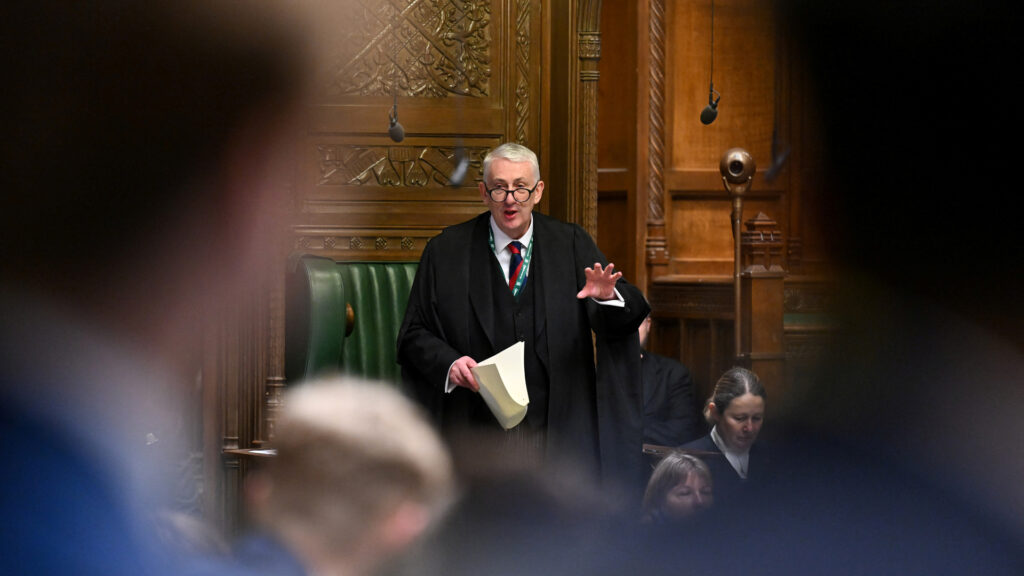
In a noteworthy revelation, British House of Commons Speaker Lindsay Hoyle disclosed that he informed the Metropolitan Police about Peter Mandelson ahead of his arrest. This statement has captured public and media attention, given Mandelson’s prominent role in British politics.
Peter Mandelson, a senior figure in the Labour Party and a former European Commissioner, has been at the center of various political controversies over the years. His arrest marks a significant development, and the involvement of the House of Commons Speaker adds an intriguing element to the unfolding story.
Lindsay Hoyle, who holds the prestigious position of Speaker of the British House of Commons, explained that he passed on intelligence or information regarding Mandelson that he deemed pertinent to law enforcement officials. This proactive move highlights the Speaker’s commitment to transparency and law enforcement cooperation, ensuring that justice processes are upheld within parliamentary affairs.
The Metropolitan Police’s action, based on Hoyle’s tip-off, suggests that information came from a credible and high-level source, which could have been instrumental in the investigation leading to Mandelson’s arrest. This connection sheds light on the procedural adherence to legal standards even when handling high-profile political figures.
Hoyle’s disclosure has prompted various reactions from political observers and the public. Some view it as an assertive step to uphold the rule of law, while others are debating the implications of such intervention by a parliamentary official in police matters.
Historically, the Speaker of the Commons maintains an impartial stance on political issues, focusing on the orderly conduct of parliamentary business. Hoyle’s involvement in this case reportedly underscores his dedication to ethical governance and the seriousness with which he treats allegations involving senior politicians.
The broader context of Mandelson’s arrest remains to be fully disclosed, but this development raises questions about the nature of the allegations and the extent of his involvement in any wrongdoing. As investigations continue, more details are anticipated to emerge from official sources.
Political analysts suggest that the Speaker’s role in this case could set a precedent for future interactions between parliamentary authorities and law enforcement agencies, particularly concerning breaches of the law committed by elected officials or government members.
Advocates for governmental transparency have praised Hoyle’s actions, emphasizing the necessity of accountability mechanisms to maintain public trust in democratic institutions. Conversely, some critics worry about potential overreach or politicization of police investigations tied to parliamentary figures.
Despite differing opinions, it is clear that the Speaker’s announcement has intensified scrutiny over Mandelson’s situation and highlighted the importance of procedural integrity in the British political system.
As the story develops, the public and media will be watching closely to understand the full ramifications of these events, along with any subsequent legal proceedings against Peter Mandelson.
This case serves as a reminder of the complex interplay between politics, law enforcement, and governance—especially in a democratic society where transparency and rule of law are paramount.
Further updates are expected as investigations progress and official comments are released, likely shaping the political discourse in the months ahead.
In conclusion, Commons Speaker Lindsay Hoyle’s disclosure about tipping off the police concerning Peter Mandelson’s conduct prior to his arrest marks a critical juncture in British political and legal affairs, underscoring the responsibilities and challenges faced by those in high public office.