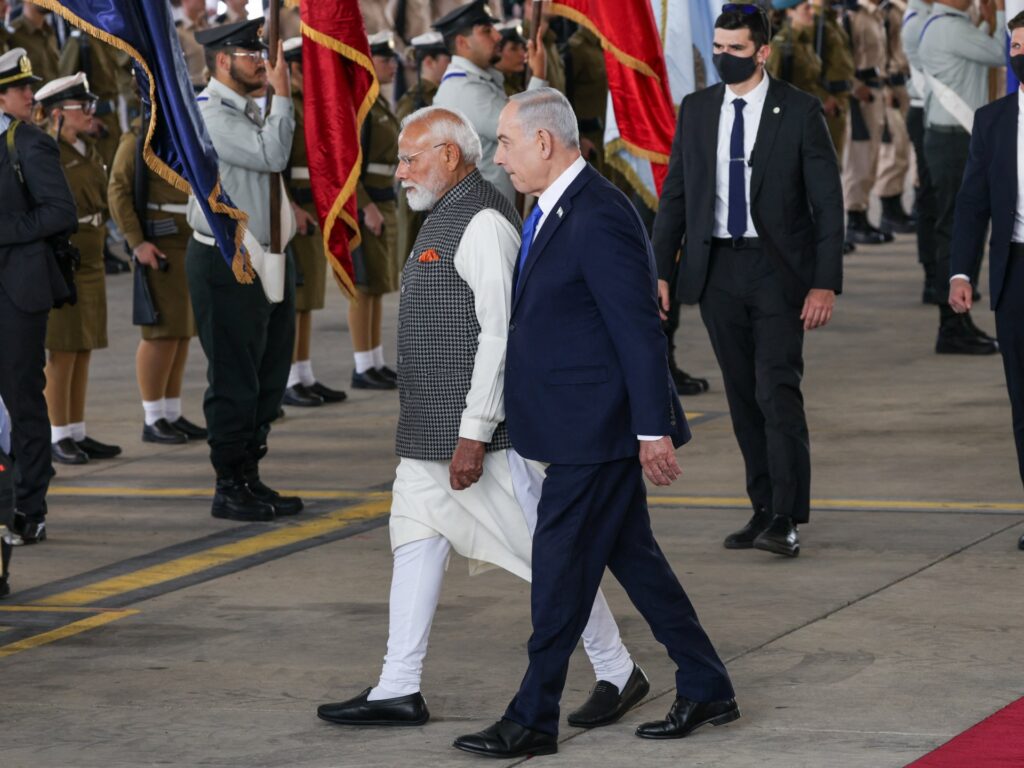
Indian Prime Minister Narendra Modi’s visit to Israel marks a significant development in the geopolitical landscape of South Asia and the Middle East. This high-profile trip underscores the deepening ties between New Delhi and Tel Aviv, a strategic embrace that could have profound implications for Pakistan’s security and diplomacy.
Historically, India and Israel have fostered a relationship based on shared strategic interests, particularly in defense, intelligence, and counter-terrorism. Modi’s visit not only cements this alliance but also signals a mutual commitment to expanding cooperation in technology, agriculture, water management, and cyber-security. This multidimensional partnership is poised to strengthen India’s regional and global positioning.
For Pakistan, this evolving Indo-Israeli nexus presents a complex challenge. Pakistan’s foreign policy has traditionally been aligned with the Palestinian cause and has maintained a cautious stance towards Israel. The burgeoning India-Israel relationship, therefore, disrupts the existing diplomatic equations that Pakistan has relied upon in the region.
Analysts suggest that the Modi visit is a clear indication of India’s intention to diversify its strategic partnerships, reducing its dependence on traditional allies and creating new buffers against perceived threats from Pakistan. The technology and intelligence-sharing dimensions of India-Israel relations could enhance India’s capability to counter terrorism, which Pakistan sees as a direct threat to its national security.
Moreover, Israel’s advanced defense technology, particularly in surveillance and missile systems, when integrated with India’s military apparatus, could shift the power dynamics in South Asia. Such advancements might compel Pakistan to reassess its defense strategies and international alliances.
The trip also carries symbolic weight, challenging Pakistan’s ability to navigate its regional diplomacy. Pakistan might find it increasingly difficult to balance its relationships with Middle Eastern countries and the Arab world, many of whom have been traditional supporters of Pakistan’s stance on Kashmir and its broader security concerns.
Furthermore, the shared concerns over radicalism and terrorism could foster a trilateral dialogue among India, Israel, and other regional powers, potentially isolating Pakistan diplomatically. This scenario enforces the need for Islamabad to adapt its foreign policy to the changing realities of regional geopolitics.
In conclusion, Narendra Modi’s visit to Israel is not merely a diplomatic engagement; it represents a strategic shift that could redefine security paradigms in South Asia. Pakistan’s security apparatus and diplomatic corps are on alert as they navigate a more interconnected and strategically complex neighborhood. How Pakistan responds to this evolving alliance will be critical in shaping the future stability and security dynamics of the region.