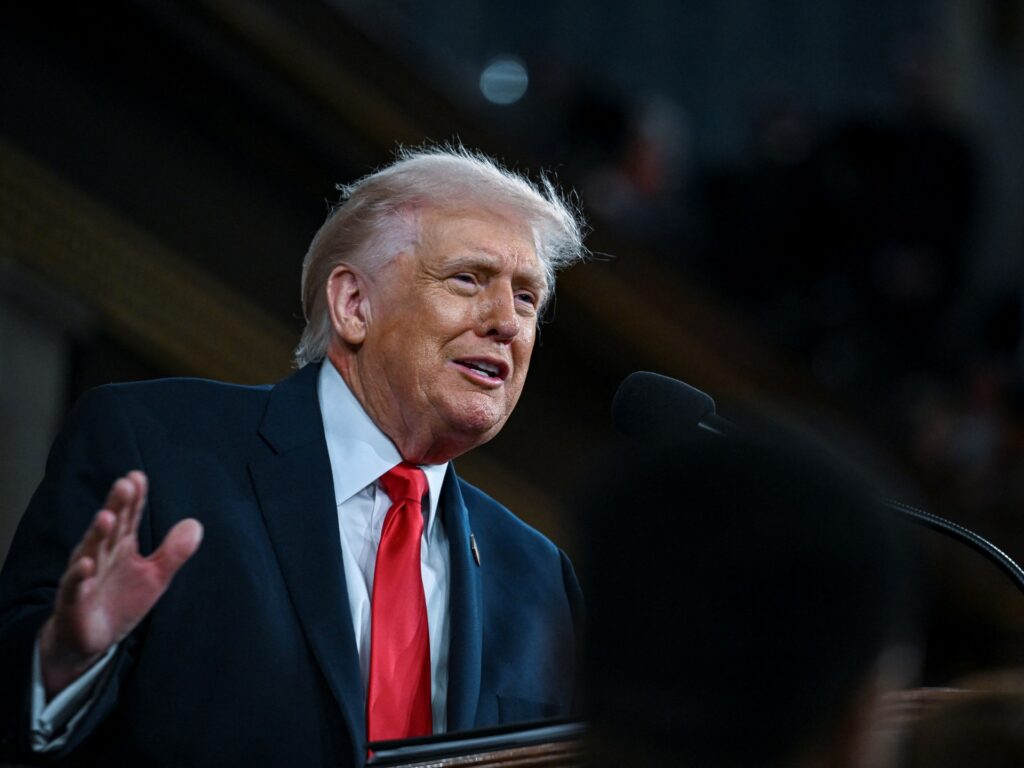
On the eve of the crucial midterm elections, President Donald Trump delivered his State of the Union address, aiming to rally support amid declining popularity. However, his speech contained several claims about the economy and immigration that warrant careful examination.
The President painted a rosy picture of the economy, highlighting job growth and economic expansion. While it is true that the unemployment rate has dropped to historically low levels and the GDP has shown steady growth, experts caution that some of these gains are unevenly distributed. Wage growth has been modest for many workers, and certain sectors continue to face significant challenges. Additionally, the economic optimism presented overlooks looming concerns such as rising national debt and trade tensions.
In terms of immigration, Trump emphasized his administration’s efforts to secure the border and reduce illegal entries. He asserted that illegal immigration has drastically decreased due to stronger enforcement policies and border wall construction. Fact-checkers note that while border apprehensions have fluctuated, the data does not fully support a clear, sustained decline solely attributed to these measures. Moreover, critics argue that the rhetoric around immigration often ignores the complex realities faced by migrants and the humanitarian issues involved.
The President also claimed credit for tax cuts and deregulation driving economic success, which is true to a significant extent. However, analysts point out that the benefits disproportionately favor corporations and the wealthy, raising questions about the overall impact on income inequality.
Overall, the address reflected the administration’s priorities and narrative but tended to exaggerate economic achievements and simplify complex immigration issues. As Americans head to the polls, voters should consider these nuances and critically assess the administration’s record beyond the optimistic speech.
The State of the Union address is a key moment for any presidency to communicate directly with the nation, but it is essential to seek balanced perspectives and verify facts to develop a comprehensive understanding of the country’s challenges and progress ahead of important democratic decisions.