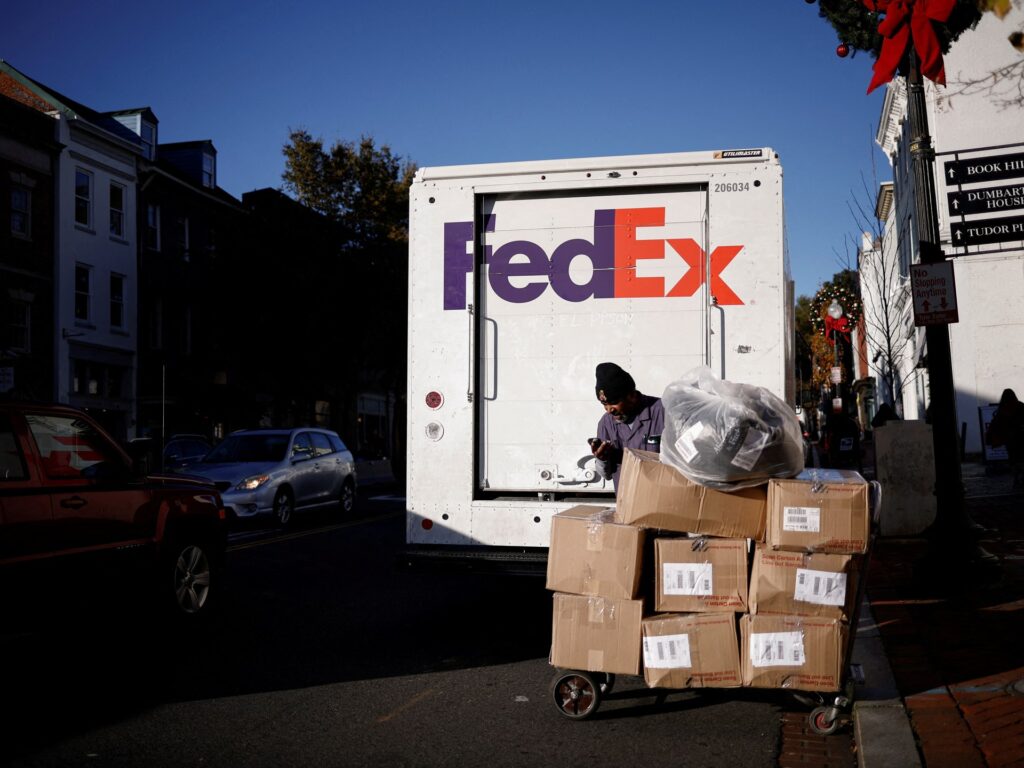
In a notable legal move, FedEx Corporation, the multinational logistics giant, has initiated a lawsuit against the United States government, seeking a refund for tariff fees previously imposed. This action comes in the wake of a recent ruling by the Supreme Court, which has significant implications for tariffs and the processes surrounding them.
FedEx’s legal challenge centers on the contention that the government improperly collected tariff fees that should be refunded under the new Supreme Court precedent. Although the highest court has ruled in a manner favorable to companies like FedEx, there remains no established procedure for how these refunds should be processed, leaving a gap between legal victory and practical implementation.
The tariffs in question have long been a contentious issue in international trade, affecting the cost and flow of goods across borders. FedEx, as a key player in global logistics, has been directly impacted by these duties, which affect both their operational costs and, ultimately, their service pricing.
By suing the government, FedEx hopes to clarify the refund mechanism and recover substantial amounts paid in tariffs. This lawsuit not only underscores the complexities of tariff legislation and its enforcement but also highlights the challenges businesses face when navigating evolving trade laws.
The Supreme Court’s decision has been hailed by some industry experts as a landmark ruling, potentially setting precedent for similar refund claims by other companies. However, without a clear refund process, affected businesses like FedEx find themselves in a legal and administrative limbo.
Legal analysts suggest that the case could prompt Congress and federal agencies to establish formal procedures for tariff refunds, providing a clearer path for companies seeking restitution. Until then, FedEx’s lawsuit serves as a critical test case that could influence future trade policy and administrative practices.
FedEx has maintained that the recovery of these tariff funds is not only a matter of financial restitution but also essential for fostering fair competition and ensuring compliance with legal standards. The outcome of this lawsuit could therefore have wide-reaching implications for the logistics industry and international commerce at large.
As the case unfolds, it will be closely watched by stakeholders across the trade and legal communities. FedEx’s assertive stance highlights the growing demand for transparency and accountability in tariff administration and the need for clear mechanisms to enforce Supreme Court decisions.
Ultimately, this lawsuit represents a pivotal moment in the intersection of law, trade, and corporate strategy. It emphasizes the ongoing tension between regulatory bodies and businesses striving to adapt to changing legal landscapes. With the tariff refund process still undefined, the resolution of FedEx’s suit could pave the way for significant reforms in how the United States handles tariff collections and refunds, impacting companies nationwide.