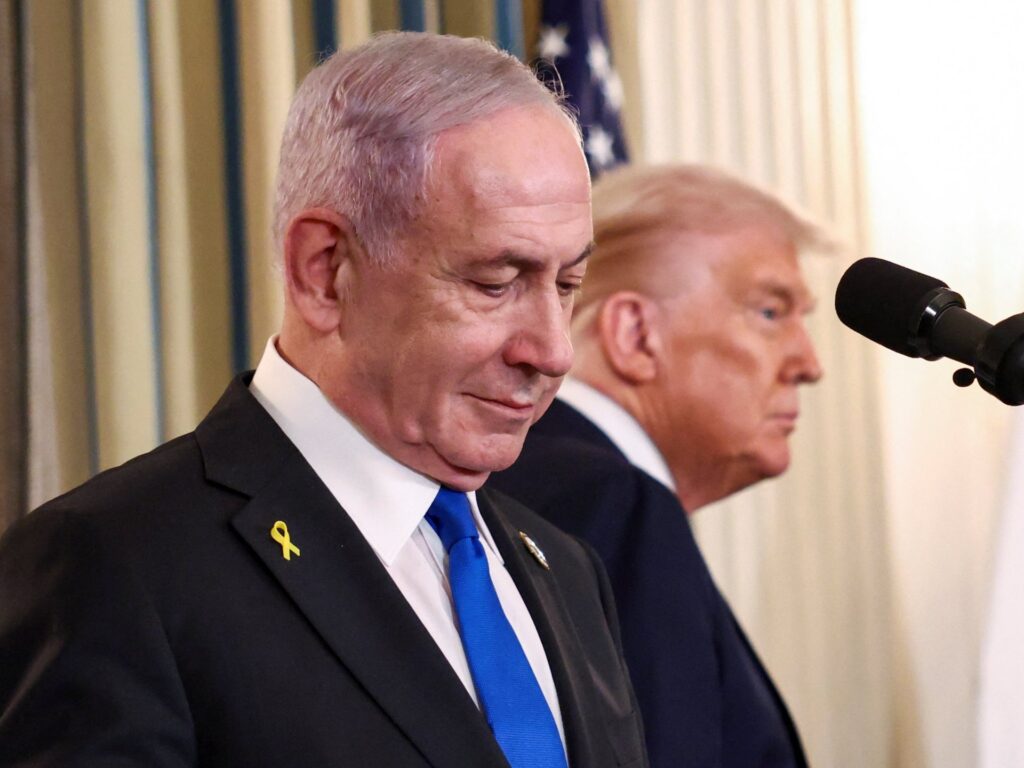
Israeli Prime Minister Benjamin Netanyahu has publicly called for the complete dismantling of Iran’s nuclear programme as a condition for any deal brokered by the United States. This announcement comes just ahead of the US government’s scheduled second round of nuclear negotiations with Iran in Geneva.
Netanyahu, a vocal critic of Iran’s nuclear ambitions, emphasized that Israel will not accept any agreement that leaves Iran’s nuclear capabilities intact or allows Tehran to retain the infrastructure necessary for developing nuclear weapons. He urged the international community to take a firm stance to ensure Iran does not become a nuclear-armed state.
The Prime Minister’s demands highlight Israel’s broader security concerns, reflecting its long-standing suspicion of Iran’s intentions in the region. Iran’s nuclear programme has been a focal point of global contention, with multiple countries fearing that Tehran aims to develop nuclear weapons under the guise of a civilian nuclear energy program.
The upcoming talks in Geneva mark the second round of negotiations between the United States and Iran since efforts to revive the 2015 nuclear agreement, formally known as the Joint Comprehensive Plan of Action (JCPOA), began. These discussions aim to find a path forward to limit Iran’s nuclear activities in exchange for lifting economic sanctions.
Israel has consistently opposed the JCPOA, arguing that it does not go far enough to prevent Iran from developing nuclear weapons in the long term. Israeli officials have expressed concern that the deal’s limitations on Iran’s nuclear programme are temporary and that sanctions relief would bolster Iran’s regional influence and military capabilities.
Netanyahu’s statement serves as a clear message to both Iran and the United States that Israel considers a robust agreement essential for regional stability. His call for a complete dismantling underscores Israeli fears that any leniency toward Iran’s nuclear infrastructure could lead to future threats.
The geopolitical stakes of these negotiations are high. While the US aims to prevent Iran from acquiring a nuclear weapon through diplomatic means, it must also balance the concerns of its Middle Eastern allies, particularly Israel, which views Iran as an existential threat.
Iran, for its part, has repeatedly insisted that its nuclear activities are peaceful and that it has the right to develop nuclear technology for energy purposes. However, the lack of transparency and previous breaches of international nuclear agreements have fueled global mistrust.
As the Geneva talks approach, the international community watches closely. Successful negotiations could halt Iran’s nuclear programme and ease regional tensions, but failure could lead to renewed sanctions and heightened conflict risks.
Netanyahu’s call for dismantling Iran’s nuclear programme adds pressure on the US delegation to adopt a hardline approach in the negotiations. It also reflects the larger global divide on how to handle Iran’s nuclear ambitions, a challenge that continues to shape diplomatic and security policies worldwide.