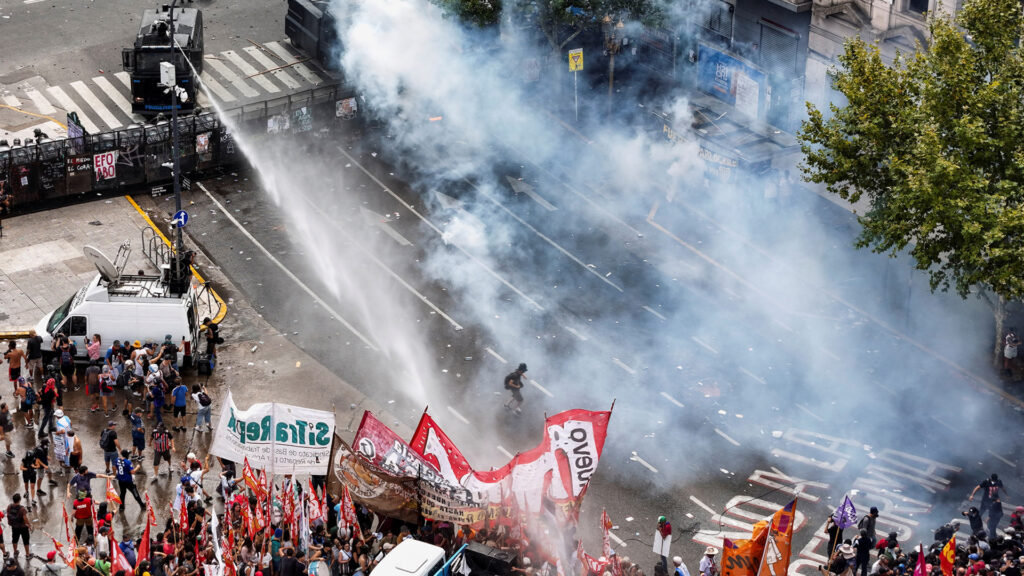
In Buenos Aires, Argentina’s capital, security forces recently confronted protesters with tear gas, rubber bullets, and water cannons. The demonstrators were opposing a proposed labour reform that has sparked widespread unrest across the city. The protests highlight significant tensions between the government and sections of the public who feel the reforms threaten workers’ rights.
Protests began following the announcement of the labour reform bill, which many argue could reduce job security and weaken labor protections. Large crowds gathered in central Buenos Aires to voice their dissent peacefully at first. However, the situation escalated when some protesters attempted to breach police lines.
In response, security forces deployed water cannons and tear gas to disperse the crowds, while rubber bullets were also reportedly used to control more aggressive elements. Several injuries were reported, and authorities called for calm, emphasizing the importance of maintaining public order.
The labour reform aims to modernize aspects of Argentina’s employment laws, which government officials argue are outdated and hinder economic growth. Supporters of the reform claim it will create more jobs and boost competitiveness. However, critics say it disproportionately favors employers and undermines workers’ rights.
This development is part of a broader pattern of social unrest in Argentina, reflecting deep economic challenges including inflation, unemployment, and public dissatisfaction with government policies. Unions and civil society groups have been particularly vocal, organizing strikes and marches to pressure the government to reconsider.
International observers have expressed concern about the use of force during these protests, calling for restraint and dialogue to resolve the conflict peacefully. The Argentine government has indicated a willingness to engage in discussions but maintains the necessity of the reforms for the country’s economic future.
The situation remains fluid, with the potential for further demonstrations or negotiations. Citizens and international bodies alike are watching closely as Argentina faces a pivotal moment in balancing economic reforms with social stability.
Ultimately, the events in Buenos Aires are a testament to the complex challenges governments face when attempting to implement significant policy changes amidst public opposition. The coming weeks will be critical in determining the direction Argentina takes on labor policies and public order.