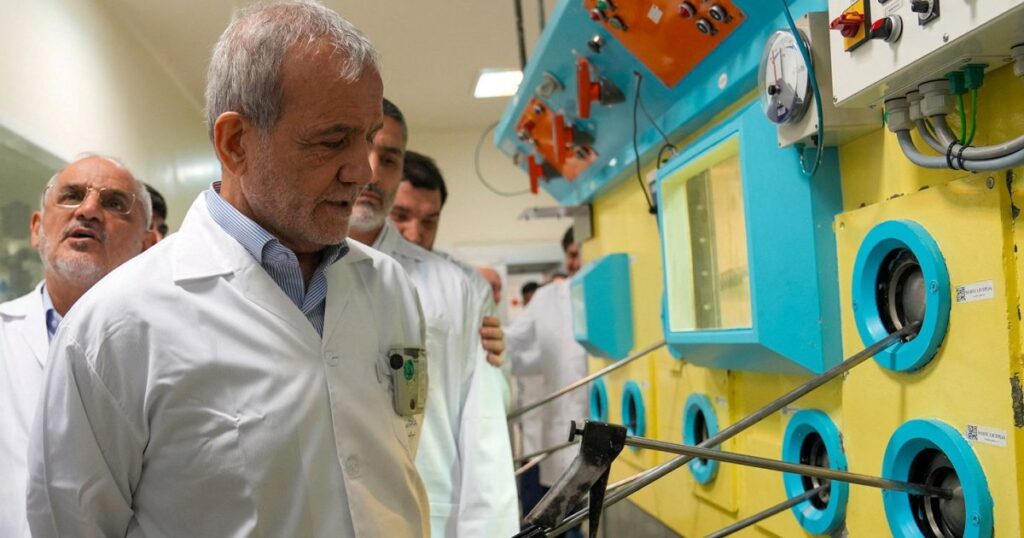
In a significant development in international nuclear diplomacy, Iran’s Atomic Energy Organization chief has indicated that the country could consider diluting its stockpile of highly enriched uranium (HEU) as a step towards achieving sanctions relief. This move is seen as a potential confidence-building measure amidst the complex and sensitive negotiations aimed at reviving the 2015 nuclear deal, also known as the Joint Comprehensive Plan of Action (JCPOA).
The statement comes as mediated talks between Iran and the United States are anticipated to resume shortly, with the involvement of European and possibly other international intermediaries seeking to bridge the diplomatic gap. Iran’s offer to dilute HEU, which is uranium processed to a high level of enrichment suitable for weapons use, suggests a willingness to make concessions that could alleviate global concerns over Tehran’s nuclear ambitions.
Highly enriched uranium is a critical material in the production of nuclear weapons, and reducing its concentration can significantly diminish its direct applicability for military purposes. By proposing to convert a portion of its HEU into lower enriched uranium, Iran aims to demonstrate its commitment to the non-proliferation of nuclear weapons, potentially easing the pathway for the lifting of stringent economic sanctions imposed by the US and other countries.
The backdrop to this proposal is the increasing economic pressure Iran faces due to sanctions, which have severely impacted its economy, international trade, and access to financial markets. Tehran regards sanctions as unjust and has repeatedly called for their removal, emphasizing its right to peaceful nuclear energy use.
Diplomats are cautiously optimistic about this development, seeing it as a constructive gesture that may restart momentum in the stalled negotiations. The dilution of enriched uranium could serve as a verifiable action, one that would be monitored by the International Atomic Energy Agency (IAEA) to ensure compliance and build international trust.
However, substantial challenges remain. The United States insists on robust guarantees that Iran’s nuclear program will be exclusively peaceful, while Iran demands reassurance against future unilateral sanctions and acknowledgment of its sovereign rights. The roadmap for these negotiations includes complex technical details, verification mechanisms, and timelines.
Regional players and global powers are attentive to the outcomes of these talks, as the Iran nuclear dossier has broad implications for Middle East security, global non-proliferation norms, and international relations. Success in this diplomatic endeavor could pave the way for broader cooperation and regional stability, while failure risks further escalation and hardening of positions.
In summary, Iran’s suggestion to dilute its highly enriched uranium stockpile marks an important potential concession in the ongoing dialogue over its nuclear program and sanctions relief. As mediated negotiations with the US loom, this development provides a beacon of hope for diplomatic resolution, contingent on sustained dialogue, verification, and mutual commitments to peaceful nuclear activity.