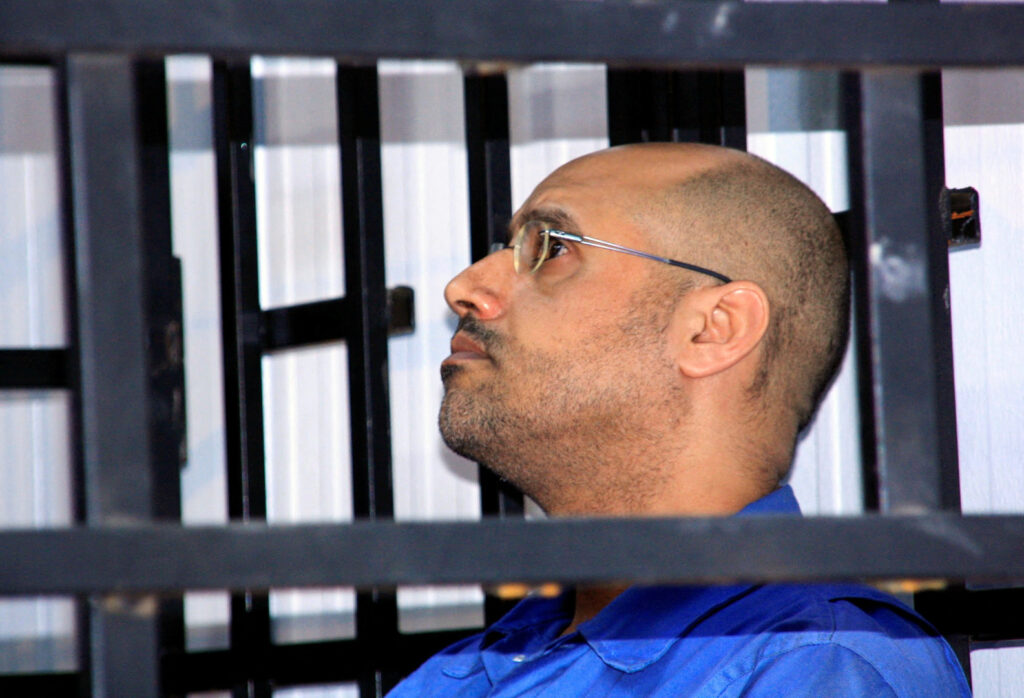
FILE PHOTO: Saif al-Islam Gaddafi, son of late Libyan leader Muammar Gaddafi, attends a hearing behind bars in a courtroom in Zintan May 25, 2014. REUTERS/Stringer/File Photo
In a significant development in Libya, Saif al-Islam Gaddafi, the son of the late Libyan leader Muammar Gaddafi, has been reported killed, according to Al Jazeera Arabic.
Saif al-Islam was a prominent figure in Libya, especially known for his role during and after the Gaddafi regime. As the second son of Muammar Gaddafi, he was groomed for leadership and was actively involved in the country’s political scene. His death marks a critical moment in Libyan history and has potential implications for the country’s ongoing political instability.
The exact circumstances surrounding his death remain unclear as of now. Reports have not specified whether he was killed in an armed conflict, an assassination, or another form of violence. Libya, a nation still grappling with internal divisions and strife since the fall of Muammar Gaddafi’s regime in 2011, has been fraught with conflict, shifting alliances, and multiple factions vying for power.
Saif al-Islam had been a controversial figure, seen by some as a potential reformer and by others as a symbol of the old regime’s oppression. After his father’s death, he sought to regain political influence, occasionally appearing in public and hinting at ambitions to participate in Libya’s fragmented political landscape.
His reported death could have significant repercussions in Libya’s fragile political environment. It may affect the balance of power among various factions and influence public sentiment in areas loyal to the Gaddafi family legacy.
International reactions are anticipated as the world watches closely how this event might impact Libya’s trajectory towards stability or further turmoil. Neighboring countries and global powers with interests in Libya will likely re-evaluate their strategies and diplomatic engagements.
This development also brings to focus the long and turbulent history of Libya since the Arab Spring uprisings, which led to the toppling of Muammar Gaddafi’s regime. The country has been stuck in a cycle of conflict and political fragmentation, with no clear resolution in sight.
Further updates are expected as more information becomes available, and the situation in Libya continues to evolve. The international community remains hopeful for a peaceful resolution to Libya’s ongoing challenges, but Saif al-Islam Gaddafi’s death undeniably marks a new chapter in this complex narrative.