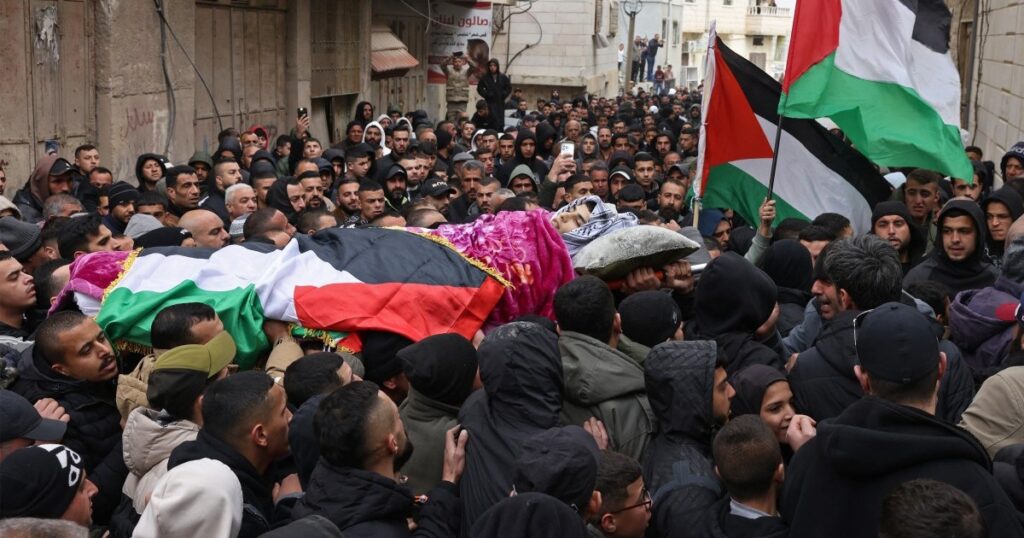
Israeli forces launched multiple raids in several towns across the occupied West Bank following the killing of a youth in the city of Hebron. The operations come amid heightened tensions as Israeli settlers stormed Joseph’s Tomb in the city of Nablus, a site considered by many to be the burial ground of the biblical figure Joseph, father of Jesus according to Christian tradition.
The killing of the youth in Hebron has escalated tensions in the region, prompting Israeli military action that targeted multiple towns in an effort to apprehend suspects and prevent further violence. The raids involved significant troop deployments and were reportedly aimed at disrupting militant activities considered a threat to Israeli security.
Simultaneously, reports emerged of Israeli settlers forcibly entering Joseph’s Tomb in Nablus. The site holds deep religious significance for Jewish, Christian, and Muslim communities, with some Israeli settlers asserting their right to visit and pray there despite Palestinian objections and concerns about security.
The storming of Joseph’s Tomb by settlers is seen as a provocative act by many Palestinians, contributing to an already volatile atmosphere in the West Bank. This has sparked protests and clashes with Palestinian residents and security forces, complicating efforts to restore calm.
The West Bank remains a focal point of conflict between Israelis and Palestinians, with frequent violent incidents and ongoing disputes over land, religious sites, and political sovereignty. The recent events underscore the fragile security situation and the difficulties in reaching a lasting peace agreement.
Israeli authorities defend the raids as necessary security measures, while Palestinian leaders condemn them as collective punishment and violations of international law. International observers have expressed concern about rising violence and urged all parties to exercise restraint.
This latest cycle of violence also highlights the sensitive nature of religious sites in the region, which are frequently flashpoints for conflict. The status and access to such sites often serve as catalysts for broader confrontations.
Human rights groups have called for investigations into the circumstances surrounding the killing of the Hebron youth and the conduct of Israeli forces during the raids. They emphasize the need for accountability and protection of civilian populations on both sides.
As night falls over the West Bank, the region remains on edge, with fears that the situation could further deteriorate. The international community continues to watch closely, hoping for de-escalation and renewed dialogue towards peace.
The complexity of the Israeli-Palestinian conflict is once again highlighted by these events, illustrating the enduring challenges of reconciling competing historical, religious, and political claims in one of the world’s most disputed territories.