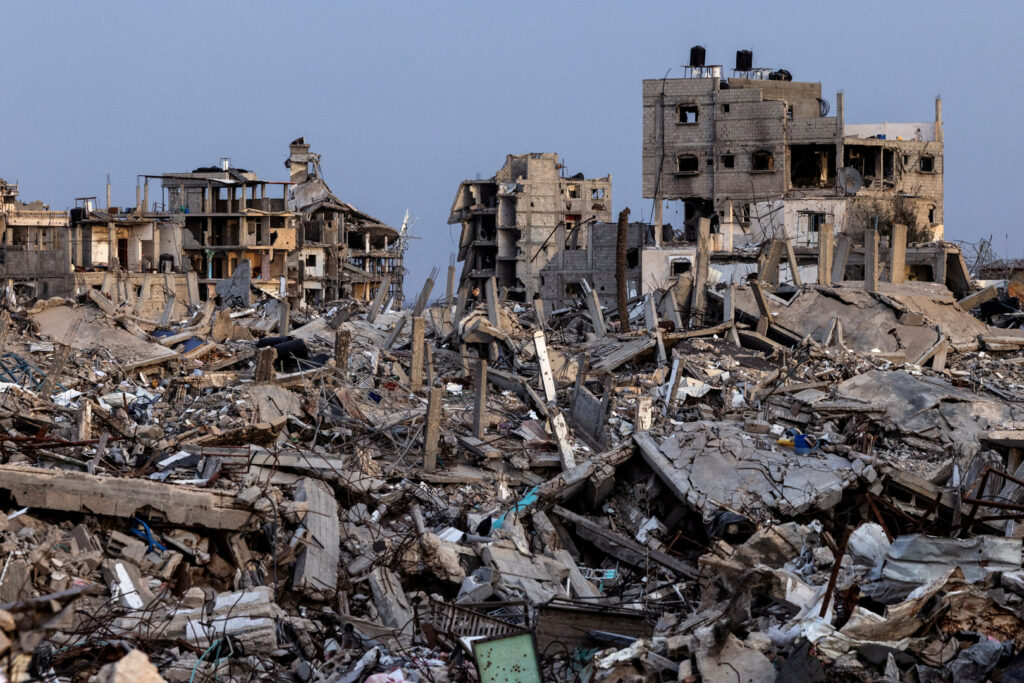
FILE PHOTO: Buildings lie in ruins amidst the rubble in Rafah in the southern Gaza Strip, December 8, 2025. REUTERS/Nir Elias REUTERS EDITOR'S NOTE: PHOTOGRAPHS WERE REVIEWED BY THE IDF AS PART OF THE CONDITIONS OF THE EMBED. NO PHOTOS WERE REMOVED TPX IMAGES OF THE DAY/File Photo
In a significant development amid ongoing challenges in the Gaza Strip, Israeli and US officials are collaborating to build Gaza’s first experimental community. This initiative aims to address some of the region’s most pressing humanitarian and infrastructural needs through innovative and collaborative efforts.
The proposal comes against a backdrop of the complex political, social, and economic conditions in Gaza, which have been exacerbated by repeated conflicts, blockades, and poverty. The new community project is envisioned to serve as a model for sustainable development and peace-building in the area.
Key aspects of the proposed community include:
1. **Experimental and Innovative Design:** The community will integrate new technologies and infrastructure solutions that are tailored to the unique needs and limitations of Gaza. This includes advanced water management systems, renewable energy sources, and resilient construction methods that can withstand local environmental challenges.
2. **Collaboration Between US and Israeli Officials:** This marks a rare instance of direct cooperation aimed at improving conditions in Gaza, demonstrating a shared interest in fostering stability and development in the region.
3. **Focus on Sustainability and Self-Sufficiency:** The project aims to create a community that can sustain itself economically and socially, reducing dependency on external aid and fostering local employment and governance.
4. **Humanitarian and Political Impact:** Beyond the physical infrastructure, the project intends to create a framework for increased dialogue and cooperation between different stakeholders, potentially easing tensions and setting a precedent for future initiatives.
5. **Challenges and Criticisms:** While the project has been welcomed by some as a positive step, it faces skepticism and criticism from various groups. Concerns include the political implications, the scale of the project relative to Gaza’s needs, and whether the experimental aspects can be effectively implemented in such a sensitive context.
The initiative is still in the planning stages, with officials working out the details and securing necessary approvals and funding. The international community is watching closely, as this project could either mark a new phase in Gaza’s reconstruction or underscore the persistent difficulties in transforming ideas into tangible change.
In summary, the US-proposed Gaza experimental community represents an ambitious and complex effort to rebuild and reimagine Gaza’s future through innovation, cooperation, and sustainability. While challenges remain, it opens a door to new possibilities for the region’s residents and offers a potentially replicable model for other areas facing similar hardships.