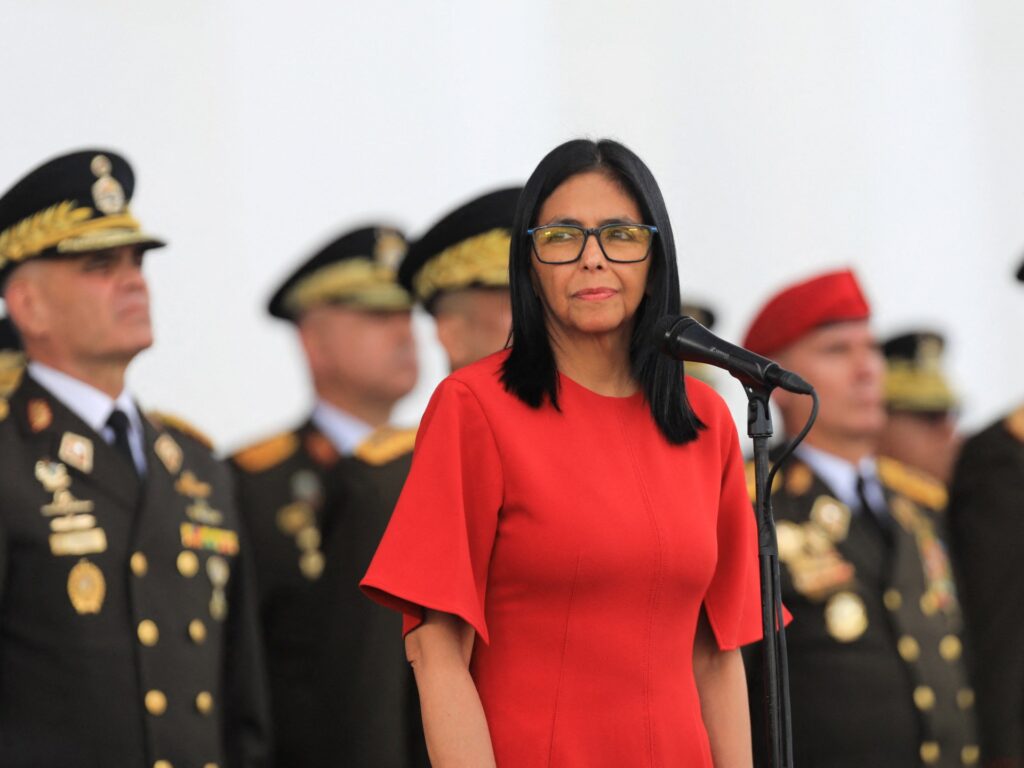
In a significant political development in Venezuela, the country’s police and military forces have publicly pledged their loyalty to Delcy Rodriguez, the interim president. This declaration comes amid ongoing political tensions and recent violent occurrences in Venezuela.
Delcy Rodriguez, who assumed the interim presidency amid a turbulent political landscape, has been striving to consolidate power and build support within the key institutions of the state, particularly among the police and military. The loyalty pledge from these security forces marks a major milestone in her administration’s efforts to stabilize governance and project authority.
This pledge of loyalty occurred just weeks following a controversial and deadly U.S. military operation aimed at abducting former President Nicolas Maduro. The operation resulted in dozens of casualties and triggered heightened security measures and political responses within the country. The repercussions of this event have intensified the political crisis and added complexity to the already fragile situation.
The support shown by Venezuela’s police and military signifies a crucial backing for Rodriguez, potentially strengthening her position against internal opposition and external pressures. It also highlights the ongoing struggle for control among Venezuelan leadership factions amid international scrutiny and sanctions.
Delcy Rodriguez has been active in diplomatic and domestic channels to secure recognition and legitimacy for her interim presidency. The loyalty pledge from the country’s security apparatus reinforces her authority and sends a clear message to both domestic adversaries and international observers about the consolidated support she commands.
The U.S. military operation that preceded this pledge was a high-risk maneuver conducted without broad international support and has been widely condemned by various global actors. It revealed the extent of foreign intervention attempts in Venezuelan affairs and underscored the volatility of the geopolitical environment surrounding the country.
Political analysts view this development as a potential turning point in Venezuela’s ongoing crisis, as it could deter further attempts by opposition factions to challenge Rodriguez’s leadership through force.
Experts caution, however, that while the police and military loyalty is a critical asset, the country remains deeply divided. The legitimacy of Rodriguez’s interim government is still contested by significant sectors within Venezuela and the international community.
The Venezuelan population continues to face immense hardships amid economic instability, shortages of essential goods, and human rights concerns. The pledge of loyalty by the police and military, while politically significant, does not immediately address these pressing socioeconomic issues.
International reactions to this development are mixed. Some countries have expressed support for Rodriguez’s leadership and the stability it may bring, while others remain skeptical, urging dialogue and peaceful resolution to the country’s crisis.
In the coming weeks, attention will focus on how this renewed institutional support for Delcy Rodriguez will translate into concrete governance outcomes and whether it will herald a period of relative calm or further deepen the political divisions within Venezuela.
The situation remains fluid, with many stakeholders watching closely the evolving power dynamics in a country where the interplay between governmental authority, military allegiance, and public sentiment continues to shape Venezuela’s future trajectory.