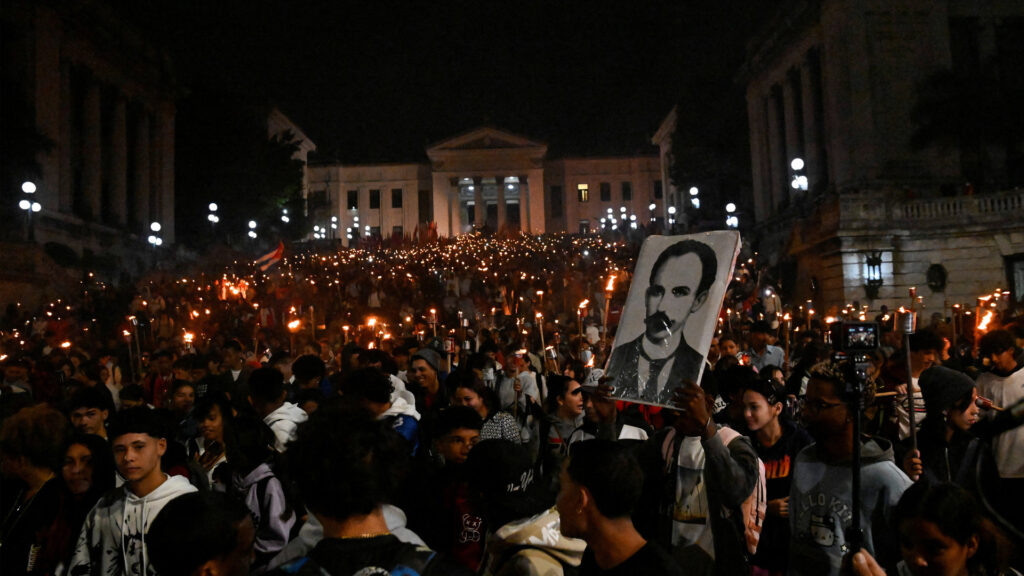
A significant rally was held to honor the legacy of Jose Marti, the revered Cuban national hero, as protesters gathered to demonstrate solidarity against the policies of US President Donald Trump. The event drew attention not only to Marti’s enduring influence in Cuba’s struggle for independence and national identity but also to contemporary political issues concerning US-Cuba relations.
Jose Marti, a prominent figure in Cuban history, symbolizes the spirit of resistance and the pursuit of freedom. His writings and activism in the late 19th century laid the groundwork for Cuba’s eventual independence from Spanish rule. Every year, Cubans and supporters globally commemorate Marti’s contributions as a source of national pride and a reminder of the ongoing challenges faced by the island nation.
During the rally, participants expressed a strong message of defiance against what they perceive as interference by then-US President Donald Trump in Cuban affairs. The protesters underscored their desire for Cuba’s sovereignty and self-determination, rejecting actions or rhetoric from the US that could undermine the nation’s autonomy.
The event included speeches, cultural performances, and the display of Cuban flags, all meant to reinforce unity and resistance. Many attendees noted that while honoring Marti’s legacy is important, it is equally crucial to address the current geopolitical tensions that threaten the progress Cuba has made.
Some protesters specifically disavowed any interference from the Trump administration, emphasizing their hope for a future where Cuba can engage with the international community on its own terms. This sentiment reflects broader concerns within Cuban society about the impact of US sanctions and policies that have historically affected the country’s economic and social landscape.
Experts and analysts have pointed out that the rally serves as both a tribute to a national hero and a platform for political expression. It highlights how historical memory and contemporary issues intersect in Cuba’s ongoing narrative.
The march and rally were peaceful, drawing attendees from various sectors including students, activists, artists, and local community members. Organizers highlighted the importance of continuing dialogues around sovereignty and solidarity among nations facing external pressures.
This event is part of a larger pattern of public demonstrations in Cuba that seek to assert national pride and political autonomy amid fluctuating international relations, particularly with the United States. It underscores the resilience of the Cuban people and their commitment to honoring their heritage while confronting present-day challenges.
In summary, the march to honor Jose Marti not only celebrated a pivotal figure in Cuban history but also served as a strong statement against perceived external interference, reflecting the complex dynamics of Cuba-US relations. The rally reinforced the collective hope for peace, dignity, and respect for Cuba’s independence and future development.