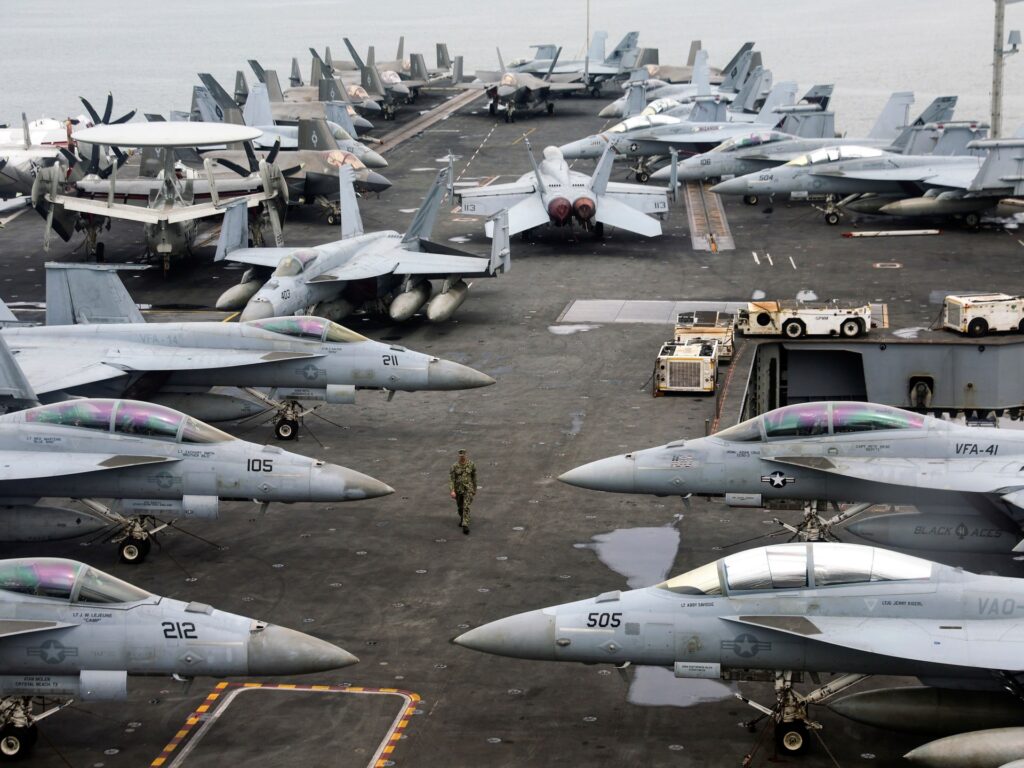
Amidst escalating tensions in the Middle East, the arrival of the USS Abraham Lincoln aircraft carrier has intensified the rhetoric between the United States and Iran. Tehran has issued a stern warning stating the carrier’s presence “is not going to affect Iran’s determination to defend the nation.”
The USS Abraham Lincoln’s deployment to the region is part of routine US military strategy, but it comes at a time of heightened geopolitical strain. The carrier strike group’s formation signals a substantial boost to American naval capabilities in the Middle East, underscoring the US commitment to security and power projection in an area fraught with conflict and strategic interests.
Iranian officials have responded forcefully to the US military buildup, reiterating their resolve to defend national sovereignty against any perceived aggression. Iranian state media has amplified these warnings, emphasizing that Tehran will not be intimidated or deterred by American military maneuvers.
The US Navy describes the USS Abraham Lincoln’s journey as a demonstration of readiness to respond swiftly to emerging threats and to maintain open sea lanes in the region. The carrier’s presence aims to reassure US allies and partners worried about regional stability amid threats tied to Iran’s nuclear program and its influence across neighboring countries.
Analysts note that the timing of the carrier’s arrival may correlate with Washington’s efforts to exert pressure on Iran regarding nuclear negotiations and regional policies. Meanwhile, Tehran’s defiant stance underscores the complexity of diplomatic and military interactions between the two nations.
Additional military assets have been reported to join the carrier group, highlighting the scale of the US military’s commitment to the Middle East. This includes destroyers, cruisers, and support vessels that enhance the operational capabilities of the Abraham Lincoln.
The international community watches closely as the US and Iran continue exchanging warnings and rhetoric. The risk of miscalculation or unintended incidents remains a concern for many diplomatic observers.
Historically, the Strait of Hormuz has been a flashpoint for US-Iran tensions, given its strategic importance for global oil shipments. The presence of the USS Abraham Lincoln in proximate waters serves both as a deterrent and a potential flashpoint, depending on developments.
In response to the carrier’s arrival, Iranian military commanders have claimed readiness to counter any threats and have conducted recent missile tests as a demonstration of military capability.
Experts argue the situation underscores a broader contest for influence in the Middle East, where the US seeks to counter Iran’s regional ambitions while maintaining alliances with Gulf states and Israel.
The rhetoric surrounding the USS Abraham Lincoln’s deployment is intensifying, with both sides signaling that they are prepared for a sustained confrontation if necessary. However, diplomatic channels remain open, with ongoing discussions seeking to reduce the risk of escalation.
As the situation evolves, the international community continues to call for restraint, urging both the US and Iran to prioritize diplomacy over confrontation and to avoid actions that could inadvertently escalate tensions into conflict.
The arrival of the USS Abraham Lincoln aircraft carrier in the Middle East thus symbolizes a critical juncture in US-Iran relations, reflecting deep-seated geopolitical challenges and the ongoing struggle for dominance in one of the world’s most volatile regions.