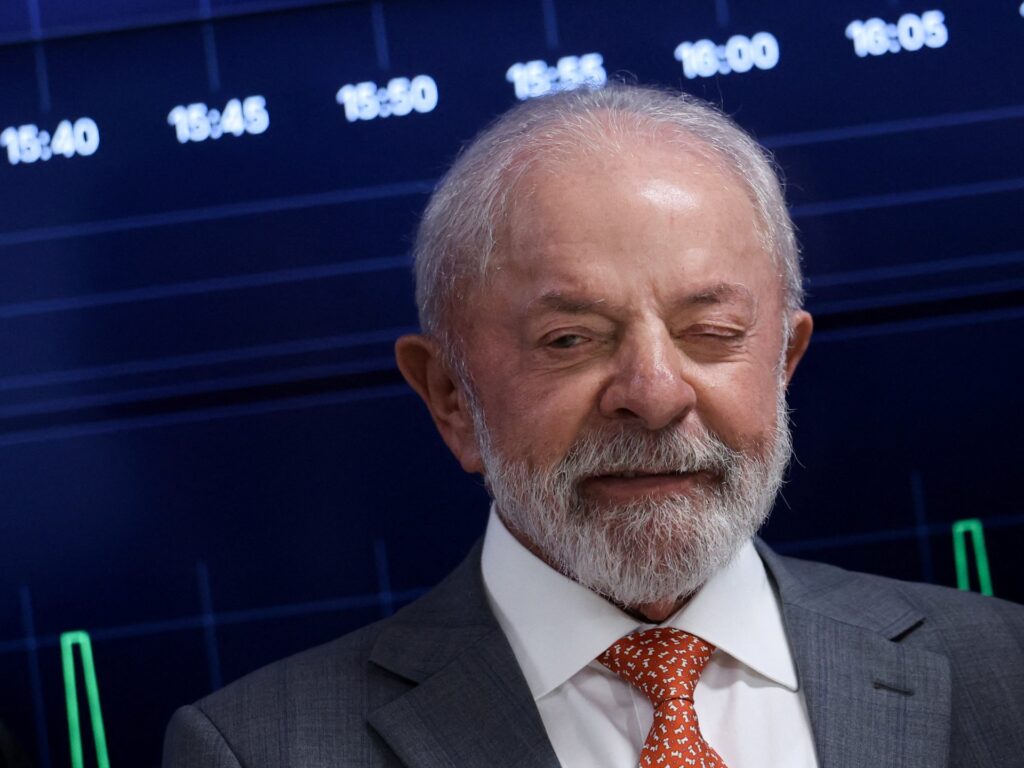
In a significant development on the international diplomatic front, Brazil’s President Luiz Inácio Lula da Silva (Lula) and former U.S. President Donald Trump have engaged in talks about forming a ‘Board of Peace.’ This initiative signals a potential collaborative effort between Brazil and the United States aimed at enhancing peace and stability in a region grappling with political and social unrest.
During their discussions, Lula and Trump agreed on the importance of convening a meeting in Washington, D.C., underscoring a mutual interest in deeper dialogue and cooperation. The forthcoming meeting is seen as a strategic opportunity to address various pressing issues affecting Latin America and beyond.
Lula explicitly criticized certain U.S. actions concerning Venezuela, focusing particularly on the United States’ stance towards Venezuelan President Nicolás Maduro. According to Lula, attempts to capture or remove Maduro are viewed as unacceptable and threatening to regional stability. He emphasized that such moves exacerbate tensions rather than contribute to peaceful resolutions in the region.
The Brazilian leader’s critique reflects a broader concern within Latin American countries about external interference and its impact on sovereignty and stability. Lula’s remarks align with his administration’s approach to fostering dialogue and peaceful coexistence among nations rather than endorsing aggressive interventions.
The proposed ‘Board of Peace’ could provide a structured platform for dialogue not just between Brazil and the United States but also among other regional players. It aims to facilitate collaborative discussions on critical challenges such as political conflicts, migration, economic disparities, and humanitarian issues.
Trump’s involvement in the talks indicates a continuing influence in international affairs despite no longer holding office. His engagement with Lula might signal a potential shift or reinforcement in U.S. policy approaches toward Latin America, especially given the changing dynamics in the region.
The decision to meet in Washington is symbolically important. The U.S. capital is a central hub for international diplomacy, and hosting the meeting there could reinforce the United States’ role in fostering peace and cooperation in the Americas.
Both leaders are expected to explore pathways to de-escalate tensions in Venezuela, a country that has been at the center of geopolitical contestation for years. The humanitarian crisis, political instability, and economic difficulties in Venezuela have ramifications that extend across borders, impacting neighboring countries and the broader region.
The dialogue between Lula and Trump may also touch upon other areas of shared interest, such as trade relations, security cooperation, and addressing transnational crime. These issues are critical to the stability and growth of Latin American nations and require multifaceted approaches involving multiple stakeholders.
Looking forward, the success of the ‘Board of Peace’ depends on the willingness of participating countries to prioritize diplomacy over confrontation. Maintaining peace in the region hinges on respectful engagement, recognition of sovereignty, and collaborative problem-solving.
In summary, the discussions between Brazil’s President Lula and former U.S. President Trump mark a noteworthy attempt to foster peace and stability through multilateral dialogue and cooperation. Their agreement to meet in Washington to further these talks highlights an important step in addressing the complex challenges facing Latin America, with a particular focus on Venezuela’s situation and regional security dynamics.