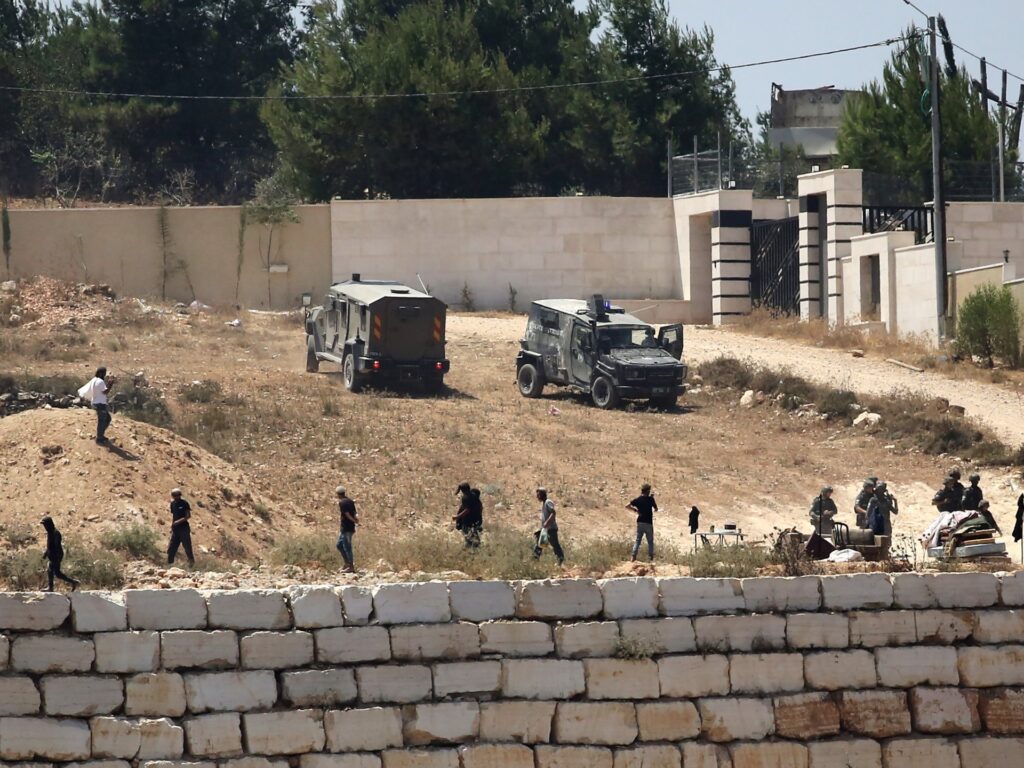
The United States has called on Israeli Prime Minister Benjamin Netanyahu to publicly condemn the violence perpetrated by settlers in the Palestinian village of Qusra. Mike Huckabee, the US Ambassador to Israel, labeled the settlers involved in the ongoing siege as “Israeli terrorists,” highlighting the escalating tensions in the region.
Qusra, a village located in the West Bank, has been under siege by extremist settlers for over a week, resulting in heightened security concerns and international alarm. The settlers’ actions have included barricading roads, harassment of local residents, and destructive behavior targeting the village’s infrastructure and property.
This violent campaign has been characterized by residents as an attempt to intimidate and displace Palestinians from their homes. The situation in Qusra reflects broader issues of settler violence in contested territories, which has been a persistent source of conflict between Israelis and Palestinians.
Ambassador Huckabee’s strong terminology underscored the US government’s growing frustration with the Israeli government’s handling of settler violence. By calling the settlers “Israeli terrorists,” Huckabee emphasized the severity with which the US views these incidents and the urgent need for Israeli authorities to act decisively.
Netanyahu’s response to this call remains closely watched. Critics argue that government inaction or tacit support for the settlers’ actions contributes to the persistence of such violent outbreaks, undermining peace efforts and exacerbating animosities.
The situation in Qusra is part of a larger pattern of settler violence in the West Bank, which various international organizations have condemned. Such violence often leads to clashes between settlers and Palestinian villagers and complicates the prospects for a peaceful resolution to the Israeli-Palestinian conflict.
International observers have also expressed concern about the implications of these events for regional stability. The US, a key ally of Israel, continues to advocate for measures that promote security, respect for human rights, and negotiations toward a two-state solution.
In response to the siege, local Palestinian communities have called for increased international attention and intervention to prevent further escalation. Human rights groups have documented numerous cases of violence and property damage attributed to settlers in Qusra and other similar villages.
The Israeli government faces mounting pressure to enforce laws against settler violence and ensure the safety of Palestinian residents. Failure to address these issues risks further alienating moderate voices within Israeli society and diminishing Israel’s standing internationally.
Ambassador Huckabee’s remarks serve as a stark reminder of the international community’s expectations regarding accountability and peaceful coexistence. As the siege of Qusra enters its second week, all parties involved are urged to seek de-escalation and open dialogue.
The ongoing violence highlights the urgent need for renewed efforts toward peace and stability in the region. Both Israeli and Palestinian leadership are called upon to act responsibly to prevent further suffering and to work toward a future free of violence and fear.
The US government’s public condemnation of settler violence signals a shift in diplomatic posture, aiming to hold all actors accountable and support a just resolution to the conflict. It also reflects broader concerns about extremism and its impact on long-standing peace prospects.
Observers will be monitoring the situation in Qusra closely, as developments could influence regional dynamics and international diplomatic strategies. The coming weeks are critical for determining whether diplomacy or violence will shape the next chapter in Israeli-Palestinian relations.