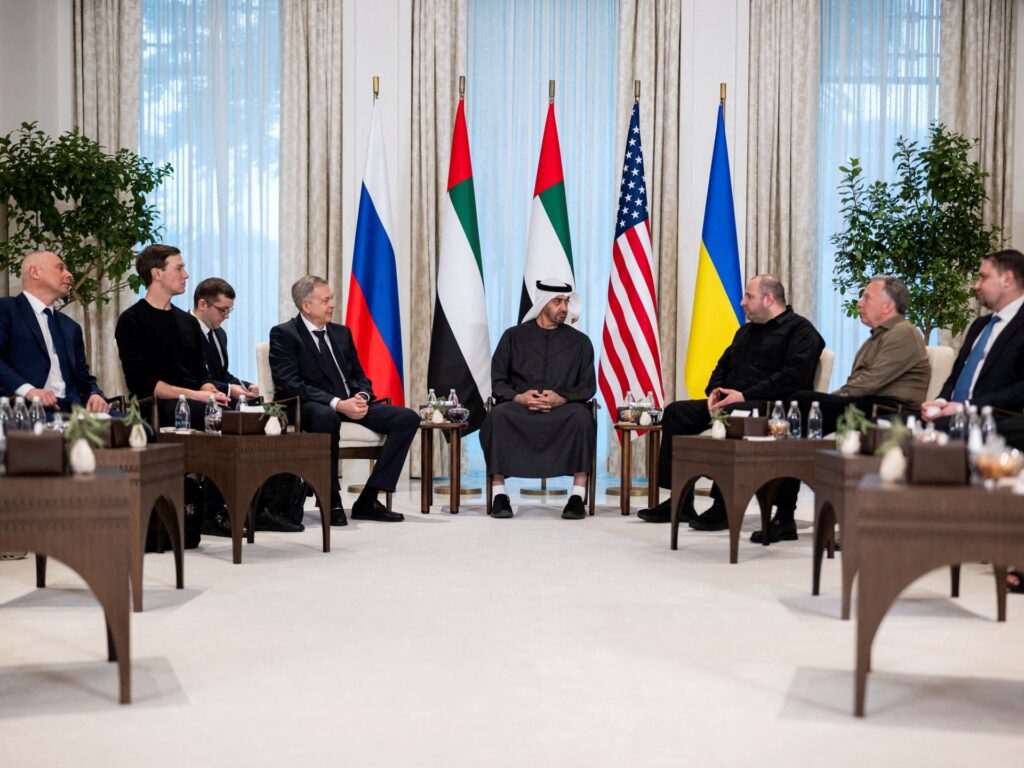
The first day of the trilateral talks on the Russia-Ukraine war has concluded in Abu Dhabi, marking a significant diplomatic effort to address the ongoing conflict. These talks involve officials from Ukraine, Russia, and the United States, who have come together in the United Arab Emirates to discuss potential pathways for resolution and de-escalation. Ukrainian President Volodymyr Zelenskyy highlighted the importance of the trilateral meetings and noted that they are a crucial platform for dialogue among the involved nations.
The meetings represent a rare and pivotal moment where direct communication is taking place among the key stakeholders in the conflict. While the discussions are preliminary, they present an opportunity for negotiation, confidence-building, and potentially opening new channels for peace talks. The choice of Abu Dhabi as the venue underscores the UAE’s role as a neutral facilitator and its increasing involvement in international diplomatic efforts.
Throughout the day, delegates from Ukraine and Russia, with the mediation and participation of the United States, exchanged perspectives on the conflict, security concerns, and humanitarian issues. Although full details of the talks remain confidential, initial reports suggest a focus on de-escalation mechanisms, ceasefire agreements, and the protection of civilian populations affected by the war.
The trilateral format is significant because it directly involves representatives from the opposing sides along with a crucial third party, the US, which has been actively involved in supporting Ukraine and managing international response to the war. This setting may enhance transparency and facilitate pragmatic solutions grounded in the realities on the ground.
President Zelenskyy expressed cautious optimism about the talks, emphasizing the need for continued dialogue and constructive engagement to bring about a peaceful resolution. He also welcomed the UAE’s role in hosting the meetings, appreciating their contribution to fostering an environment conducive to diplomatic progress.
As the talks progress, international observers and stakeholders are watching closely, hopeful that this diplomatic engagement might pave the way for further negotiations and ultimately a reduction in hostilities. The ongoing conflict has had severe humanitarian and geopolitical ramifications, making any progress in such talks critically important.
The second day of the trilateral meetings is scheduled to continue discussions on key issues and explore potential compromises that could help bridge differences. While challenges remain, the initiation of these discussions in Abu Dhabi signals a positive step toward dialogue and conflict resolution in one of the most persistent conflicts of recent times.