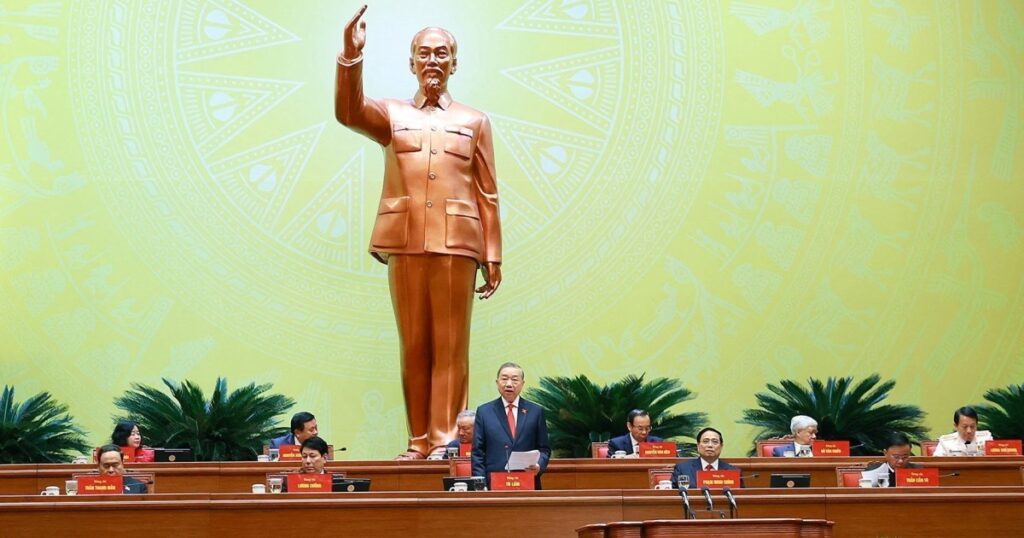
Vietnam’s political landscape has witnessed a significant reaffirmation of leadership as To Lam secures a second term, extending his position at the helm of the country’s Communist Party for an additional five years. This development underscores the continuity of leadership and a commitment to ongoing reforms within Vietnam’s evolving political and economic framework.
To Lam’s re-election marks a critical moment for Vietnam, as he continues to steer the Communist Party through a dynamic period characterized by both challenges and opportunities. His leadership is seen as pivotal in maintaining political stability while pushing forward a reform agenda aimed at accelerating economic growth and modernization.
During his first term, To Lam emphasized the importance of comprehensive reforms that would open Vietnam’s economy further to global markets, enhance private sector engagement, and improve government efficiency and transparency. These reforms were designed to sustain the country’s rapid economic development and improve living standards for its population.
The second term presents an opportunity for To Lam to build upon these initiatives, ensuring that Vietnam remains competitive on the international stage. Under his leadership, the Communist Party is expected to continue prioritizing policies that foster innovation, attract foreign investment, and strengthen key industries.
Vietnam has seen impressive economic growth over the last decade, with significant advancements in manufacturing, technology, and exports. However, challenges such as income inequality, environmental sustainability, and geopolitical tensions remain on the agenda. To Lam’s extended tenure is seen as a signal of steadfast governance aimed at addressing these complex issues through calculated reform strategies.
Observers note that To Lam’s ability to navigate internal Party dynamics and external pressures will be crucial in shaping Vietnam’s trajectory. His leadership style, combining pragmatic policymaking with adherence to the Party’s core principles, has garnered support from various factions within the government.
The global community has also taken note of Vietnam’s reform pledges, which could open doors for enhanced international cooperation and trade relations. As the country moves forward, To Lam’s role in aligning Vietnam’s domestic policies with global economic trends will be central to its success.
In summary, To Lam’s victory in securing a second term as leader of Vietnam’s Communist Party marks a continuation of established leadership committed to rapid economic reform and political stability. With five more years at the top, his administration aims to solidify Vietnam’s development path, ensuring prosperity and growth for its citizens in a rapidly changing world.