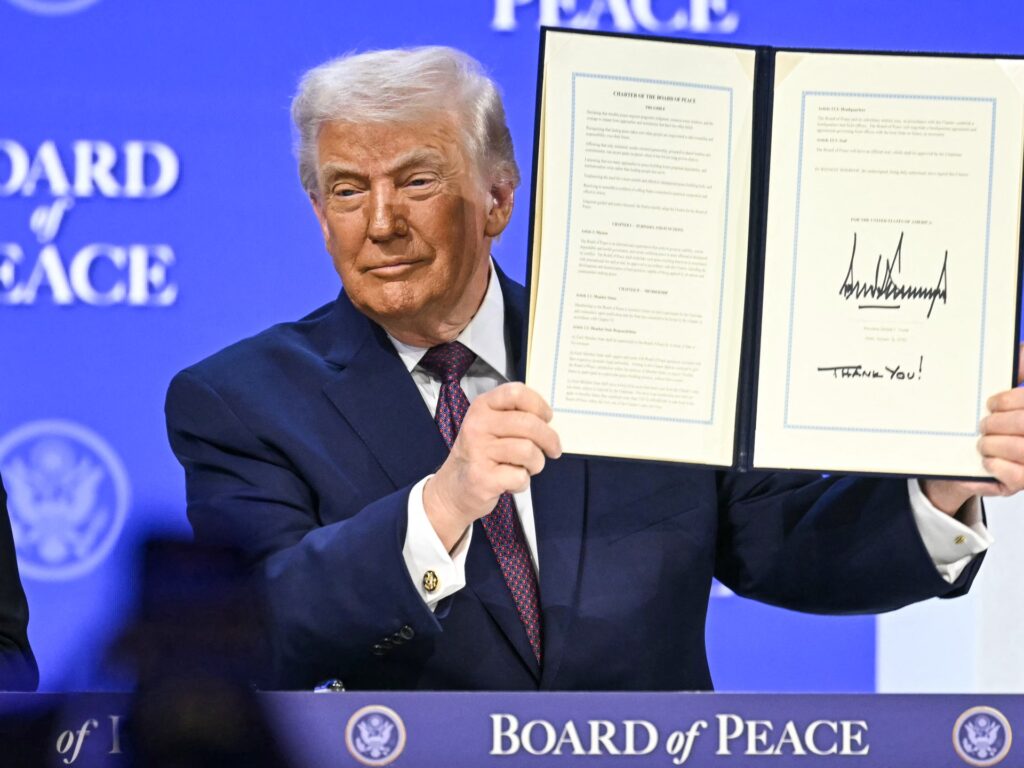
On a significant day at the World Economic Forum in Davos, former U.S. President Donald Trump inaugurated the ‘Board of Peace’ through a formal signing ceremony. This initiative, initially conceived as a board to aid in the reconstruction of Gaza following a devastating period of conflict and humanitarian crisis described by some as a genocide, has now evolved into an ambitious global conflict resolution organization.
The launch event drew international attention with key figures in politics, diplomacy, and various global organizations present to witness this new chapter in Trump’s post-presidency initiatives. The Board of Peace aims to leverage expertise and resources to address not only the rebuilding efforts in Gaza but also to serve as a platform seeking peaceful solutions to conflicts worldwide.
Originally focused on providing comprehensive support to Gaza, the Board has expanded its mandate to include various regions suffering from conflict, with a vision to promote peace through collaboration, strategic intervention, and development.
Trump emphasized the board’s purpose during the ceremony, stating, “Peace is not just the absence of conflict but the presence of justice and thriving communities. We must come together globally to rebuild and secure a better future for all.”
The ceremony included the signing of foundational documents outlining the board’s objectives, governance structure, and initial programs. These programs will involve partnerships with local governments, international NGOs, and global leaders who support peace-building and reconstruction.
Critics and supporters alike have expressed diverse opinions regarding the Board of Peace. Some see it as a hopeful step towards repairing war-torn societies and fostering dialogue between conflicting parties. Others remain cautious, highlighting the complex geopolitical challenges and the need for impartiality and transparency in its operations.
Despite differing views, the launch signifies an important international effort to address the aftermath of severe conflicts and prevent future escalations. The Board’s focus on Gaza symbolizes recognition of the critical humanitarian needs there, while its global outlook indicates an understanding that peace in one region often depends on broader international cooperation.
This initiative comes at a time when many parts of the world are grappling with ongoing conflict, displacement, and reconstruction needs. The Board of Peace could potentially serve as a model for similar efforts, uniting diverse stakeholders under a common mission of peace and development.
Observers will be closely watching the Board’s activities in the coming months to assess its impact and effectiveness. The involvement of prominent figures and the backing of international organizations may provide the momentum required for meaningful progress.
As the world looks towards solutions to some of its most intractable conflicts, the launch of Trump’s Board of Peace at Davos introduces a new player dedicated to the delicate work of rebuilding lives and fostering lasting peace. The success of this board will depend on sustained commitment, resources, and the willingness of nations and communities to collaborate in the spirit of peace and reconciliation.