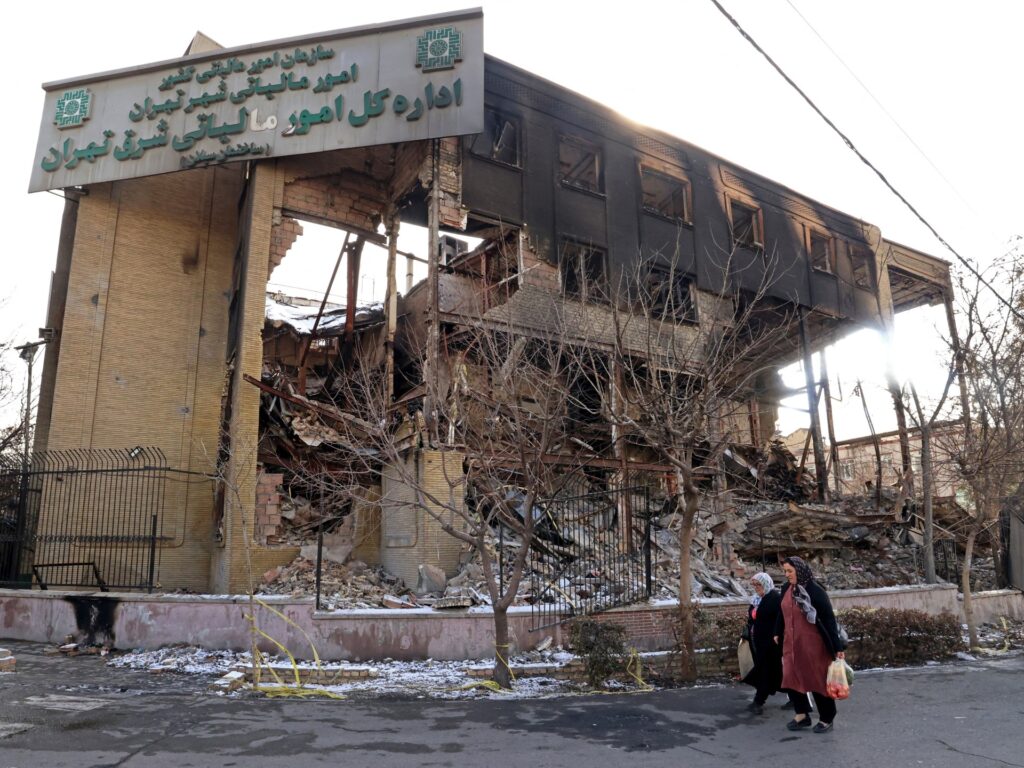
According to a recent report from Iranian state media, the death toll during the ongoing protests in Iran has reached at least 3,117 individuals. The Martyrs Foundation, an organization within Iran that tracks those who have died for political and social causes, stated that among the deceased were 2,427 civilians and members of the security forces.
The protests, which have been occurring across multiple cities, began as demonstrations against specific grievances but rapidly expanded, drawing widespread participation from various sectors of Iranian society.
The state’s acknowledgment of such a high number of casualties marks one of the deadliest episodes in recent Iranian political unrest. The Martyrs Foundation’s report included detailed categorizations of the victims, signifying an attempt to document the human cost of the ongoing conflict between protesters and government authorities.
Many of those killed were reportedly innocent civilians caught in violent clashes or facing harsh reprisals during demonstrations. Security personnel losses indicate the scale and intensity of confrontations.
Local and international human rights organizations have expressed grave concerns about the scale of violence in the protests, calling for restraint and dialogue to resolve underlying societal issues.
The Iranian government’s response to the protests has included crackdowns leading to significant casualties, curfews, and internet blackouts intended to curb communication among protestors.
This loss of life underscores the tragic consequences of prolonged political tensions in Iran, highlighting the urgent need for negotiations and peaceful solutions.
As of now, the situation remains volatile, with ongoing protests and a heavy security presence in key urban areas. The international community continues to watch closely, urging for protection of human rights and peaceful resolution to the crisis.
This development adds to the complex narrative of Iran’s socio-political landscape and calls for a reassessment of dialogue approaches to address the concerns fueling public dissent.