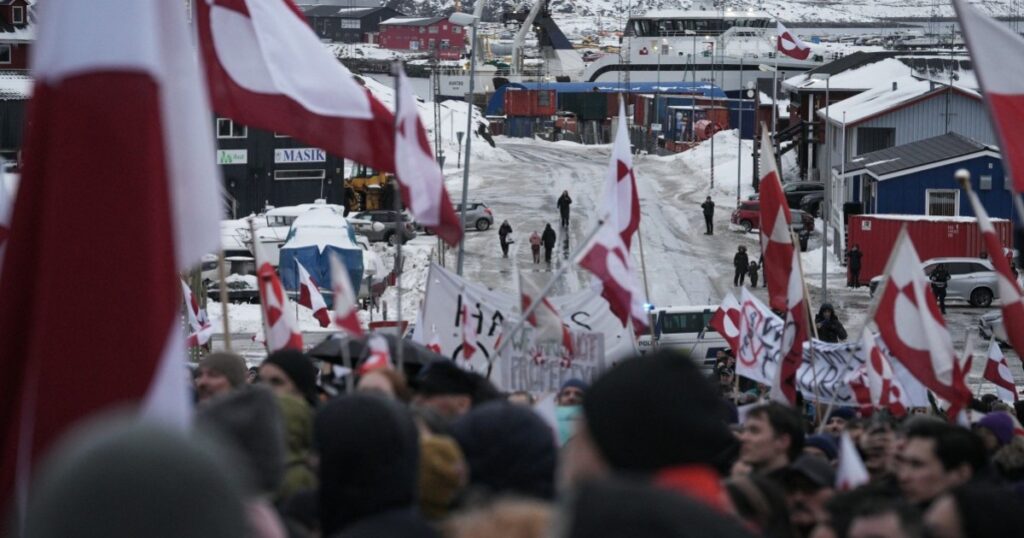
European leaders have strongly criticized former U.S. President Donald Trump’s tariff threats concerning Greenland, emphasizing their unity in defending their sovereignty and economic interests. This recent dispute escalated tensions between the United States and various European countries, particularly Denmark, which administers Greenland as an autonomous territory.
Trump’s administration had proposed imposing new tariffs on European goods, partly in response to deals involving Greenland’s resources and strategic importance in the Arctic region. These tariff threats came amid broader discussions regarding Greenland’s role in global geopolitics, including its mineral wealth and geopolitical location vital for defense and trade.
European officials responded collectively, highlighting that such unilateral tariff threats undermine international cooperation and the rules-based trading system established under the World Trade Organization (WTO). They stated that Europe remains committed to upholding its sovereignty and will contest any protectionist measures that affect their economic stability and relations.
Denmark, as the sovereign state responsible for Greenland, reaffirmed its control over the island’s affairs and condemned any external attempts to interfere without consultation. Greenland’s government also expressed concerns about the negative impact these threats could have on the island’s economic development and foreign relations.
Many analysts interpret Trump’s moves as part of a broader strategy to assert American interests more aggressively in the Arctic, a region becoming increasingly significant due to climate change opening new shipping routes and access to untapped resources.
The European Union also conveyed its unified stance, promoting dialogue and diplomatic engagement over punitive tariffs or coercive tactics. EU trade representatives emphasized that collaboration, rather than confrontation, will better serve the shared security and economic interests of the transatlantic partners.
This episode underscores ongoing complexities in global trade relations, where geopolitical ambitions intersect with economic policies. It serves as a reminder of the fragile balance between national sovereignty and the interconnectedness that defines modern international affairs.
As discussions continue, European countries vow to maintain solidarity and pursue legal and diplomatic avenues to safeguard their rights and regional stability. The situation reflects broader concerns about rising protectionism and the need for constructive multilateralism in addressing emerging global challenges.
In conclusion, the clash over Greenland illustrates the tensions inherent in managing territorial sovereignty, economic interests, and geopolitical strategy amid evolving international dynamics. European leaders remain resolved to defend their territories and interests against external pressures while advocating for peaceful cooperation and mutual respect among nations.