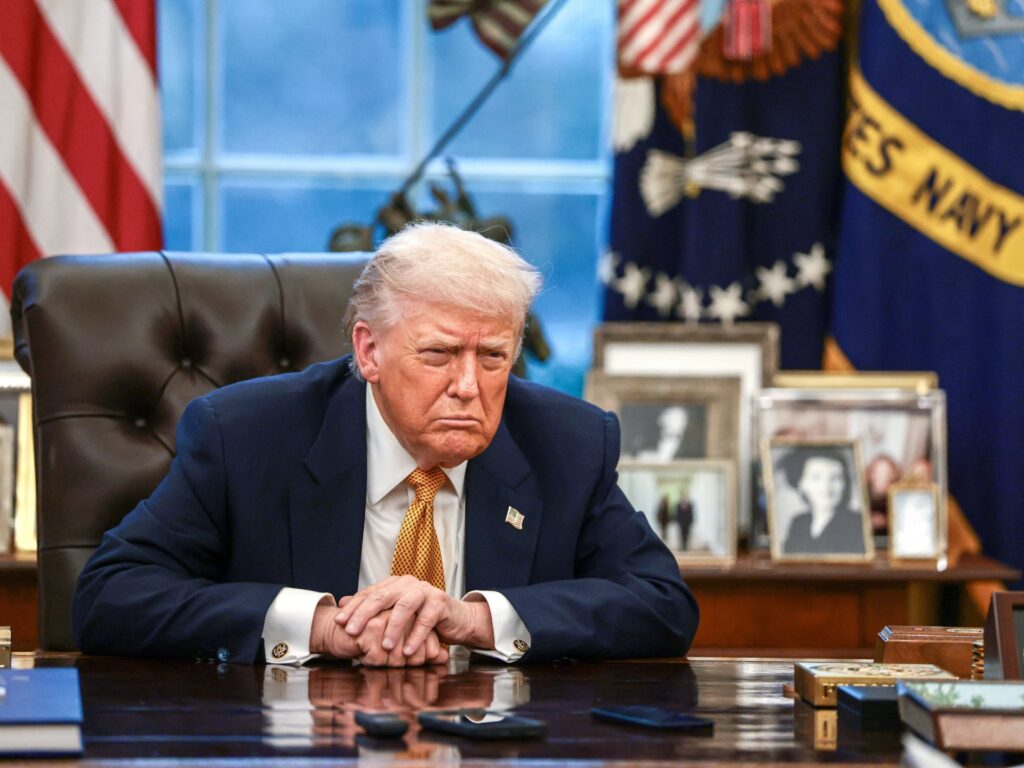
In a bold move that has sent ripples through the international community, US President Donald Trump has announced plans to impose tariffs on eight European countries. This decision stems from their opposition to US ambitions concerning Greenland, a semi-autonomous Danish territory known for its strategic and economic significance.
Greenland, rich in natural resources and holding a crucial geographical position in the Arctic, has long been a point of interest for global powers. President Trump’s administration sought to increase US influence and control in the region, aiming to leverage Greenland’s potential for military and economic advantages. However, this bid has met resistance from European nations allied with Denmark.
The US president stated that the tariffs are a direct response to what he described as “uncooperative behavior” by these European allies. The list includes some of the most prominent countries within the European Union, signaling a dramatic shift in US-European relations.
This development signifies a tough stance by the Trump administration against what it perceives as obstruction to American strategic interests. The tariffs aim not only to pressure governments but also to safeguard US claims and investments.
Such economic measures could exacerbate tensions between the US and Europe, potentially impacting trade, diplomacy, and broader geopolitical stability. Critics argue that the tariffs may hurt international cooperation, especially among NATO allies, while proponents see it as a necessary step to protect US sovereignty and economic interests.
Political analysts warn that the implications extend beyond immediate economic consequences. The dispute over Greenland, while regional, touches on broader themes of control over emerging Arctic routes, natural resources, and territorial sovereignty in the age of climate change.
Greenland’s unique status as a semi-autonomous region under Danish sovereignty adds complexity. Denmark’s position and its relationships with both the US and Europe will be critical in navigating this dispute.
As the situation unfolds, all eyes are on diplomatic channels seeking to resolve tensions without escalating conflicts. The tariffs, if implemented, could mark a significant chapter in transatlantic relations, highlighting the challenges of balancing national interests with international alliances.
In sum, President Trump’s announcement underscores a pivotal moment in global politics, where economic power and geopolitical strategy intertwine amidst the contested landscapes of the Arctic. The outcome remains uncertain, with potential ramifications for trade, security, and international diplomacy for years to come.