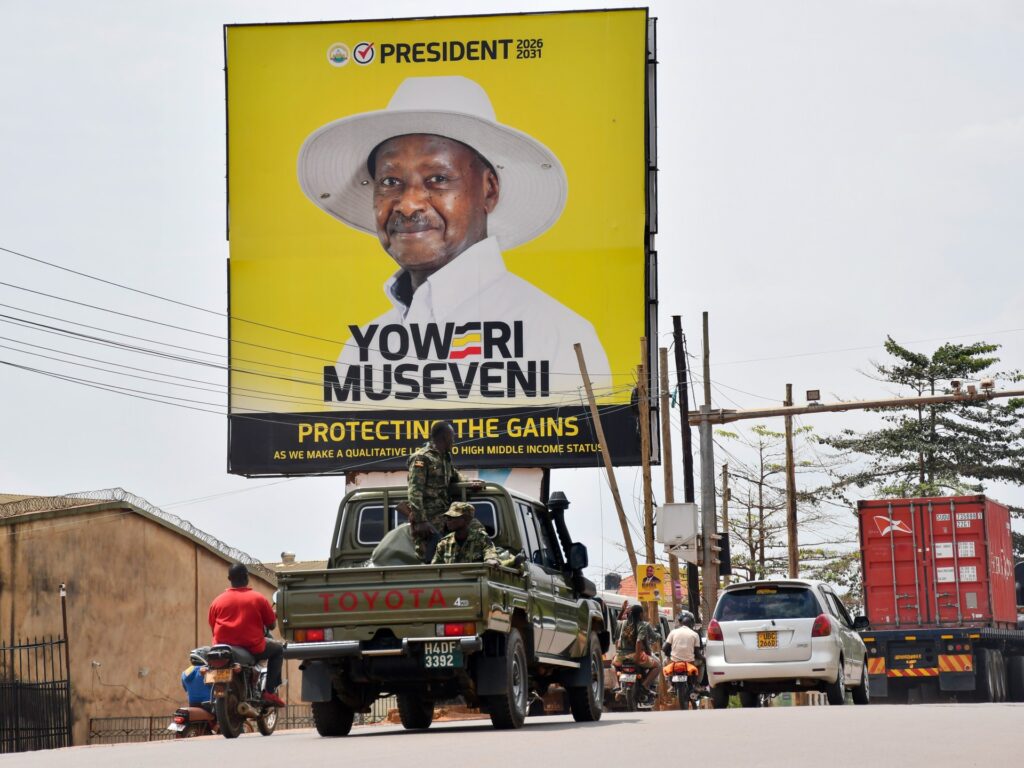
Uganda’s President Yoweri Museveni has secured a seventh term in office after winning 71.65% of the vote, according to the country’s Electoral Commission. At the age of 81, Museveni extends his long-standing rule, which has spanned nearly four decades since he first came to power in 1986.
The election has been described as contentious, with significant challenges and controversies surrounding the campaign period. Opposition parties and international observers noted instances of intimidation and restrictions on campaign activities, raising questions about the fairness of the electoral process.
Despite these tensions, the official results declared Museveni the winner, signaling continued dominance of the political landscape by the veteran leader. His ruling National Resistance Movement (NRM) has maintained a firm grip on Uganda’s governance and institutions.
Museveni’s victory cements his status as one of Africa’s longest-serving leaders, a fact that has both supporters and critics. Supporters argue that his experience provides stability and continuity, while critics voice concerns over democratic backsliding and suppression of dissent.
During the campaign, Museveni emphasized economic development achievements, infrastructural projects, and security improvements under his government. However, opposition candidates focused on issues such as governance reforms, corruption, unemployment, and human rights abuses.
The main opposition candidate garnered less than 30% of the votes, reflecting the challenges faced by opposition groups in mounting an effective challenge to the incumbent government. Many international observers have called for electoral reforms to promote transparency and inclusivity in future elections.
This seventh term win continues a trend of extended presidencies in several African countries, raising debates about term limits, democratic principles, and political stability in the region.
As Uganda moves forward, the country faces critical challenges including economic recovery post-pandemic, addressing poverty and inequality, and navigating regional security issues. Museveni’s administration will be under close scrutiny to deliver on promises and uphold democratic governance standards.
The international community has urged peaceful political dialogue and respect for human rights in the aftermath of the elections. It remains to be seen how Museveni’s government will engage with opposition groups and citizens seeking greater political freedoms and reforms.
In summary, Yoweri Museveni’s victory ushers in another era of his presidency amidst a politically charged environment. The outcome underscores continuing debates about leadership longevity and democratic health in Uganda and the wider African continent.