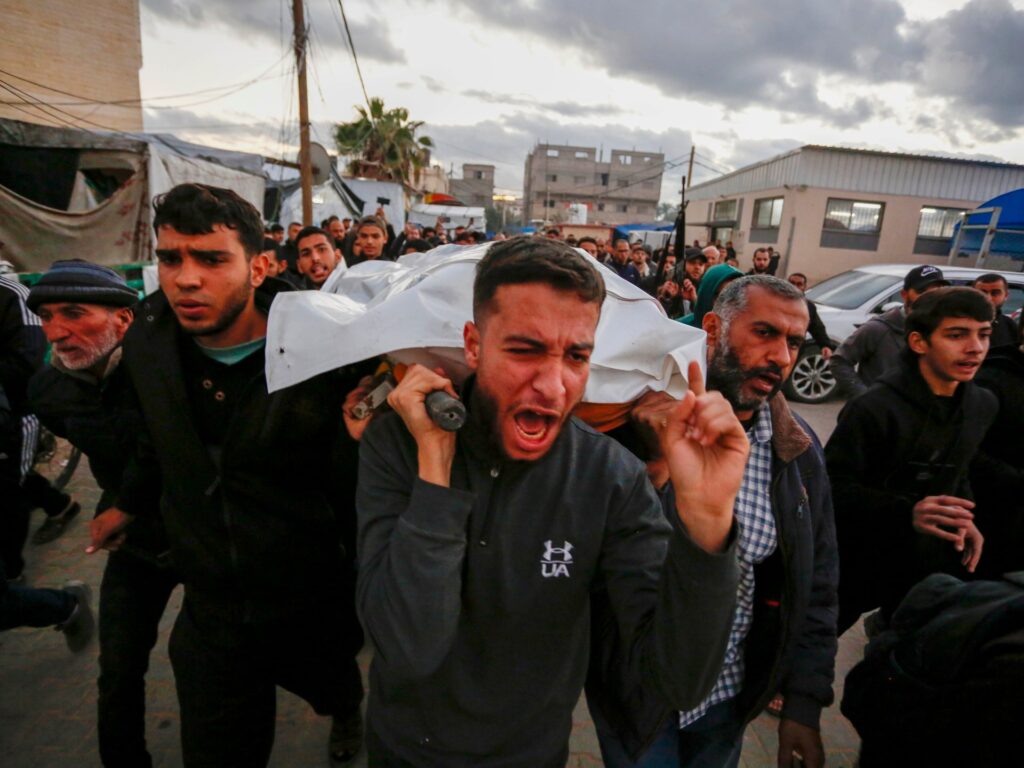
In a recent escalation of violence, Israeli forces have carried out multiple attacks across the Gaza Strip, resulting in the deaths of 10 individuals. The strikes included targeted hits on family homes in Deir el-Balah, a city in the central Gaza Strip known for its dense population and vulnerable civilian areas. The attacks have drawn international concern as the humanitarian situation in the region remains precarious.
These events come as the United States has declared the launch of phase two of a ceasefire deal aimed at mitigating the ongoing conflict between Israel and Palestinian factions in Gaza. The ceasefire initiative seeks to reduce hostilities and create conditions conducive to longer-term peace negotiations. However, the recent Israeli military actions have raised questions about the feasibility and immediate impact of the new phase of the ceasefire.
The Gaza Strip, which has been a focal point of the Israeli-Palestinian conflict for decades, continues to suffer from repeated bouts of violence that deeply affect civilians. Reports from the ground indicate that the recent airstrikes and military engagements have primarily targeted residential areas, further exacerbating the humanitarian crisis. Families have been displaced, and critical infrastructure has been damaged, complicating aid efforts.
The international community has expressed alarm at the loss of civilian lives and the escalating violence. Human rights organizations have called for restraint from all parties to prevent further casualties and to uphold international humanitarian law. The United Nations has reiterated its stance on the importance of protecting civilians and ensuring access to humanitarian assistance in conflict zones.
The United States’ involvement in declaring phase two of the ceasefire underlines its ongoing diplomatic efforts to stabilize the region. This phase focuses on enforcing the terms of the ceasefire agreement and monitoring compliance from both sides through international observers. Despite these efforts, the recent incidents suggest significant challenges remain in achieving durable peace.
Local authorities in Gaza have condemned the Israeli attacks, urging the global community to take stronger action to stop what they describe as disproportionate use of force. Meanwhile, Israel maintains that its military operations are necessary measures to target militant groups and prevent attacks on its territory.
The situation remains fluid, with the potential for further escalation if diplomatic initiatives falter. Analysts warn that without sustained international engagement and a genuine commitment from all parties to de-escalate tensions, the cycle of violence is likely to continue.
As phase two of the ceasefire unfolds, the focus will be on whether both sides can adhere to the agreement and work towards a comprehensive peace process. The coming days and weeks will be crucial in determining the trajectory of this conflict and the possibility of lasting peace in a region long plagued by turmoil.