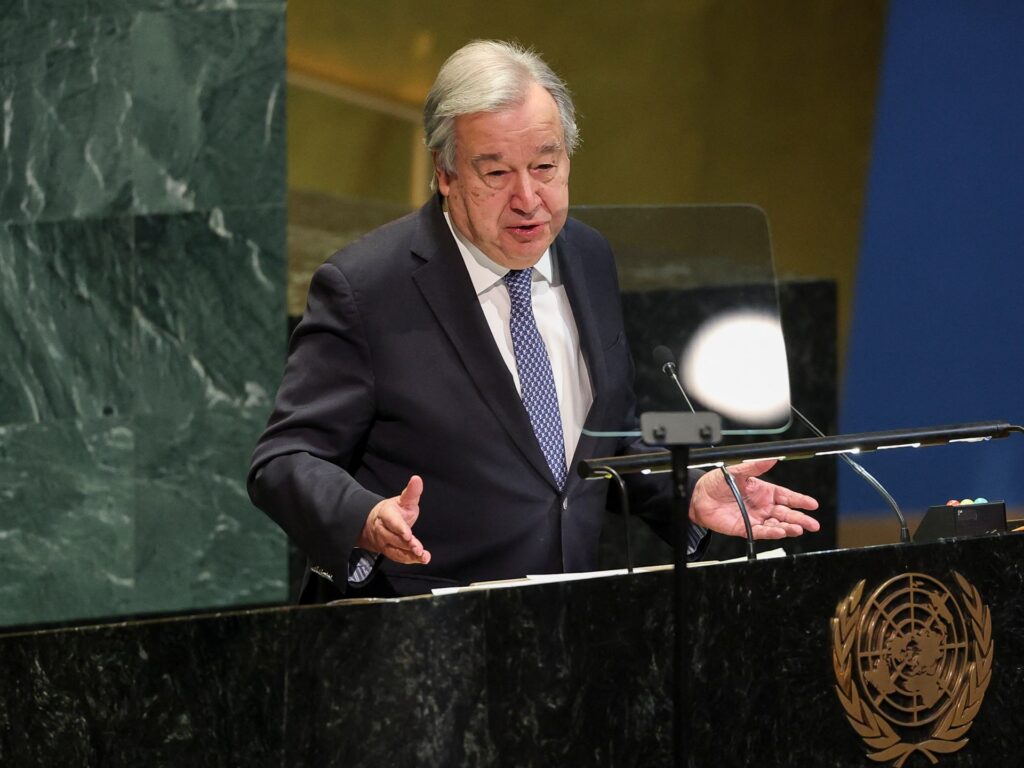
In his final annual address as the Secretary-General of the United Nations, Antonio Guterres delivered a powerful critique of world leaders, highlighting a concerning lack of cooperation on global issues. The speech, which resonated with urgency and disappointment, underscored the critical challenges the international community faces amid growing geopolitical tensions and financial constraints.
Guterres’ remarks appeared to be a direct response to recent actions by influential countries, particularly pointing towards the United States. The US had recently made the controversial decision to reduce its financial contributions to the United Nations, a move that sparked significant concern about the organization’s viability and effectiveness.
“Adapt or die,” Guterres urged, signaling a stark warning to member states that the UN must evolve or risk becoming irrelevant in a changing world. He stressed the indispensable role of the United Nations in fostering peace, security, and cooperation, yet acknowledged that without adequate support and unified action from its member nations, these goals are at risk.
The Secretary-General highlighted the consequences of diminished cooperation, including weakened responses to humanitarian crises, climate change, and conflicts that transcend national borders. His address called for renewed commitment to multilateralism and a reinvigorated partnership among countries to tackle these global challenges collectively.
Throughout his tenure, Guterres has been a stalwart advocate for collaboration and the strengthening of international institutions. This final speech is seen by many observers as a culmination of his persistent efforts to remind world leaders of their shared responsibilities and the urgent need for cohesive strategies.
The reduction in the US contribution not only affects the UN’s budget but also sends a symbolic message about the shifting geopolitical landscape and the prioritization of national interests over global solidarity. Guterres’ explicit call to action is a plea for revitalization of the UN’s mission and an appeal to countries to reconsider their roles in global governance.
As the UN faces the challenges of the 21st century, Guterres’ speech serves as both a farewell message and a clarion call. It is a reminder that the world’s problems demand more than isolated efforts—they require the collective will and unity of all nations. The future of international cooperation depends on how countries respond to this urgent appeal.
In concluding his address, Guterres expressed hope that the UN would continue to adapt and grow stronger, with renewed support and cooperation from its members. His tenure may be ending, but the issues he raised remain critical for the organization’s future and for global peace and security.