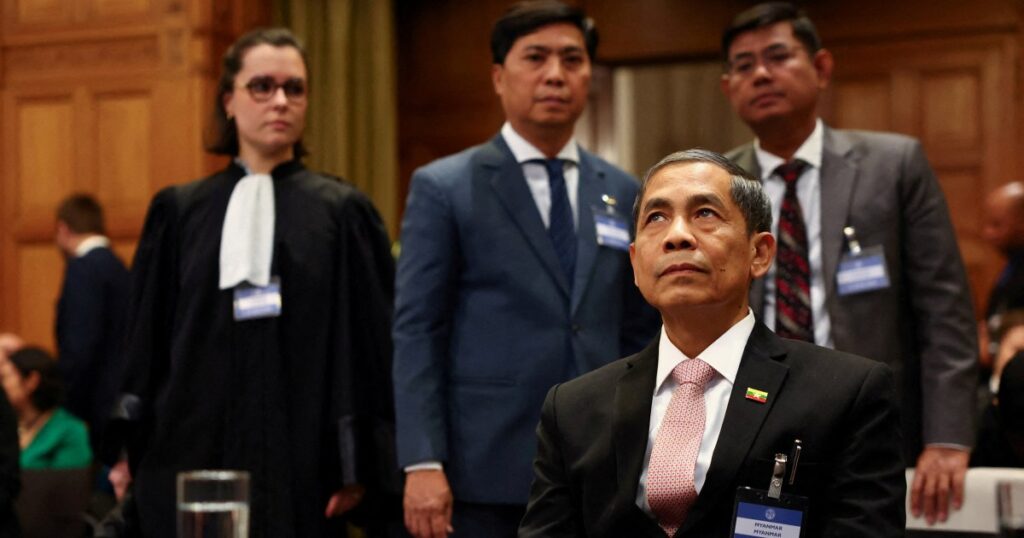
The International Court of Justice (ICJ) is currently deliberating whether Myanmar committed genocide against the Rohingya Muslim minority during a 2017 military crackdown. This case has garnered significant international attention due to allegations that Myanmar’s military conducted widespread atrocities, including mass killings, rapes, and the displacement of over 700,000 Rohingya to neighboring Bangladesh.
Myanmar’s government, however, strongly rejects these accusations, describing the genocide case at The Hague as “flawed and unfounded.” Officials argue that the military operations were a legitimate counter-terrorism response to attacks by Rohingya militants and deny any intent to destroy the Rohingya group as required by the legal definition of genocide.
In a statement, Myanmar’s representatives emphasized that the country has faced significant security challenges and has taken measures to protect all its citizens. They called into question the evidentiary basis of the claims presented at the ICJ, highlighting inconsistencies and disputing testimonies from refugees and human rights organizations.
The case was brought forward by The Gambia, a small West African nation, which accused Myanmar of violating the 1948 Genocide Convention. The proceedings at The Hague include detailed examinations of eyewitness accounts, satellite imagery, and reports from international observers.
Legal experts note that the ICJ’s ruling could have far-reaching consequences not only for Myanmar but also for international law in holding nations accountable for crimes against humanity. The court’s decision will assess whether Myanmar’s actions meet the stringent criteria of genocide, which requires proving specific intent to destroy a protected group.
Since the military crackdown in 2017, the Rohingya community has remained largely stateless and vulnerable. International humanitarian groups continue to call for justice and further investigations into human rights abuses.
Myanmar’s denial, however, reflects a broader pattern of resistance to international scrutiny and intervention, complicating diplomatic efforts to resolve the crisis peacefully.
The ICJ hearings are ongoing, and a final verdict is expected in the coming months. Both the global community and affected Rohingya groups await the decision, which could set a pivotal precedent in international human rights law.
This case underscores the challenges faced in addressing alleged atrocities in conflict zones and the importance of impartial judicial processes in delivering justice and reconciliation for victims.