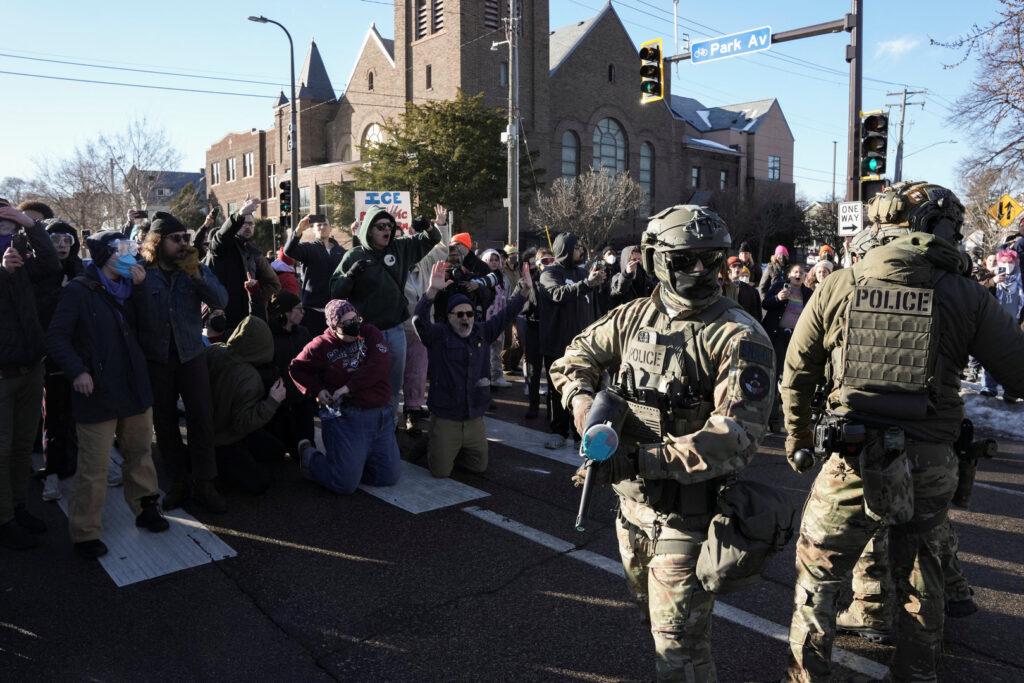
SENSITIVE MATERIAL. THIS IMAGE MAY OFFEND OR DISTURB Observers use their mobile phones to document the actions of federal agents in the area, as some of them kneel in protest, days after an ICE agent fatally shot Renee Nicole Good, in Minneapolis, Minnesota, U.S., January 13, 2026. REUTERS/Tim Evans
In Minneapolis, Minnesota, tensions escalated significantly as protesters confronted Immigration and Customs Enforcement (ICE) agents in the wake of a fatal shooting involving an ICE agent. The incident, which resulted in the death of Renee Nicole Good, has stirred widespread outrage and brought attention to the actions of federal agents in the area.
Renee Nicole Good was fatally shot by an ICE agent under circumstances that are currently under investigation. Details about the shooting remain sparse, but the event has become a catalyst for public demonstrations demanding accountability and justice.
In response to the shooting, a large number of protesters gathered near the locations where ICE agents operate, expressing their anger and demanding better oversight and reform of immigration enforcement practices. The demonstrations were marked by strong emotions as community members, activists, and advocates voiced their concerns over what they perceive as excessive use of force.
The protests in Minneapolis reflect a broader national debate surrounding immigration enforcement, law enforcement practices, and the treatment of individuals by federal agents. Many activists argue that such incidents highlight the urgent need for policy changes and increased transparency within ICE.
Local authorities and ICE officials have pledged to conduct thorough investigations into the shooting to determine the facts and hold those responsible accountable. However, the community remains uneasy, and demands for justice and systemic reform persist.
This confrontation between protesters and ICE agents marks a critical moment for Minneapolis amid ongoing discussions about civil rights, law enforcement accountability, and immigration policy. The community’s response is a powerful reminder of the continuing struggles related to federal immigration enforcement and the impact of such encounters on individuals and families.
As investigations proceed, many are watching closely to see how officials will address these serious concerns and what measures may be implemented to prevent future tragedies. The situation underscores the complex and often contentious dynamic between federal law enforcement agencies and the communities they serve.
The legacy of this tragic event will likely influence future policies and community relations surrounding immigration enforcement. Advocates continue to call for greater protections for individuals and insist on reforms to ensure that such incidents do not reoccur.
In summary, the deadly shooting of Renee Nicole Good by an ICE agent has ignited protests and heightened scrutiny of federal immigration enforcement practices in Minneapolis. The incident serves as a grim reminder of the challenges and tensions surrounding law enforcement and immigration issues in the United States today.