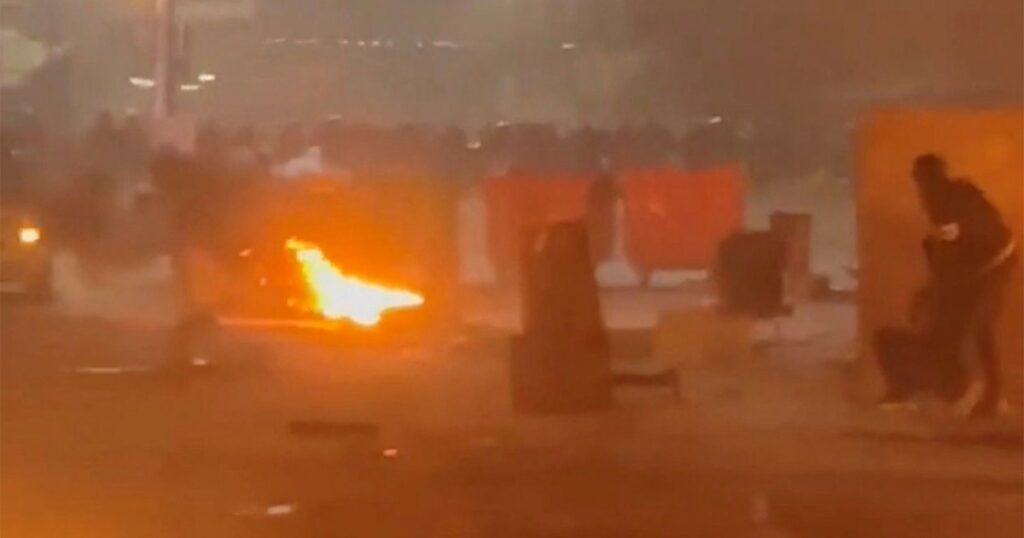
Iran’s Foreign Minister has claimed that recent protests in the country were intentionally made ‘bloody’ to provide an excuse for intervention by former US President Donald Trump. These comments come amid ongoing reports from Iranian media describing a generally calm night despite a nationwide internet ban imposed by Iranian authorities.
The internet blackout, initiated to curb the spread of information, continues to impact communication and the flow of news across Iran. This move appears aimed at controlling the narrative domestically and limiting the ability of protesters to organize or broadcast their actions internationally.
The protests, which have drawn significant attention both inside and outside Iran, stem from a variety of grievances. While details about the scale and impact of recent demonstrations remain somewhat unclear due to restricted internet access, official statements downplay the unrest’s severity.
The Iranian Foreign Minister’s remarks suggest that some elements may have escalated protests to violent levels specifically to provide justification for external interference, particularly from the US government. This stance aligns with Tehran’s long-standing suspicion of foreign involvement in its internal affairs.
Meanwhile, the US President has announced the possibility of a meeting concerning the situation, signaling ongoing international diplomatic engagement. This development adds another layer to the complex geopolitical dynamics surrounding the protests and Iran’s response.
Iranian media reports indicate that despite the protests and government efforts to control information, the situation has been relatively calm in recent times. However, the continuation of the internet ban reflects ongoing concerns within the government about maintaining order and preventing further escalation.
The international community remains watchful, as any attempt at foreign intervention could have significant regional implications. The narrative of protests being manipulated or exaggerated to legitimize outside interference is particularly sensitive and highlights the delicate balance Iran seeks to maintain between managing domestic unrest and defending its sovereignty.
These events occur against the backdrop of a broader context of strained US-Iran relations and ongoing debates over Iran’s policies and human rights record. The Iranian government’s framing of the protests as part of a foreign plot aims to rally domestic support and discredit opposition movements.
In summary, while protests have rocked parts of Iran and resulted in a harsh governmental response including a nationwide internet shutdown, official narratives emphasize that the unrest has been contained and that some factions may have purposefully intensified violence to provoke international intervention, especially by the US. The potential for diplomatic discussions marks a critical point in the evolving situation, with careful attention to both internal stability and external diplomatic pressures continuing in the coming days.