Venezuela, once a global oil powerhouse, has long been under the shadow of Nicolas Maduro’s contentious leadership. As Maduro’s hold on power faces increasing challenges, the implications for Venezuela’s oil industry, regional power dynamics, and international intervention are profound and multifaceted.
For decades, Venezuela has been synonymous with vast oil reserves, its economy heavily dependent on petroleum exports. However, under Maduro’s rule, the nation’s oil production has plummeted due to mismanagement, sanctions, and economic collapse. Despite Venezuela’s colossal reserves, its capacity to influence global oil markets today is limited, rendering it almost a footnote in the current age of oil abundance.
The global energy landscape has dramatically shifted, with proliferating sources of oil and alternative energy diminishing the geopolitical weight of traditional oil giants like Venezuela. Countries in the Middle East maintain their strategic importance, but Venezuela’s impact on oil markets is now comparatively minor.
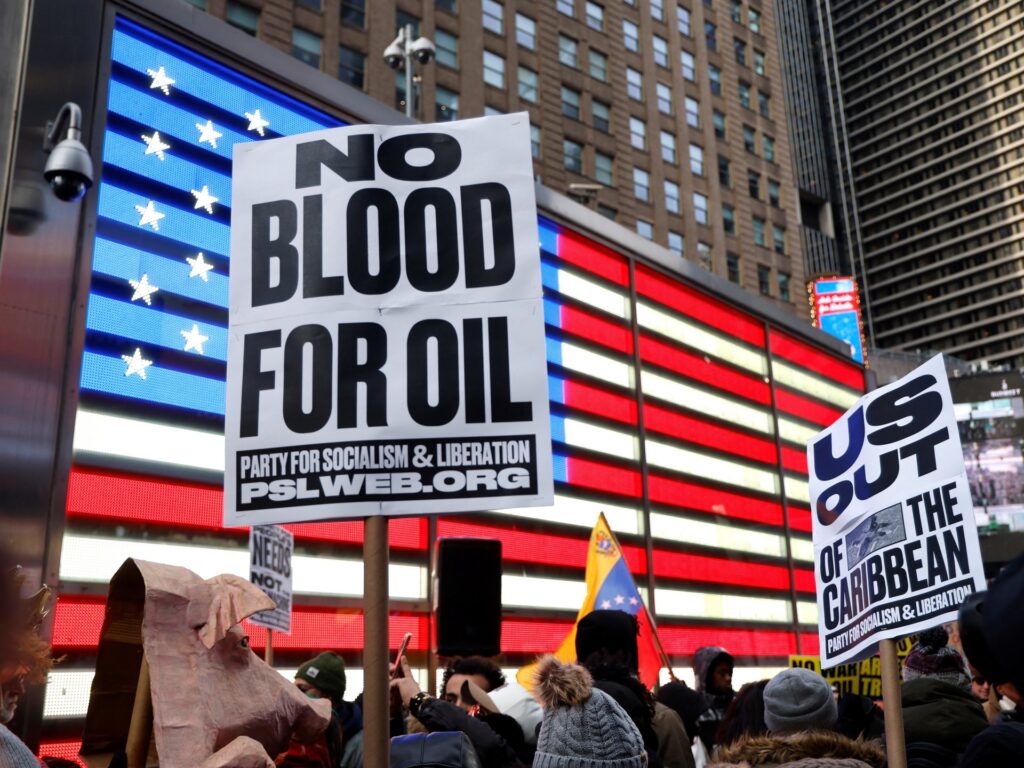
Yet, the United States’ recent moves regarding Venezuela serve as a stark reminder to the Middle East about the complexities and dangers of foreign intervention. Washington’s approach highlights the delicate balance between exerting power and the unforeseen consequences that such actions can provoke. For the Middle East, watching the US actions in Venezuela is a cautionary tale about the limits of intervention to influence regime change or global policy.
Domestically, Venezuela is grappling with severe social, economic, and political crises. The government faces widespread dissent, hyperinflation, and a humanitarian emergency as millions flee the country. The oil sector’s degradation exacerbates these problems, weakening state income and diminishing public service delivery.
Internationally, Maduro’s government finds itself increasingly isolated, with sanctions from the US and other Western nations targeting the oil industry and government officials. However, alliances with countries like Russia, China, and Iran provide some economic and political support, complicating the global geopolitical chessboard.
The potential for regime change remains uncertain. While opposition forces and international actors debate intervention strategies, the risks of instability and regional spillover effects loom large. Venezuela’s crisis is a poignant example of how economic dependence on a single commodity, coupled with political strife, can undermine national sovereignty and regional stability.
In conclusion, Venezuela after Maduro represents a critical junction for understanding the intricate interplay of oil markets, international power, and the profound limits of intervention. While the nation’s oil influence wanes on the world stage, its internal turmoil and the external geopolitical stakes continue to command global attention. The lessons from Venezuela’s experience underscore the challenges of navigating power in an era defined by complexity and shifting alliances.