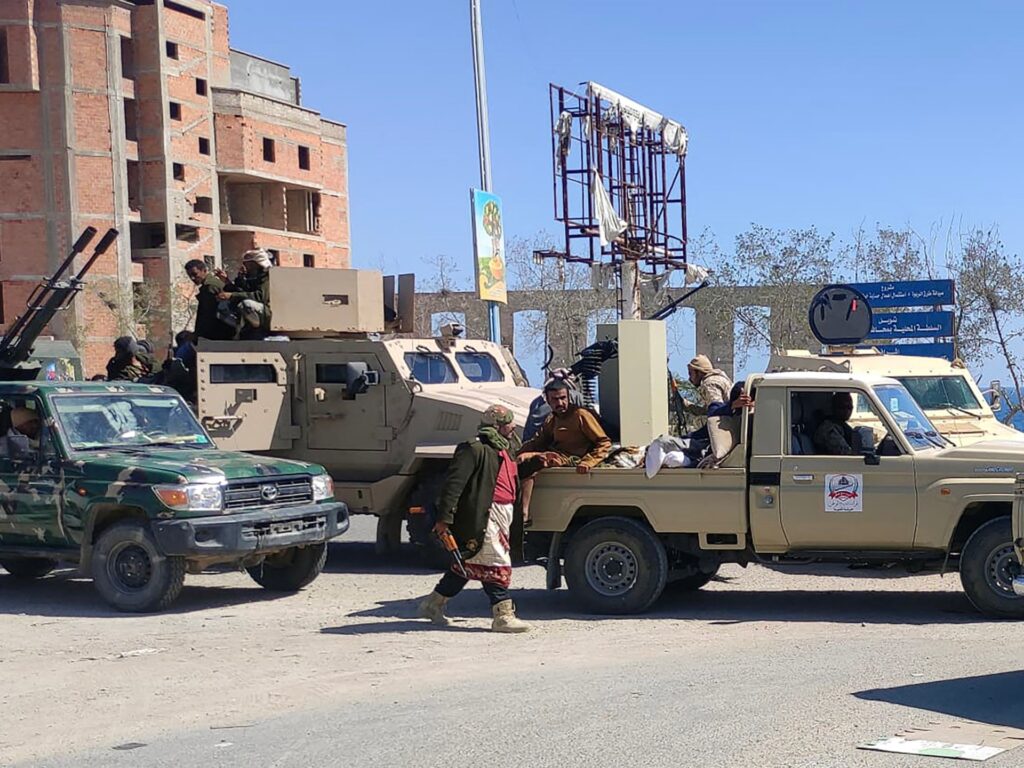
ADEN, YEMEN – In a pivotal development in the protracted Yemeni conflict, Saudi-backed government forces have successfully retaken multiple strategically important cities across southern Yemen. The advance marks a significant military victory for the internationally recognized government and its allies, offering a potential shift in the complex power dynamics of the war-torn nation.
Rashad al-Alimi, the head of Yemen’s Presidential Leadership Council (PLC), hailed the achievement, stating that the elite Homeland Shield forces had accomplished “record success.” This declaration underscores the importance of the recent operations, which saw government troops consolidate control over areas previously contested or held by rival factions, bolstering the PLC’s authority and territorial reach.
Sources close to the government, speaking on condition of anonymity, indicated that the retaken cities are crucial logistical and population centers, control of which significantly enhances the government’s ability to project power and restore administrative services. The Homeland Shield forces, known for their training and operational effectiveness, reportedly executed their campaign with precision, minimizing civilian casualties and rapidly securing key infrastructure within the regained territories.
Al-Alimi’s commendation is not merely a morale booster for the troops; it carries profound political implications. The “record success” statement projects an image of a strengthening, capable government, vital for a leadership council striving to unite disparate factions under a common banner and re-establish state institutions across Yemen. It also serves as a strong message to both internal adversaries and international partners regarding the PLC’s commitment and capacity to achieve its objectives.
The strategic importance of southern Yemen cannot be overstated. The region is home to vital ports, energy infrastructure, and critical land routes that are essential for humanitarian aid delivery and economic stability. Securing these areas provides the government with greater access to resources and improves its position in any future negotiations aimed at a comprehensive peace settlement.
This latest offensive unfolds against the backdrop of an eight-year conflict that has plunged Yemen into one of the world’s worst humanitarian crises. The war pits the internationally recognized government, backed by a Saudi-led coalition, against the Houthi rebels, who control the capital Sana’a and large swathes of the north. Various southern groups, including separatists, have also played significant roles, making the conflict a multi-layered struggle for control and influence.
The recent gains by the Homeland Shield forces could significantly alter the military landscape, potentially giving the government a stronger hand in any renewed peace talks. International efforts, spearheaded by the United Nations, have long sought a durable ceasefire and a political resolution to the conflict. Whether these military successes will pave the way for genuine dialogue or lead to further entrenchment of positions remains to be seen.
Despite the recent triumphs, the path ahead for Yemen’s government is fraught with challenges. Beyond military consolidation, the PLC faces the daunting tasks of restoring basic services, fostering economic recovery, ensuring long-term security, and navigating the complex web of tribal and regional loyalties. The humanitarian situation, though potentially eased by improved access in some areas, remains critical across much of the country.
As the dust settles over the retaken cities, the focus will inevitably shift to how these military gains translate into sustained stability and progress towards an elusive peace. The “record success” of the Homeland Shield forces offers a glimmer of hope, yet underscores the immense undertaking still required to bring lasting peace and recovery to a nation ravaged by years of war.