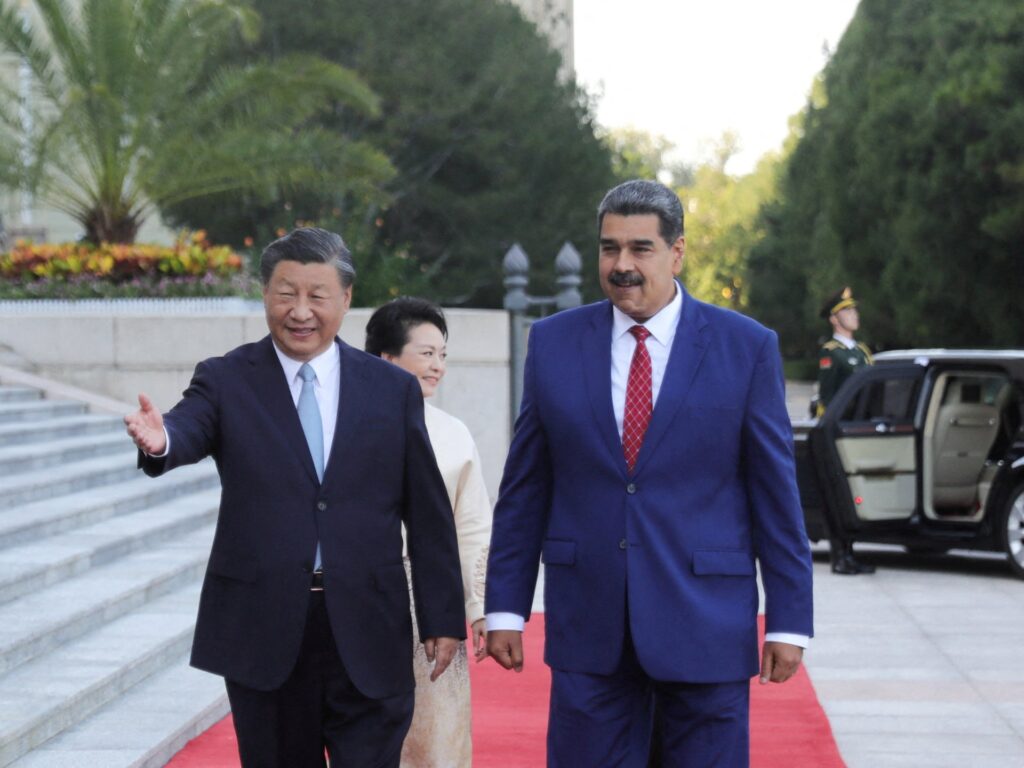
Beijing has issued a stern call to the United States, urging an immediate halt to what it perceives as efforts to destabilize the Venezuelan government and demanding the release of President Nicolás Maduro. This diplomatic broadside underscores the escalating tensions surrounding the Latin American nation and the broader geopolitical rivalry between Washington and Beijing.
China’s foreign ministry spokesperson emphasized Beijing’s consistent adherence to the principles of non-interference in the internal affairs of sovereign states, a cornerstone of its foreign policy. The statement highlights China’s deepening concern over the prolonged political and economic crisis in Venezuela, a country where China has significant economic investments and strategic interests, particularly in the energy sector.
The demand for Maduro’s release implicitly criticizes the U.S. stance, which has long recognized opposition leader Juan Guaidó as Venezuela’s legitimate interim president and has imposed extensive sanctions aimed at pressuring Maduro to step down. The U.S. has often accused Maduro’s government of authoritarianism, human rights abuses, and corruption, pushing for a democratic transition.
However, analysts suggest that despite the strong rhetoric, China is highly likely to confine its response to diplomatic channels rather than resorting to more aggressive measures or “hard power.” This approach is rooted in several factors. Beijing typically prioritizes economic stability and long-term strategic influence over direct military intervention in distant conflicts.
Moreover, a direct confrontation with the U.S. over Venezuela would divert resources and attention from China’s primary geopolitical concerns, particularly in its immediate region and its ongoing trade and technology disputes with Washington. China’s strategy often involves leveraging its economic might and diplomatic influence to counter U.S. hegemony rather than engaging in direct military challenges.
Experts also point to China’s desire to maintain a relatively stable global environment conducive to its own economic growth and Belt and Road Initiative. Undermining this stability through military involvement in Latin America would be counterproductive to these overarching goals. Therefore, while China will continue to vocalize its support for Maduro and condemn U.S. actions, its practical response will likely remain within the realm of diplomatic protest, statements at international forums, and perhaps further economic assistance to Venezuela without crossing the line into direct military support.
This diplomatic protest serves as a clear signal of China’s position on sovereign integrity and its opposition to what it views as coercive foreign intervention, further delineating the ideological fault lines in the international arena. The move reinforces China’s role as a major power challenging the U.S.-led world order, albeit through a calculated, non-military approach in the Venezuelan context. The ongoing crisis in Venezuela thus remains a significant flashpoint in the broader U.S.-China rivalry, played out largely through diplomatic and economic means.