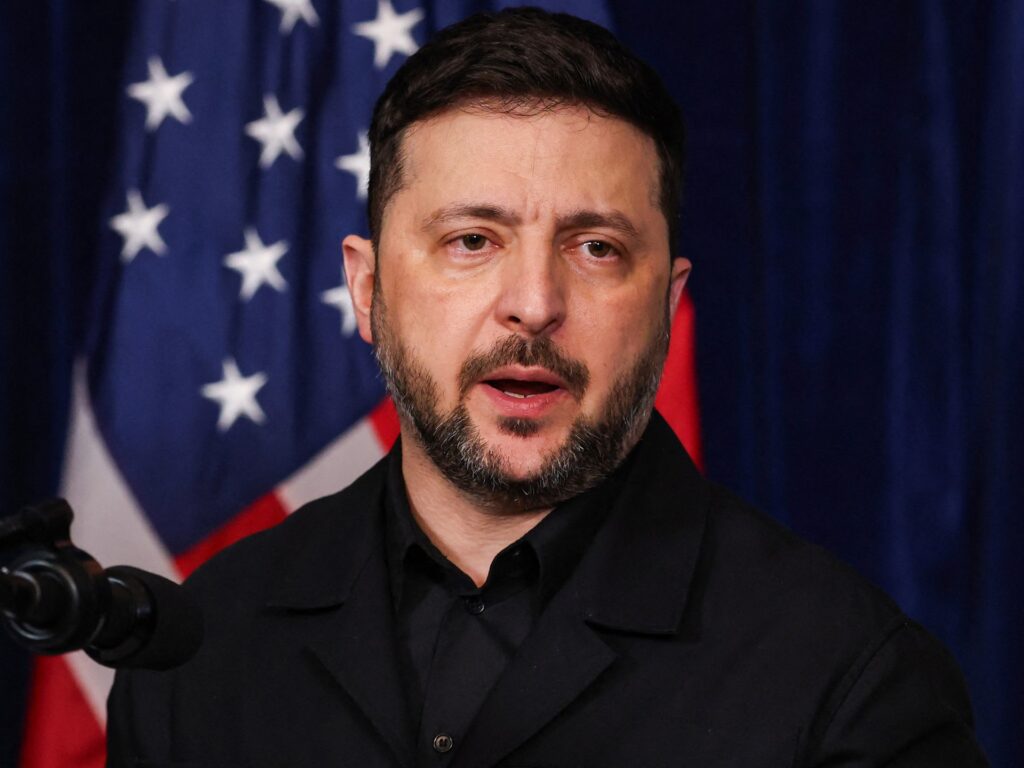
In a recent development amidst the ongoing conflict, Volodymyr Zelenskyy, the President of Ukraine, swiftly denied claims made by Russia that Ukraine launched a strike on Russian President Vladimir Putin’s residence located in the city of Novgorod. The Russian authorities had alleged that this attack was carried out by Ukrainian forces targeting a high-profile political figure, escalating tensions between the two nations.
Zelenskyy’s denial came shortly after the Russian claim was publicized, aiming to clarify Ukraine’s position and de-escalate any potential misunderstandings that could further provoke hostilities. Official statements from the Ukrainian side emphasized that the allegations were baseless and part of a misinformation campaign intended to justify increased military actions or create propaganda narratives.
The strike, as suggested by Russian sources, reportedly involved an operation intended to directly threaten the Russian leadership. This claim, however, has not been corroborated by independent observers or any credible evidence from international monitoring entities.
The geopolitical context surrounding this incident remains volatile, with ongoing conflict affecting the broader Eastern European region. Communications between the two countries have been marked by mutual accusations, often involving misinformation and disinformation tactics.
Experts analyzing the situation suggest that such claims might be used strategically to rally domestic support or to send messages to international stakeholders. Both Russia and Ukraine have engaged in information campaigns to bolster their narratives and justify their respective actions during the conflict.
The Ukrainian government, under Zelenskyy’s leadership, continues to navigate complex diplomatic challenges while managing military operations in contested areas. Denials such as this one are part of broader efforts to maintain clarity about Ukraine’s military conduct and to counteract hostile propaganda.
This incident underscores the importance of verifying information in conflict zones and the role of credible journalism and international oversight. The ongoing strife between Russia and Ukraine remains a critical area of focus for global security analysts and policymakers aiming to foster stability in the region.
As the situation evolves, both sides are expected to continue exchanging claims and counterclaims, making it imperative for the international community to carefully assess information before drawing conclusions. Zelenskyy’s firm denial of the alleged strike on Putin’s residence reflects the heightened sensitivity and the delicate nature of communication in this conflict.