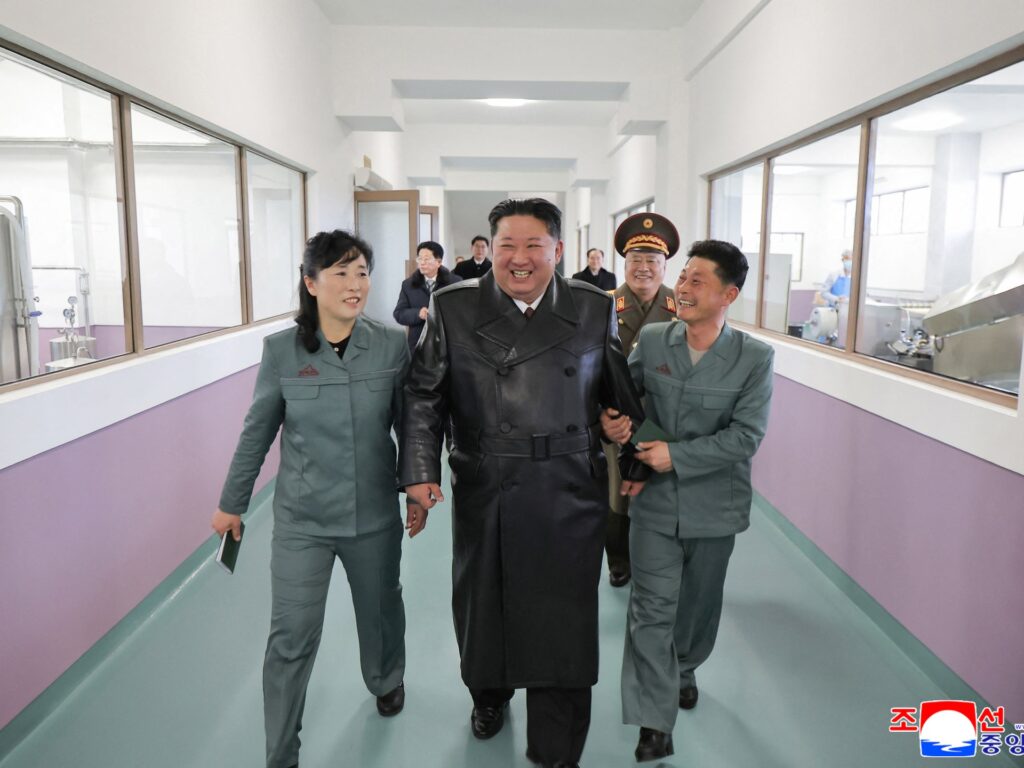
North Korean leader Kim Jong Un has recently called for an expanded production of missiles and artillery shells, emphasizing the importance of bolstering the country’s military capabilities. This directive includes the establishment of additional factories dedicated to manufacturing these weapons, signaling a significant push towards military strengthening.
Kim Jong Un’s call comes amid ongoing tensions on the Korean Peninsula, where North Korea has consistently maintained a strategy focused on its missile program as a core element of national defense and deterrence. Kim has described the augmented production of missiles and shells as vital to sustaining a “war deterrent,” which is a crucial part of safeguarding the nation against perceived external threats.
The directive involves not only increasing the quantity of weaponry but also advancing production capabilities with new factories, potentially ramping up the scale and speed at which North Korea can arm itself. Analysts interpret this move as a signal that Pyongyang is prioritizing military readiness and modernization, possibly in response to regional security dynamics and international diplomatic pressures.
Missile production in North Korea has been a contentious issue internationally, attracting sanctions and widespread condemnation due to concerns over proliferation and regional stability. The regime’s enhanced focus on missile manufacturing underlines its intent to maintain and possibly expand its strategic weapons arsenal despite global calls for denuclearization and peace on the peninsula.
This step is likely to escalate tensions with neighboring countries, particularly South Korea, Japan, and the United States, all of whom view North Korea’s missile development as a significant threat to regional security. The increased production and deployment capabilities may prompt heightened military alertness and preparedness among these nations.
Furthermore, Kim Jong Un’s remarks underscore the regime’s narrative of self-reliance and military strength as essential for the country’s survival and sovereignty. By framing missile production as a “war deterrent,” North Korea reinforces its position that a strong military posture is necessary to deter potential aggression.
Overall, North Korea’s renewed emphasis on missile and artillery production highlights a strategic commitment to advancing its military power. This approach reflects an ongoing cycle of military expansion that poses challenges to diplomatic efforts aimed at denuclearization and peacebuilding in Northeast Asia.
The international community remains watchful of Pyongyang’s military developments, and the situation will likely influence diplomatic engagements and policies related to security and non-proliferation in the region. As Kim Jong Un pushes for increased production capacity, the geopolitical landscape of East Asia continues to face uncertainty and potential volatility.