an-overcast-scene-at-a-railwayindustrial-complex-shows-a-heavily-damaged-multi-story-building-with.jpg
Russia has escalated its offensive against Ukrainian infrastructure targets with a significant aerial bombardment, coinciding with high-stakes discussions between the United States and Ukraine in Florida.
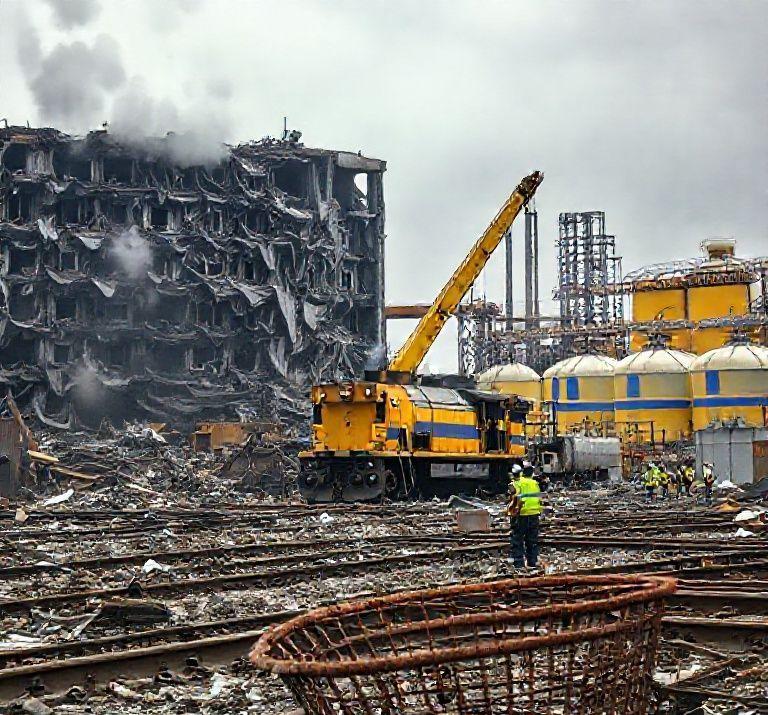
Overnight, Russian forces launched 653 drones and 51 missiles, most of which were intercepted by Ukrainian defenses. One particularly damaging strike targeted a railway hub in the town of Fastiv, just outside Kyiv, destroying the main station building and causing damage to rolling stock. Ukrainian President Volodymyr Zelensky characterized the assault as “meaningless from a military point of view,” adding that Russian commanders “could not have been unaware of this.”
These intensified attacks follow earlier calls from US and Ukrainian negotiators for Russia to demonstrate a “serious commitment to long-term peace,” after prior talks in Moscow yielded no significant progress. Millenium TV has learned that in recent weeks, Moscow has stepped up its assaults on Ukraine’s energy sector and critical infrastructure. The energy ministry confirmed that Russian attacks on Saturday impacted energy facilities across eight regions, leading to widespread power outages. Concurrently, the UN’s nuclear watchdog reported that the Zaporizhzhia nuclear power plant experienced a temporary loss of all external power, marking the eleventh such incident since Russia’s full-scale invasion.
In response to the strikes, the Russian defense ministry stated it had launched a “massive strike” in retaliation for what it described as Ukrainian attacks on civilian targets. Ukrainian Foreign Minister Andrii Sybiha criticized Russia’s actions, stating, “Russia continues to disregard any peace efforts and instead strikes critical civilian infrastructure.” He emphasized, “This shows that no decisions to strengthen Ukraine and raise pressure on Russia can be delayed. And especially not under the pretext of peace process.”
Meanwhile, in Florida, two days of “constructive” talks concluded between US special envoy Steve Witkoff and Rustem Umerov, secretary of Ukraine’s national security council. A statement posted by Witkoff indicated that the two officials “agreed on the framework of security arrangements” for a potential peace agreement and “discussed necessary deterrence capabilities to sustain a lasting peace,” though specific details were not disclosed. The statement further noted that the prospect of ending the conflict hinges on Russia’s willingness to take “steps towards de-escalation and cessation of killing.” These negotiations, also involving Jared Kushner, are scheduled to continue for a third day.
Millenium TV understands that during the Florida talks, the Ukrainian delegation was briefed on a recent meeting between Witkoff and Russian President Vladimir Putin in Moscow. Witkoff spent nearly five hours with Putin, after which the Kremlin indicated that “no compromise” was reached on a draft US peace plan. The Kremlin conveyed that Putin was prepared to continue meeting American officials “as many times as needed,” though Ukraine and its European allies have expressed skepticism regarding the Russian leader’s genuine commitment to ending the war.
Ukrainian President Volodymyr Zelensky had previously expressed his desire to “obtain full information about what was said in Moscow and what other pretexts Putin has come up with to drag out the war.” Kyiv has pushed for revisions to the initial US peace plan, which was reportedly seen as largely favorable to Moscow when an early version was leaked. An updated version has yet to be publicly released.
Significant disagreements persist between the two sides, particularly concerning post-war security guarantees for Ukraine and territorial concessions. Russia currently controls approximately one-fifth of Ukrainian territory, including large sections of the Donbas region. In a recent interview, Putin warned Ukrainian troops to fully withdraw from the Donbas this week, threatening that Russia would otherwise “liberate these territories by force.”
Kyiv and its European partners believe that the most effective way to prevent future Russian aggression is to grant Ukraine membership in NATO or to provide comprehensive security guarantees. Russia remains staunchly opposed to Ukraine joining NATO, and former US President Donald Trump has also repeatedly signaled his disinclination to allow Ukraine into the military alliance. The Kremlin confirmed that Ukraine’s potential NATO membership was a “key question” addressed in the Moscow discussions. Trump described those talks as “reasonably good,” but cautioned that it was too early to determine outcomes, stating, “it does take two to tango.”
© Millenium TV