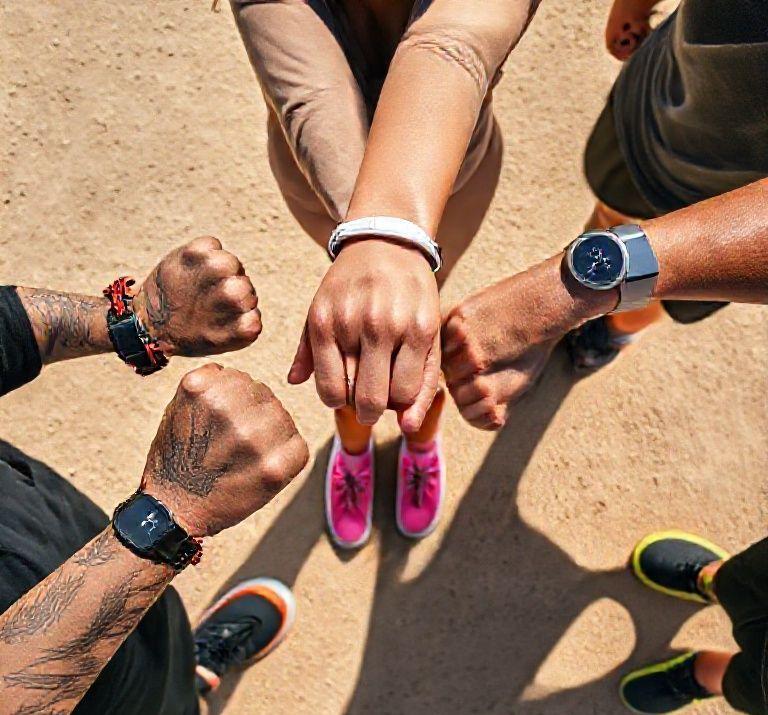
an-overhead-shot-shows-three-likely-athletes-standing-together-outdoors-with-clenched-fists-meeting.jpg
Smartwatches have transitioned from simple step counters to ubiquitous personal health monitors, strapped to millions of wrists worldwide. These devices promise a wealth of data on our physical and mental states, but as their capabilities expand, so too does a growing debate about their true impact on our wellbeing.
The wearable tech market is now a multi-billion-pound industry, dominated by household names like Apple Watch, Samsung Galaxy, Garmin, Huawei Watch, and Google’s Fitbit. With models ranging from hundreds to thousands of pounds, these sophisticated gadgets track nearly every imaginable bodily function—from sleep patterns and blood pressure to heart rate variability, oxygen, and even glucose levels.
Yet, this constant stream of personal metrics isn’t always welcome. Millenium TV has spoken with numerous users who express a complex relationship with their devices. Some admit to feeling “insane,” unable to “switch off” from the constant monitoring, while others find the insights comforting, like “a friend supporting me.” However, a common sentiment is frustration, particularly when watches deliver unwanted news. Rachael Fairclough, a mother from St Helens, recounted her Apple Watch repeatedly informing her she wasn’t “productive enough” during pregnancy, and now, with a six-month-old, it frequently highlights her “bad night’s sleep.” She acknowledges her “love-hate relationship” with the device, questioning whether its extensive functions have become “too much.”
The technology behind these insights typically involves sensors on the watch’s reverse side. Green LED lights monitor blood flow to detect pulse rates, while more advanced models can assess stress levels by detecting changes in electrical currents on the skin.
Experts caution against an over-reliance on these devices. Professor Niels Peek, a data science expert at the University of Manchester, notes the “fine balance” between their potential to save lives by “detecting disease before we show symptoms” and the risk of creating the “worried well.” He highlights advanced wearables’ capacity to perform electrocardiograms (ECGs) and flag conditions like atrial fibrillation, an irregular heartbeat that could signal future risks of stroke or heart problems. However, Professor Peek expresses reservations about the increasing number of functions, stating, “I’m not entirely convinced being able to monitor so many things is such a good idea,” fearing users may struggle to interpret complex health data.
Clinical psychologist and professor in cardiology, Lindsey Rosman, shares these concerns. Her research with cardiovascular patients suggested that 20% of those using wearable tech for heart monitoring experienced heightened anxiety and increased their use of healthcare resources. Professor Rosman observed a concerning pattern: a troubling reading on the watch led to worry, which in turn elevated heart rate, prompting further checks and escalating anxiety—a “self-fulfilling prophecy.” She explained, “If we see stats about ourselves that we don’t really understand then, of course, we are going to want to know more.”
Despite these potential pitfalls, many individuals report significant benefits. Mark Morton, a 43-year-old specialist vet from Cheshire, attributes a complete change in his sleep habits to his Whoop device. He discovered that even one or two beers near bedtime significantly impacted his sleep quality. By adopting practices like wearing a sleep mask and optimizing his sleep environment, his data now reflects improved rest. Morton stated that while his tracker isn’t “going to make me an Olympic athlete or anything,” it has “really made me think about my health.”
On the question of accuracy, Dr. Kelly Bowden-Davies, a senior lecturer in Sport and Exercise Sciences at Manchester Metropolitan University, clarifies that smartwatches do not provide “laboratory quality results” or a “true reading of speed or pace in a given moment.” She points to variables like GPS unreliability and watch movement affecting data collection. Since these devices aren’t subject to the same regulations as medical equipment, they cannot offer a definitive health picture.
However, Dr. Bowden-Davies emphasizes their value in establishing a personal “baseline.” She explained, “That baseline might not reflect reality to the second, or the calorie, or the metre, but it’s personal to you. You can then figure out how well you are doing – if you’ve got faster, or you’ve slept better, or you’ve burnt more calories. They’re really useful for that.” For many, these watches serve as powerful tools for self-improvement and even friendly competition.
© Millenium TV