a-woman-with-loosely-styled-light-brown-hair-wearing-a-soft-light-blueteal-scarf-over-a-dark-top.jpg
The Women’s Institute (WI) has announced with profound regret that it will no longer extend full membership to transgender women. This significant change, impacting thousands of local branches across the UK, is set to take effect from April 2026 and comes in response to a pivotal Supreme Court ruling earlier this year that defined a woman by biological sex under equality law.
Historically, the Women’s Institute, an organization known for its community events, campaigns, and social gatherings, had welcomed trans women—individuals assigned male at birth who identify as women—into its ranks. This policy shift marks a departure from decades of inclusive practice.
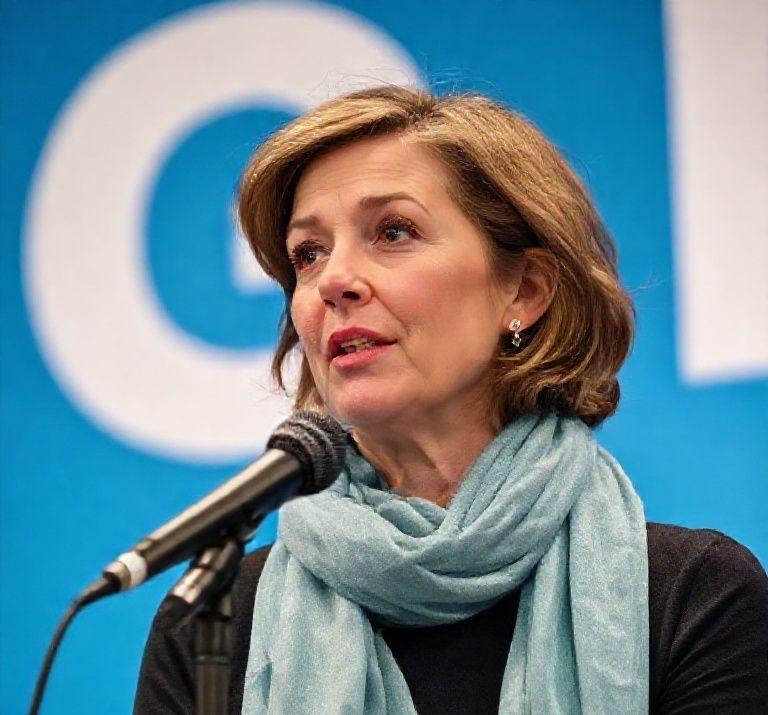
Melissa Green, Chief Executive of the National Federation of Women’s Institutes, explained the legal imperative behind the decision. “Unfortunately the legal position as it stands means that we can no longer offer that,” she stated. Millenium TV understands that this decision follows “40 years of fellowship and sisterhood with those women,” a sentiment Green conveyed in a recent discussion.
Describing itself as “a legally recognised women’s organisation and charity,” the WI affirmed its commitment to comply with the Supreme Court’s judgment. This compliance necessitates restricting “formal membership to biological women only.”
To foster continued support and friendship for transgender women, the organization plans to establish a new national network of “sisterhood groups.” These groups will operate alongside existing Women’s Institutes that wish to provide a “trans-inclusive space.” Green acknowledged the “difficult decision” for the WI, which boasts 175,000 members, recognizing that opinions within the organization are deeply divided. She maintained that this was the only viable path, underscoring that “ultimately the WI is a women’s organisation.”
Green elaborated, stating, “Our council were very clear, the majority of them wish to remain trans inclusive, but that legal option wasn’t open to us.” She expressed empathy for long-standing transgender members, some of whom have been part of the WI “for four decades,” acknowledging the “sadness” this change will bring. “We intend to be clear that whilst the law restricts membership, it’s our firm organisational belief that transgender women are women,” Green affirmed, promising continued “sisterhood” through the new network.
While details on how the membership restriction will be enforced remain pending, awaiting guidance from the Equality and Human Rights Commission (EHRC), Green indicated that enforcement would be proportionate. She also explained the timing of the announcement, noting, “We could have waited for the EHRC guidance, but I think society needs organisations such as my own to lead.” The EHRC is expected to update its guidelines for businesses and services on interpreting the law.
Helen Belcher, Chair of the trans rights organization TransActual, voiced strong concerns regarding the decision. “This is the second national charity in as many days which has been pushed to force out trans people, against the organisation’s will and at great cost,” Belcher remarked. She attributed such changes to “a handful of extremists imposing their views on groups which have been very happily trans inclusive for many years if not decades,” and urged the government to “urgently to rectify the situation.”
Conversely, Helen Joyce, Director of women’s rights charity Sex Matters, supported the WI’s move. “A group set up for women must be able to keep out all men, even the ones who are very insistent that they feel like women,” Joyce stated. She argued that the distinctiveness of single-sex groups is “obviously lost if people of the opposite sex are admitted,” suggesting ample mixed-sex and trans-identifying specific groups are available.
This decision by the Women’s Institute follows a similar announcement by Girlguiding earlier in the week to also exclude transgender girls, highlighting a growing trend among single-sex organizations grappling with the implications of UK equality law.
© Millenium TV