a-woman-with-long-straight-blonde-hair-showing-gray-at-the-roots-stands-at-a-blue-podium-speaking-i.jpg
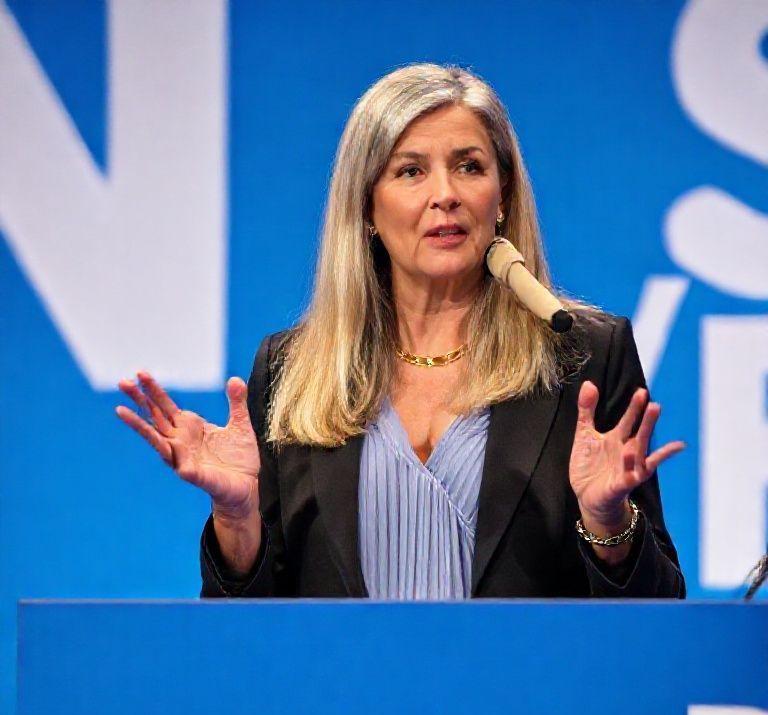
Laura Anne Jones, the sole Reform UK representative in the Welsh Parliament, has returned to the Senedd chamber following a two-week suspension for using a racial slur against Chinese people. Her return has reignited concerns among members of the Chinese community in Wales, who assert that the offensive term has caused significant distress.
Millenium TV has learned that Jones, who joined Reform UK in July after defecting from the Conservatives, was sanctioned for comments made in a private WhatsApp chat in August 2023. The incident, which occurred during a discussion about the TikTok app, resulted in a docked salary and her exclusion from parliamentary proceedings. The Chinese in Wales Association (CIWA) acknowledged the Senedd’s disciplinary action but emphasized that the word used by Jones carries “deeply hurtful and racist connotations,” expressing profound disappointment at such language from an elected official.
Jones issued an apology, referring to her remarks as “regrettable comments” made in a “private message.” On November 19, she stated that she and her staff had completed Senedd training on respect and conduct, adding that she had “actively been in contact and helped the community that is being referred to.” She also conveyed deep reflection on the matter, affirming her acceptance of the need for greater care with her language at all times. In contrast, Reform UK leader Nigel Farage characterized the incident as a “pretty minor offence,” suggesting the word “colloquially probably was meant in a nice way 20 years ago,” while acknowledging Jones had “absolutely made a mistake.”
Shirley Au-Yeung, founder and CEO of CIWA, described Jones’s comment as “very upsetting,” particularly emanating from a political figure. Au-Yeung remarked that while the word is sometimes used without full understanding of its impact, public figures must be especially mindful of the harm such language can inflict. She stressed the importance of preventing the normalization or dismissal of racially derogatory language in society.
Beyond the slur, Jones, who represents South Wales East, also used other disparaging terms in the group chat, referring to a former staff member as “a wanker” and a “bitter, twisted, useless person.” According to 2021 census data, approximately 14,000 residents in Wales identify as Chinese, with Swansea holding the highest proportion outside of Cardiff.
Professor Yan Wu, a media communications expert at Swansea University who has researched Chinese immigration in Europe since 2005, explained that Chinese immigration to the UK has evolved through three distinct phases since World War Two, diversifying from post-war labor, through students and scholars in the late 1970s, to a broader range of individuals including political dissidents, economic immigrants, and Hong Kong migrants since 2000.
Au-Yeung, based in Swansea, further highlighted that “many ethnically Chinese people born in Wales have shared that their Welsh identity can feel questioned at times because of how they look.” She elaborated that many feel Welsh, yet face external questioning, causing significant hurt. Foo Seng, CIWA’s advocacy lead, commented, “By using that word you are telling the public that it is OK to use that word to talk about the Chinese community,” adding that the upset caused is “demeaning.”
Angela Hui, author of ‘Takeaway: Stories From Behind the Counter,’ explained that while the word “might look harmless to someone on the outside,” it “cuts to the core” for many East and South East Asian individuals in the UK. Hui, from Beddau, Rhondda Cynon Taf, asserted that such language encourages people to ignore struggles and dismiss pain as mere “banter” rather than racism. She noted that many grew up in a system that taught them to stay quiet, and when such “little things” are casually thrown around, they accumulate into something much larger. Hui added that such incidents from elected politicians are “nothing new and unsurprising,” emphasizing the necessity of actively calling out racism.
Au-Yeung expressed concern that Jones has not fully acknowledged the profound impact of her language on the community, stating, “I recognize this has been difficult for her, but it is also important to acknowledge the experiences of Chinese community members who face this negative language in their daily lives. Many continue to suffer in silence.” She welcomed the Welsh government’s engagement on the issue, expressing hope for increased education and an end to the use of the offensive word. CIWA affirmed that Jones’s suspension serves as “an important reminder that racism must be taken seriously, especially by those in positions of public trust,” and hopes the incident will prompt deeper reflection within political parties and the Senedd on practices that allow racist language to emerge.
© Millenium TV