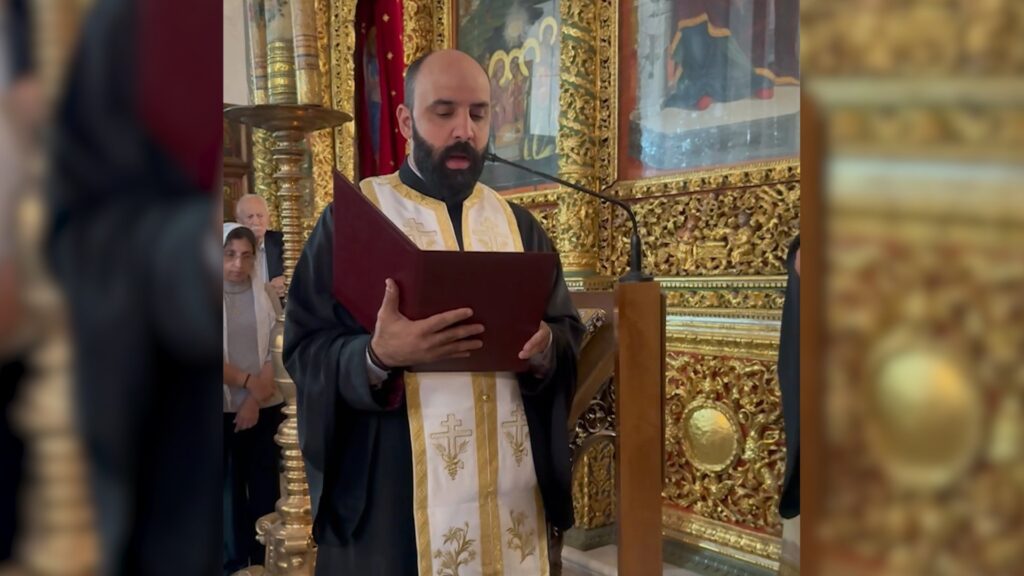
A Christian priest hailing from Bethlehem, the historically significant birthplace of Jesus Christ, has come forward with allegations that the United States denied him a visa on the grounds of his Palestinian identity. This claim has sparked discussions on the complexities and challenges faced by individuals from the Palestinian territories when seeking to travel internationally, particularly to countries like the United States.
The priest, whose role is deeply rooted in the Christian traditions of Bethlehem, expressed disappointment and frustration over the visa denial. According to his account, the rejection was directly linked to his nationality or ethnic background rather than any issues related to security, documentation, or his intent of travel. This situation brings to light the ongoing difficulties faced by Palestinians in obtaining travel permits and visas, which often involve rigorous scrutiny and political considerations.
Bethlehem holds profound religious and cultural significance as the birthplace of Jesus, attracting pilgrims and clergy members from around the world. Many Christian leaders from the region travel frequently for religious, educational, or humanitarian missions, relying heavily on international travel opportunities. A visa denial based on nationality can severely restrict their ability to conduct such activities, thereby impacting religious and cultural exchanges.
The United States government has previously maintained policies aimed at national security and immigration control, which sometimes affect applicants from regions with geopolitical conflicts. However, allegations of discrimination based on ethnicity or nationality raise concerns about fairness and human rights. Advocates for Palestinian rights and various human rights organizations often highlight the restrictions placed on Palestinian movement as part of broader systemic issues related to the Israeli-Palestinian conflict.
In response to such cases, diplomatic channels and advocacy groups frequently call for clearer, unbiased, and transparent visa policies that respect individual rights regardless of nationality. They argue that denying visas on the basis of Palestinian identity not only undermines legitimate religious and cultural exchange but also perpetuates divisions and mistrust.
The priest’s claim also resonates with a wider conversation about the identity and rights of Palestinians within the global community. Many Palestinians face barriers in travel due to their stateless or semi-autonomous status, complicating their ability to participate fully in religious, educational, and professional activities on the world stage.
This incident serves as a reminder of the complex intersection between religion, politics, and human rights in the Middle East. It underscores the need for ongoing dialogue and reforms in visa and immigration policies to ensure equal treatment for all applicants, fostering peace and understanding across cultural and national divides.
As this story develops, it will be important to monitor the responses from US immigration authorities, Palestinian representatives, and international human rights organizations. Their reactions and any subsequent changes in policy could set precedents for how nations handle similar situations involving individuals from conflict-affected regions in the future.