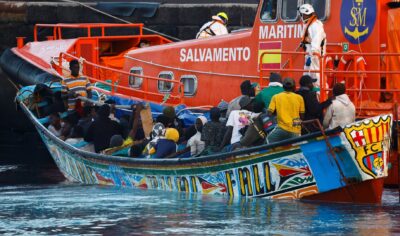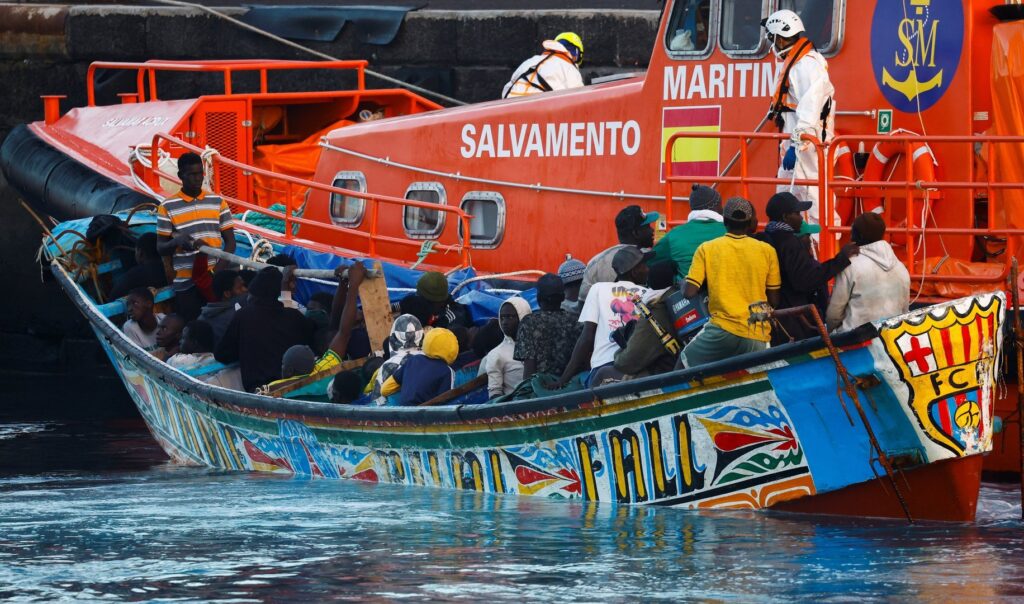
In the first ten days of November, over 7,400 migrants arrived in Spain’s Canary Islands, highlighting the escalating perilous journeys undertaken by individuals seeking refuge and better opportunities in Europe. This surge in migrant arrivals has sparked significant concern among authorities and humanitarian organizations alike, emphasizing the lethal risks these individuals face on their routes.
The Canary Islands, located off the northwest coast of Africa, have increasingly become a preferred entry point into the European Union for migrants. Many of these individuals come from sub-Saharan Africa, fleeing conflict, poverty, and instability in their home countries. However, the journey across the Atlantic Ocean aboard overcrowded and often unsuitable vessels is fraught with danger, leading to numerous fatalities each year.
Authorities in Spain have reported that the majority of early November migrants arrived on small boats and makeshift rafts, enduring harsh oceanic conditions. The boats are frequently ill-equipped for such voyages, lacking sufficient fuel, food, or safety equipment. The Mediterranean route has been the most notorious crossing for migrants for years, but the Atlantic route to the Canary Islands presents unique challenges due to its longer distance and unpredictable sea conditions.
Human rights groups have condemned the increasing number of deaths associated with these crossings, calling for more robust rescue operations and safer migration pathways. Spain’s government has responded by ramping up search and rescue missions and collaborating with international organizations to manage the influx humanely.
The socio-economic factors driving migration remain complex. Many migrants are driven by desperation, seeking shelter from violence, persecution, and economic despair. The Canaries’ popularity among migrants stems from its geographic proximity and the belief that once on Spanish soil, there are better prospects for asylum and integration.
The arrival of thousands in such a short period poses logistical and humanitarian challenges for the islands’ resources and infrastructures. Local authorities struggle to provide adequate shelter, medical care, and social services for the continuous influx of arrivals. In response, Spain has called for greater support from the European Union to share the burden of managing new migrants.
The Spanish government emphasizes the importance of international cooperation to tackle the root causes of migration, addressing issues like conflict resolution, poverty alleviation, and economic development in countries of origin. Still, immediate measures remain centered on managing the ongoing migration pressure at the borders.
Despite efforts to dissuade migrants by increasing patrols and legal deterrents, the underlying factors driving migration have not diminished. The Canary Islands continue to represent a gateway for those willing to risk everything in search of a better future.
This humanitarian crisis underlines the broader global challenge of migration management. It calls for a balanced approach that ensures border security while upholding the rights and dignity of vulnerable populations. The hope remains that enhanced international dialogue, cooperation, and investment in development can reduce the deadly journeys that so many migrants undertake each year.