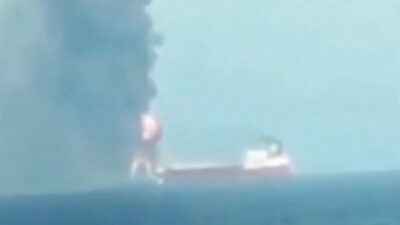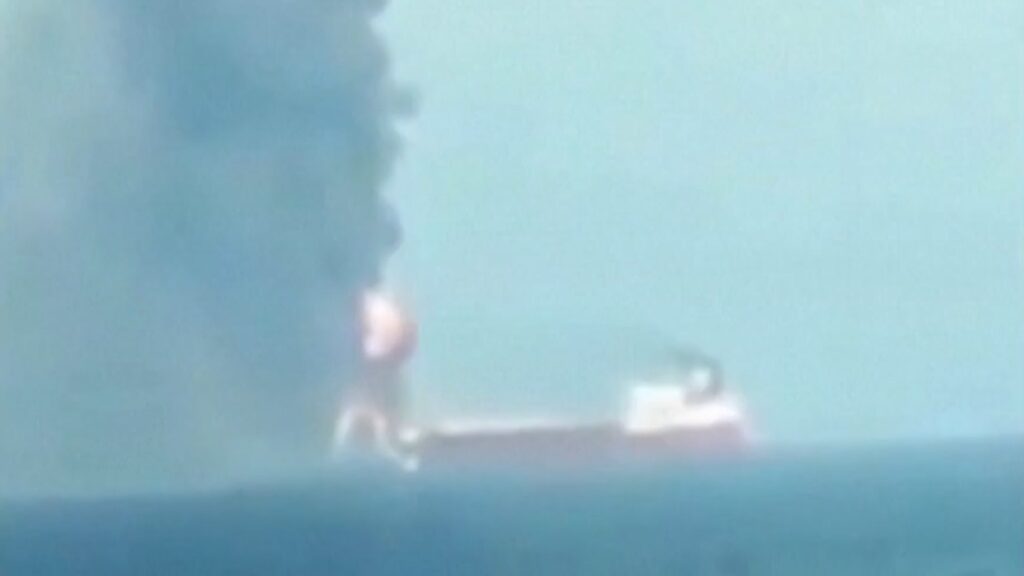
In a recent and alarming incident, a liquefied gas carrier suffered a major fire outbreak after hitting naval mines in the strategic Strait of Hormuz, according to a statement by the Islamic Revolutionary Guard Corps (IRGC). The Strait of Hormuz is one of the world’s most critical chokepoints for global oil shipments, making any disruption there a significant international concern.
The IRGC reported that the tanker was navigating through the Strait when it came into contact with mines, triggering a fire onboard. The exact cause of the mines’ placement has not yet been clarified, and investigations are presumably underway to determine responsibility and circumstances surrounding the event.
The Strait of Hormuz connects the Persian Gulf with the Gulf of Oman and the Arabian Sea, serving as a crucial maritime route for energy exports, particularly oil and liquefied natural gas. An incident of this nature threatens not only the safety of the vessel and its crew but also the stability of global energy markets.
Eyewitness accounts and satellite images are being analyzed to assess the damage extent and to provide aid as needed. The tanker involved is a liquefied gas carrier, a type of vessel specially designed to transport liquefied natural gas (LNG) or liquefied petroleum gas (LPG). A fire in these conditions is especially dangerous due to the volatile nature of the cargo.
International maritime authorities and regional powers have expressed concern over this event. It highlights the ongoing volatility in a region already marked by tensions and military presence from various international actors.
The IRGC, which controls Iranian naval forces in the area, did not specify the environmental impact of the incident, but such events typically raise alarms about potential marine pollution, particularly from hazardous gas leaks or oil spills.
Efforts to control the fire and secure the vessel are reportedly underway, with Iranian authorities coordinating response teams to manage the situation. There have been no immediate reports on casualties, but the safety of the crew remains a primary concern.
This incident comes amid a context of heightened geopolitical tensions around the Strait of Hormuz, where several similar maritime incidents have raised concerns over navigation safety and the risk of military escalation.
Global energy markets and shipping industries are closely monitoring the developments to understand the impact on oil transportation routes and potential delays.
Further updates are expected as investigations continue and emergency responses unfold to mitigate the consequences of this dangerous event in one of the world’s most strategically important waterways.