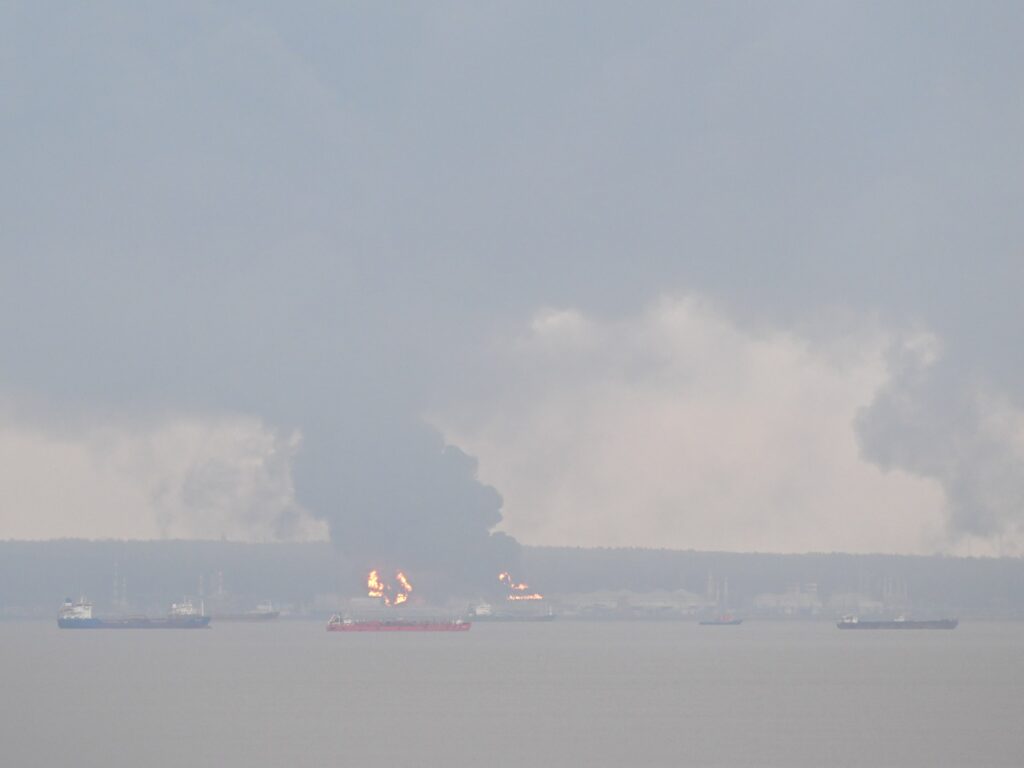
Recently, Ukraine launched an attack on a Russian warship near the coast of Finland in the Baltic Sea, coinciding with peace negotiations held between Kyiv and Moscow in Abu Dhabi, brokered by the United States. This unexpected military action in the Baltic Sea has drawn widespread attention and prompted questions about Ukraine’s motivations during ongoing talks.
The attack represents a significant escalation in the conflict dynamics, as the Baltic Sea is a strategic and sensitive maritime area under the influence of several NATO countries, including Finland, which recently joined the alliance. Ukraine’s decision to strike Russian vessels in this region underscores its determination to challenge Russian naval capabilities even beyond the immediate borders of the conflict zone.
Finland confirmed that Ukrainian forces targeted a Russian warship near its coastal waters, marking a rare instance of the war reaching so close to Finnish territory. This action highlights the complexity of the conflict, as it now involves the security of broader European regions, potentially raising the stakes for NATO and its member states.
The timing of the attack is particularly notable, occurring simultaneously with peace talks in Abu Dhabi between representatives of Ukraine and Russia, arranged by the United States. While these talks aim to find a diplomatic resolution to the ongoing war, Ukraine’s military initiative signals a stance of strength and sends a message of resistance against Russian aggression.
Analysts suggest the strike might be intended to pressure Russia by demonstrating Ukraine’s capability to hit critical Russian assets, thereby influencing the negotiating table dynamics. This move could reinforce Ukraine’s bargaining position or seek to disrupt any Russian military advantages during the discussions.
Moreover, the naval attack in the Baltic Sea may serve multiple strategic purposes, including disrupting Russian supply lines, showcasing Ukraine’s growing military reach, and rallying international support by exposing Russian vulnerabilities.
However, the incident also risks escalating tensions in a broader European context, potentially drawing NATO more directly into the conflict and complicating diplomatic efforts as parties debate the implications of such military actions during peace negotiations.
In conclusion, Ukraine’s attack on a Russian warship in the Baltic Sea amid ongoing peace talks symbolizes its strategic approach to the conflict: combining diplomatic engagement with assertive military actions. This complex interplay reflects the high stakes and multifaceted nature of the Russia-Ukraine war, where battlefield maneuvers and negotiations unfold simultaneously on the international stage.