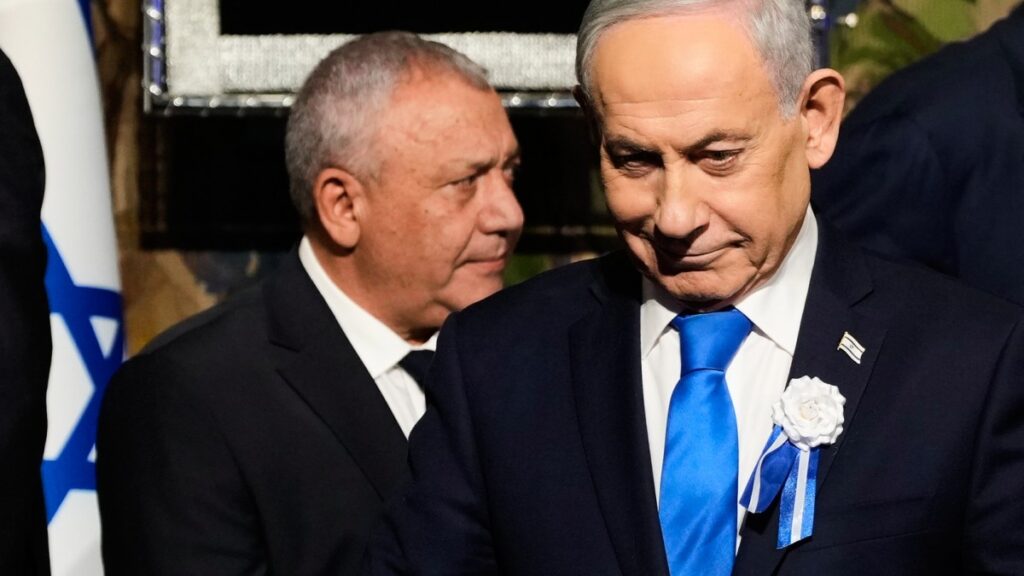
Israeli politics is once again at a critical crossroads as Likud and Yashar prepare for scheduled talks this Sunday to explore the possibility of forming a unity government. This potential alliance, primarily between Prime Minister Benjamin Netanyahu and former Chief of Staff Gadi Eisenkot, has generated significant discussion and analysis across political circles and among the public.
Benjamin Netanyahu, a prominent leader with a long-standing career, heads the influential Likud party. Gadi Eisenkot, retired IDF Chief of Staff and a political newcomer, leads Yashar, a party that has been gaining attention for its fresh perspectives on security and governance. The prospect of these two figures uniting to govern Israel brings both hope and skepticism.
The core incentive behind talks of a unity government stems from the complex political landscape in Israel. Following multiple inconclusive elections and a fragmented Knesset, forming a stable government has proven difficult. A partnership between Netanyahu and Eisenkot could potentially stabilize governance and present a united front on national and security issues.
However, significant hurdles remain. Deep ideological differences and policy disagreements stand in the way. Netanyahu’s Likud has pursued a right-wing agenda with firm stances on security, settlements, and the judiciary, whereas Eisenkot’s Yashar advocates for more centrist reforms and sometimes critiques Netanyahu’s approaches.
Several key areas will require negotiation and compromise if a unity government is to succeed. These include economic policy, handling of ongoing regional tensions, judicial reform, and approaches to peace negotiations. Each side will also have to address questions about leadership roles and the distribution of ministerial portfolios within the prospective coalition.
Political analysts note that public opinion is divided. Some Israelis express hope for stability and cooperation, especially amid geopolitical uncertainties and domestic challenges. Others remain wary, fearing that combining divergent political forces could lead to ineffective governance or deepen divisions.
The scheduled talks on Sunday will be crucial in determining whether these two political heavyweights can bridge their differences. Successful negotiations could lead to a government that strengthens Israel’s standing at home and abroad.
Conversely, failure to reach an agreement may prompt additional elections or alternative coalition-building efforts, prolonging political uncertainty. Both Netanyahu and Eisenkot face pressures from their respective parties and voter bases to be flexible yet firm in their visions.
In conclusion, while there is a pathway for Netanyahu and Eisenkot to form a unity government, the journey is fraught with challenges. Overcoming ideological divides and agreeing on a shared governance framework will be essential to any coalition’s durability and effectiveness.
As Israel watches closely, the outcomes of Sunday’s talks could shape its political and security landscape for years to come, marking either a new chapter of unity or continued political fragmentation.